Archives for category: North Carolina

Back in February, long before President Biden stepped back and Vice-President Kamala Harris became the Democratic nominee for President, two red-state Governors spoke out against vouchers. Both are Democrats who understand the importance of public schools for their communities. They are Governor Roy Cooper of North Carolina, whose gerrymandered legislature has a Republican supermajority, and Governor Andy Beshear of Kentucky, whose legislature is controlled by Republicans. When Beshear ran, he picked a teacher as Lieutenant Governor.

The two Governers wrote this article in USA Today:

In North Carolina and Kentucky, public schools are the center of our communities. We’re proud public school graduates ourselves – and we know the critical role our schools play in teaching our students, strengthening our workforces and growing our economies.

We’ve seen record-high graduation rates of almost 90% in our public schools. North Carolina and Kentucky rank in the top 10 for National Board-certified teachers, one of the highest recognition teachers can earn.

In Kentucky, we’ve seen significant improvement in elementary school reading, even with setbacks from the pandemic like many states experienced. In North Carolina last year, public school students completed a record 325,000 workforce credentials in areas like information technology and construction. The bottom line? Our public schools are critical to our success and an overwhelming number of parents are choosing them for their children.

That’s why we’re so alarmed that legislators want to loot our public schools to fund their private school voucher scheme. These vouchers, instituted in the 1950s and 1960s by Southern governors to thwart mandatory school desegregation, are rising again thanks to a coordinated plan by lobbyists, private schools and right-wing legislators.

Voucher programs chip away at the public education our kids deserve

This is their strategy: Start the programs modestly, offering vouchers only to low-income families or children with disabilities. But then expand the giveaway by taking money from public schools and allowing the wealthiest among us who already have children in private schools to pick up a government check.

In North Carolina, the Republican legislature passed a voucher program with no income limit, no accountability and no requirement that children can’t already go to a private school. This radical plan will cost the state $4 billion over the next 10 years, money that could be going to fully fund our public schools. In Kentucky, legislators are trying to amend our constitution to enshrine their efforts to take taxpayer money from public schools and use it for private schools.

Both of our constitutions guarantee our children a right to public education. But both legislatures are trying to chip away at that right, leaving North Carolina and Kentucky ranked near the bottom in per-pupil spending and teacher pay.

Public schools are crucial to our local economies. In North Carolina, public schools are a top-five employer in all 100 counties. In many rural counties, there are no private schools for kids to go to – meaning that those taxpayer dollars are torn out of the county and put right into the pockets of wealthier people in more populated areas.
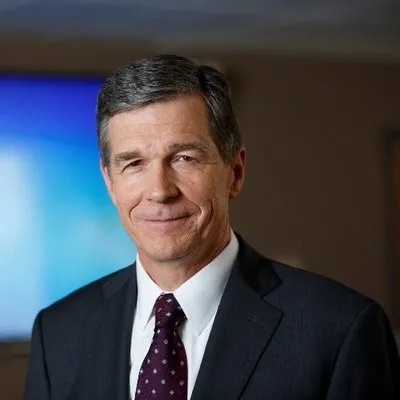
Governor Roy Cooper, North Carolina

In fact, in Kentucky, 60% of counties don’t even have a certified private school. This has caused rural Republicans in red states like Texas and Georgia to vote against voucher schemes that would starve their rural schools.
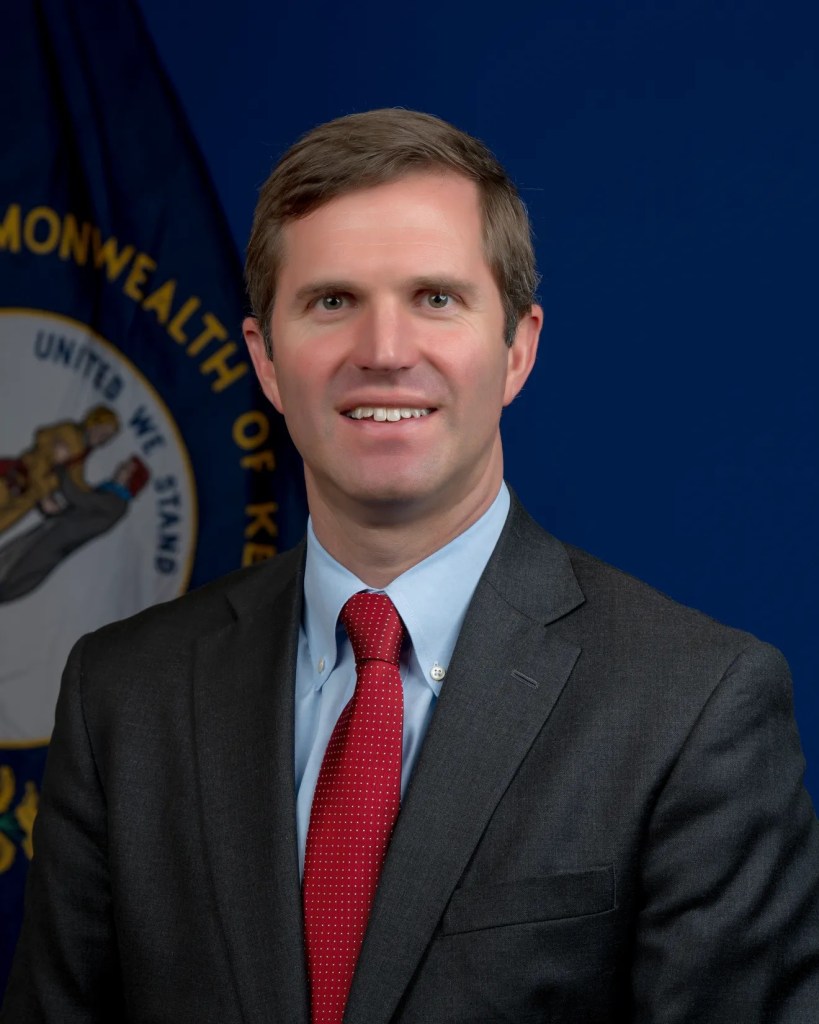
Governor Andy Beshear, Kentucky

Private schools get taxpayer dollars with no real accountability

As governors, we’ve proposed fully funding our public schools, teacher pay raises to treat our educators like the professionals they are and expanded early childhood education. We know that strong public schools mean strong communities. Families in Kentucky and North Carolina know that too. In North Carolina, nearly 8 in 10 children go to public schools.

Our public schools serve all children. They provide transportation and meals and educate students with disabilities. And they’re accountable to taxpayers with public assessments showing how students and schools are doing and where they need to improve.

But private schools that get this taxpayer money have little to no accountability. They aren’t even required to hire licensed teachers, provide meals, transportation or services for disabled students. They don’t even have to tell the taxpayers what they teach or how their students perform. North Carolina’s voucher system has been described as “the least regulated private school voucher program in the country.”

Studies of student performance under school voucher programs not only showed that they don’t help them, but that they could actually have harmful effects. Results from a 2016 study of Louisiana’s voucher program found “strong and consistent evidence that students using an LSP scholarship performed significantly worse in math after using their scholarship to attend private schools.” In Indiana, results also showed “significant losses” in math. A third study of a voucher program in Ohio reported that “students who use vouchers to attend private schools have fared worse academically compared to their closely matched peers attending public schools.”

We aren’t against private schools. But we are against taxpayer money going to private schools at the expense of public schools.

The future of our nation goes to class in public schools, and all Americans must be on guard for lobbyists and extremist politicians bringing similar plans to their states. Our segregationist predecessors were on the wrong side of history, and we don’t need to go back.

We are going to keep standing up for our public school students to ensure that they have the funding they need, and that teachers are paid like the professionals they are. It’s what’s best for our children, our economy and our future.

Roy Cooper is the governor of North Carolina. Andy Beshear is the governor of Kentucky.

The editorial board of the Capitol Broadcasting Company wonders why voucher schools in North Carolina are exempt from the same accountability as public schools. The answer is simple: They don’t want the public to know. They don’t want them to know that most kids who use vouchers never attended public schools. They don’t want them to know that the few public school kids who sought vouchers are falling behind their peers in public schools.

The editorial boldly chastises the North Carolina General Assembly:

It is not an unrealistic expectation that North Carolinians hold elected officials – whether executive, legislative or judicial – accountable for how tax dollars are spent.

When legislators dole out — say more than half-a-billion dollars – to private schools it should go without mention there would be clear provisions for taxpayers to know how much money goes where, whether the money is being spent for the purpose intended and whether that purpose is being achieved.

Accountability isn’t simply to the parents of students. Achievement isn’t merely a matter of the parents’ happiness.

All North Carolinians – particularly every taxpayer who is paying the tab – have a right to know how their money is being spent and whether it is in the hands of competent and qualified people to deliver the services intended – educating school children.

When it comes to private school vouchers, the leaders of the General Assembly want to pump as much as $632 million into them so that even wealthy families can gain taxpayer subsidies for their kids’ tuition. Nearly 20% of the likely beneficiaries are families with annual household incomes exceeding $259,000 (representing the top 7% of families in the state).

Accountability is overlooked. More than overlooked, it seems legislative leaders are actually blocking the kinds of routine accountability that other recipients of taxpayer money must adhere to.

A recent examination of 200 private schools that receive the greatest share of taxpayer-funded vouchers by the Public School Forum of North Carolina revealed little oversight and few of the basic requirements that are in place for public schools, so taxpayers can see if their schools are properly staffed and kids are learning.

It is the law that students in public schools be taught by state-certified teachers. Voucher-supported private schools have no teacher-certification requirements. Only 2% of private schools require teachers have state certification.

Public schools must operate at least 185 days for classroom instruction. There’s no requirement of any minimum on instruction for voucher-supported private schools.

Public schools – including charter schools – must administer state end of grade tests. Voucher private schools can administer a nationally-normed standardized test of their choice to students.  They must pay if they choose to  use the state’s end of grade tests (see clarification below).

Current funding schemes for private school vouchers – even if funding for students from low- and modest-income families – needs to be accountable.

And there’s certainly no urgency to act on the unwise expansion of private school vouchers. The reality is that none of the families who might be awaiting word on the availability of the subsidies, is dependent upon them to send their kids to ANY school of their choice – public or private.

There are certainly some circumstances when the education needs of students cannot be met in public schools. Having a taxpayer-financed option for those students who need it – and need financial assistance – is appropriate.

But every taxpayer should be able to know – by transparency and accountability set out in state law – that their dollars are being spent as intended by competent teachers and there’s a demonstrable way to determine the effectiveness of the instruction.

Schools that discriminate in admissions or hiring, schools that don’t require basic teacher certification, classroom attendance, schools that don’t show student achievement through the same end-of-grade testing used in public schools and schools that don’t make that information available as public schools do, should not be subsidized with taxpayer dollars.

That’s just basic accountability our legislators should demand and schools willingly provide.

CLARIFICATION: An earlier version of this editorial stated that North Carolina private schools receiving taxpayer-financed vouchers were prohibited from using state end of grade tests. Private schools, including those receiving vouchers, are not prohibited from participating in the state’s end of grade and/or end of course tests, according to the state Department of Public Instruction.  If the private schools pay they can participate and some do, according to the department.

Leaders of the pro-public school organization called Public Schools First in North Carolina discovered that many public school parents and advocates are unaware that the state’s General Assembly has passed a budget that gives vouchers to the rich. They are distributing the following opinion piece from the Greensboro News to inform the public:

Our Opinion: Five words for GOP candidates: ‘And you’re OK with That?’

“And you’re OK with that?”

As Republican candidates for the state legislature begin to the make the rounds this fall, they should be hearing those five words over and over from constituents of all political stripes.

At every stop, on every stump, they should be pressed to give straight answers to that simple question on three issues:

Private-school vouchers

Even as they’ve increased taxpayer funding for private school tuition, adding wealthy families to the dole, many local public districts, including our own in Guilford and Forsyth counties, complain that they are seriously underfunded.

To be more specific, your party plans to plow hundreds of additional millions in taxpayer money into private school tuition assistance. Although 40% of that money ($96 million) would go to middle-class and working-class families earning between $57,721 to $115,440 a year (for a family of four), 44% (or $107 million) would go families earning $115,441 to $259,740.

And 16% (or $39 million) would go to those who need it the very least: wealthy families earning more than $259,741 annually.

One Democratic lawmaker likened it to asking low- and moderate-income taxpayers to help pay for a wealthy kid’s Porsche.

How do you square that with your rhetoric against “the welfare state” and profligate spending of other people’s money?

How do you square it with public school funding gaps throughout the state?

And how do you tell public schools no, that’s all we have to spend and then turn around and tell rich families y’all come. Who do we make the check out to?

Keeping secrets

Your party also slipped a provision into the state budget bill last fall that allows state lawmakers to decide for themselves whether they will make any of their documents accessible to the public. 

By law, they also get to choose whether to destroy or sell documents. They’re the decider. Which means they’re creating their own deep state right here and now on Tobacco Road.

What are they trying to hide and why?

And what gives them the right to membership in this exclusive club, but not others (the governor, the lieutenant governor, the attorney general and other North Carolina officials who are elected statewide need not apply)?

Easy money

Then there’s the provision the Republican-controlled legislature embedded within an (unnecessary) anti-masking bill that allows more “dark money” donations to political candidates in North Carolina.

As the current law stands, candidates must disclose the names of donors to their campaigns. They also are prohibited from taking donations from corporations, and contributions from individuals and political groups may not exceed $6,400.

This bill would change all that by making it legal for political parties in the state to take money from “Super PACs,” which are allowed to keep their donors secret and may receive unlimited amounts of money.

Those Super PACs would be able to collect the money and pass it on to the political parties, which could then funnel it to candidates, no questions asked.

At least your party has made no secret of the fact that it designed this new rule specifically with the GOP gubernatorial candidate in mind. Mark Robinson substantially trails his Democratic opponent, Josh Stein, in fundraising.

To recap, are you OK with:

Channeling taxpayer money to rich people as public schools go wanting?

Keeping documents and correspondence a secret from the public … unless you decide to share it?

And allowing anonymous cash to flow unfettered to candidates of both parties?

If the answer is yes, please explain how any of this benefits most North Carolinians and why we should vote for you anyway.

And how this in any way resembles government for, by and of the people.

The Republicans in North Carolina have submitted legislation in the General Assembly to authorize a charter school with powerful political connections.

Ann Doss Helms of WFAE reported:

Buried deep in the 271-page House budget bill introduced Monday night, there’s a provision that would allow an unnamed charter school to bypass state review and open in August.

The description is very specific: The “expedited opening” would apply only to applications filed in 2024, for schools in the state’s largest statistical metropolitan area, in a fast-growing county and a school district serving fewer than 25,000 students.

Also, “the proposed charter school will be located in a fully furnished school facility purchased from a local board of education.”

That description applies to Trinitas Academy, which bought the old Mt. Mourne School in Mooresville from Iredell-Statesville Schools in 2022.

Trinitas hasn’t even begun the state review process that ensures its board is ready to educate students and responsibly handle millions of dollars of public money.

But it does have a website describing it as a K-8 classical academy. It lists a board that includes:

  • Susan Tillis, wife of Republican U.S. Senator Thom Tillis and founder of the Susan M. Tillis Foundation. She’s described as having  “an extensive background in state and national politics.” (Her name was removed from the site Wednesday, after this story aired.)
  • Will Bowen, communications director for Republican Rep. Patrick McHenry.
  • Marcus Long of Mooresville, described as a retired chief circuit judge from Virginia.
  • Board Chair Mark Lockman, described as having been “part of the district leadership at Charlotte-Mecklenburg Schools and Iredell-Statesville Schools. Additionally, Mark was instrumental in building the State of North Carolina’s first data-based instructional growth model for public K-12.”

They couldn’t immediately be reached. Trinitas board member Mikail O. Clark, a Charlotte lawyer, confirmed that Trinitas plans to open in August, but said he didn’t know enough about the House Bill to discuss it. “We’ve obviously engaged counsel to assist us with this matter,” he said, and hung up before answering a question about the status of the Trinitas application…

State Charter Schools Director Ashley Baquero said Tuesday that she knew nothing about the plan to bypass the approval process.

Open the link to finish the story of cronyism.

North Carolina has a serious problem. Its GOP has controlled the state since 2010, despite having a Democratic Governor for 8 years, who was made powerless by the legislature (General Assembly).

The GOP that swept the state in 2010 was Tea Party. But the top three GOP candidates in 2024—for governor, for attorney general, for state superintendent—are radical extremists. Not just MAGA, but QAnon batshit crazy.

Chris Seward of the Raleigh News & Observer wrote:

The woman who would take charge of K-12 education in this state has addressed her noxious trail of online posts — including calls to, you know, kill people — by not addressing them.

Ask the Republican nominee for state superintendent of public instruction, Michele Morrow, whether and, if so, why she would write such things and she seems irked that it should matter.

For instance, when confronted by a CNN reporter following a recent Wake County GOP event, Morrow deflected repeated questions about social media posts such as the one suggesting the execution of Barack Obama by firing squad on pay-per-view TV.

“Have a good night,” she said….

Meanwhile, Morrow is fueling her campaign with rhetoric that accused the state’s public schools of teaching “political and sexual and racially explicit stuff that’s poisoning our children’s minds and keeping them from getting a good education.”

Uh, maybe it’s only us, but calls to shoot people with whom you disagree seems a lot more harmful to our young children than teaching them that slavery was a bad thing.

Then again, CNN did ambush Morrow with a microphone and a camera.

Maybe in a friendlier environment, say, on the March 25 podcast of former Trump adviser Steve Bannon, she finally could explain herself and put this issue to rest once and for all?

She did, however, describe her Democratic opponent, former Guilford County Schools Superintendent Maurice “Mo” Green, as “the farthest left, extreme candidate they (Democrats) have ever thought about putting out for superintendent.”

She warned gravely: “Our state will be unrecognizable” if Green is elected.

Surely, the state GOP establishment has issues with Morrow’s over-the-edge pronouncements and provocations?

House Speaker Tim Moore, soon to take a seat in Congress in a gerrymandered district, addressed Morrow’s controversies with what probably will become a boilerplate response.

“I certainly wouldn’t have made those comments,” Moore said Wednesday.

Moore added that he plans to “support all the Republican nominees for office, and voters have to make up their own mind on what you think is a good choice for that office.”

Describing himself as a “good loyal, fellow Republican,” Moore said, “I’m going to vote for the Republican nominees for office.”

Translation: Yes, it’s a bad thing to endorse killing people. But if a Republican does it, Moore will support him or her for the good of the team.

That’s obviously the case as well with the state’s most powerful Republican, Senate leader Phil Berger. Berger earlier endorsed the GOP nominee for governor, Lt. Gov. Mark Robinson, who has posted or spoken out loud a veritable smorgasbord of offensive references to Jews, Muslims, Black people and the LGBTQ community.

“I just think he’s got a good head on his shoulders,” Berger said in November.

In fact, Robinson and Morrow have attracted so much attention that another GOP candidate vying for statewide office, Dan Bishop, has gone relatively unnoticed in his bid for attorney general.

Bishop, a sitting member of Congress, voted against certifying Joe Biden’s victories in Arizona and Pennsylvania. Bishop also opposed the debt-ceiling and budget deals former House Speaker Kevin McCarthy made with Democrats.

Before that, as a member of the General Assembly, Bishop sponsored HB 2, the “bathroom bill” that required transgender people to use public bathrooms matching the gender on their birth certificates. The bill, which also banned local anti-discrimination ordinances, cost the state’s economy an estimated $525 million in revenue from canceled business projects and sports and entertainments events before lawmakers partially repealed it.

Now he could become the head of the state’s Department of Justice.

What all of this means is that the norms have shifted in the Republican Party.

With the likes of Robinson, Bishop and Morrow on the Nov. 5 ballot, the GOP nominee for state superintendent may be right about at least one thing: Our state could be “unrecognizable” … not if they lose, but if they win.

We’ve got 99 problems in North Carolina, and Michele Morrow is only one of them.

Public Schools First in North Carolina finds it strange that the legislature can’t find the money to raise teachers’ salaries but easily finds money to fund vouchers for the rich.

Its latest notice says:

This week House majority leader Tim Moore announced that a legislative short session priority would be to increase funding for vouchers for the coming year by around $300 million to ensure that the state could fund vouchers for all families who applied. More than half of the applications came from families with incomes too high to have been eligible last year. Our March 9 newsletterdescribed the applicant pool breakdown and pointed out that increased demand this year was likely due to the state spending $1,000,000 to market the program and droves of existing high-income private school families seeking a taxpayer-funded discount coupon for their tuition bill.

From 2018-19 through 2022-23, the percentage of new applicants who actually accepted vouchers ranged from 44% to 51%. If historical patterns hold, the current voucher budget would more than pay for Tier 1 and Tier 2 families, cover the cost for returning voucher recipients (typically 80%) and be left with $50 million extra. In other words, more voucher funding is only needed to pay for vouchers for the upper-income families.

To put Moore’s priorities in sharp relief, his announcement came one week after the State Board of Education heard from DPI staff that last year’s teacher attrition rate was higher than it had been in decades. It hit 11.5%, which represents a whopping increase of 42% over last year’s attrition numbers.

The attrition rates were driven by especially high attrition for teachers with fewer than five or more than 26 years of experience. The highest rate, 26%, was the same for first-year teachers and veteran teachers with 35+ years of experience.

When asked about teacher salaries, Moore did say he thinks there may be room in the budget for teacher raises, and that the short session would address the looming crisis in early childhood care funding.

But North Carolina has some serious catching up to do when it comes to bringing teacher salaries to a level where they will attract and retain teachers. North Carolina lags behind all surrounding states in state-funded salaries. Our beginning teachers start out lower and our veteran teachers remain at the bottom. (See our fact sheetfor links to salary schedules.)

In 2023-24, North Carolina’s state minimum beginning teacher salary was $39,000. While it is scheduled to increase to $41,000 in 2024-25, it will still lag behind the beginning salary in neighboring states. And young people looking at teaching as a possible profession will be put off by the relatively poor earnings trajectory.

Strong support for bolstering salaries also came from North Carolina’s Fiscal Research Division’s recent analysis of state-funded salaries that found only deputy clerks of court had lower starting salaries than teachers. After the 7th year, deputy clerks made more. Only state highway patrol officers had lower maximum salaries than teachers. 

Many local communities are working to make up for state neglect by offering teacher salary supplements, but this remedy simply exacerbates existing inequities. In 2023-24 teacher salary supplements ranged from $10,650 in Chapel Hill/Carrboro School District to $0 in Caswell County, Graham County, and Weldon City Schools.

Teacher salary increases barely scratch the surface of what the NCGA could do to improve conditions for public school educators, students, families, and communities. Funding for instructional assistants, school psychologists, counselors, nurses, and social workers is desperately needed. The looming child care crisiswill require fast action to prevent child care centers across the state from closing.

According to Moore, North Carolina has ample funds in reserve to pay the private school tuition vouchers for wealthy families. Perhaps those tax dollars should be redirected toward programs that serve the taxpaying public at large. 

Gwen Frisbie-Fulton is a columnist for the News & Observer in North Carolina. She explains in this column why extremist Michelle Morrow is unqualified to be elected as state superintendent of public instruction. What the public knows about her is that she homeschools her children, she has called the public execution of Obama, Biden, Clinton, and other leading Democrats. But there’s more.

Frisbie-Fulton writes:

After years of being a science nerd, devouring books about space and astrophysics, my son recently became very athletic. This came as a surprise — he comes from a long line of artists and wanderers.

I embraced this new development wholeheartedly and cheered enthusiastically for his team from the sidelines. Next to me, always, was his coach, yelling support until his throat was raw.

A book-smart high school logic teacher, his coach was also learning the sport. He threw himself all in, researching and bringing different hill sprints and threshold runs into their practices. He read, researched and frequently solicited advice from others. The team never became top- tier, but every single runner improved their times and they made it to the regionals. Measured by wins, he might not have been the greatest coach — but he was a very solid leader.

This year, North Carolinians will head to the polls. While elections are inherently about politics, we will also be tasked to determine which candidates are equipped to lead.

To lead, someone must of course be experienced, but he or she also must be curious and open to about the world around them. And that is why I think that my son’s coach — whose politics I disagree with substantially —would be a better, more qualified candidate for superintendent of public instruction than GOP nominee Michelle Morrow.

Experience matters in leadership and Michele Morrow’s experience is extremely limited. While my son’s coach spends nine hours a day at the school, plus another two hours outside it on practice days, Morrow has homeschooled her children. Nonetheless, she has formed rigid opinions about North Carolina’s public schools, calling them “socialism centers” and “indoctrination centers” (WRAL).

Morrow not only lacks experience with public education, but she also lives a life very distant from what most students who rely on our schools know. While my son’s coach lives in an apartment complex where, no doubt, many of his students also live, Morrow lives in a wealthy suburb of Raleigh in a house valued at more than twice the average North Carolina home. In contrast to the Morrows, nearly half of all students in North Carolina are considered economically disadvantaged (with family incomes less than 185% of the federal poverty line). Morrow might believe that “the whole plan of the education system from day one has actually been to kind of control the thinking of our young people” (WRAL), but she fails to understand the supportive, stabilizing impact of public schools in children’s lives.

Good leaders are curious. While my son’s coach has a lot of experience with kids and schools, he didn’t have a much experience coaching — which is why he read, researched and sought advice from others. Morrow appears curiously uncurious. Active on the internet, she puts herself in an echo chamber of views, falling victim to conspiracy theories. During the pandemic, she used the QAnon hashtag #WWG1WGA multiple times and she spread disinformation about vaccinations (Fox 8).

Offline, Morrow further surrounds herself with people who will reinforce, not challenge or grow, her understanding of the world. She was photographed at a far-right candidate training session alongside John Fisher, a Proud Boy, and Sloan Rachmuth, an extremist provocateur who famously trolls and harasses her opponents on social media. Morrow served on the board of one of Sloan’s anti-public education projects (Libertas Prep, which appears to have never launched) alongside extremist Emily Rainey, who at one point claimed to have information about the attack on Moore County’s electrical grid. This insular clique mimics one anothers’ anti-diversity, anti-LGBTQIA+, and anti-education stances, just as Morrow parroted insurrectionist talking points while filming herself on her way to the U.S. Capitol on Jan. 6: “If you’re going to commit treason, if you’re going to participate in fraud in a United States election, we’re coming after you,” she said into her livestream.

If you don’t have experience, and you don’t surround yourself with different ideas and opinions, you must at least have a deep, principled commitment to fight for everyone to be a leader. My son and his coach spar regularly about politics and culture, but he makes sure my kid is always included, respected and heard. On the contrary, Michele Morrow prides herself on her intolerance, calling repeatedly for the “execution” of people she disagrees with (CNN).

She supports banning Islam (HuffPost), though our state has the 10th-largest Muslim population in the country. She has made anti-inclusivity a cornerstone of her campaign, railing against the LGBTQIA+ community, saying “There is no pride in perversion” (Media Matters). Morrow’s ability to lead schools that include many Muslim and LGBTQIA children is, in a word, impossible.

Having opinions doesn’t make you a leader: Experience, curiosity and the desire to work for everyone does.

When fully funded and at their best, North Carolina’s schools are creating our state’s future leaders — and our students need to see what good leadership looks like. The many teachers and coaches who model good leadership to our children day in and day out are not running for office this year; unfortunately Michele Morrow is.

The Republican nominee for State Superintendent of Public Instruction is a homeschooling parent who has espoused extremist views, calling for the deaths of Obama, Biden, and other prominent Democrats. She attended the January 6 insurrection at the U.S. Capitol, though she says she did not enter the building. Her opponent in the race is Mo Green, who was educated at Duke University, practiced law, worked at a major foundation, served as school superintendent of Guilford County Schools, and supports public schools.

Ned Barnett, an opinion writer in the North Carolina News & Observer said that Morrow could be elected with Trump at the top of the ballot. Barnett wrote:

A low-turnout primary dominated by the party’s most conservative voters denied the Republican nomination to incumbent Superintendent of Public Instruction Catherine Truitt. The party’s nominee is Michele Morrow, a relatively unknown conservative activist whose caustic social media posts put her not only on the far right, but around the bend.

CNN discovered her incendiary tweets and sent a crew to interview her.

The far-right Republican candidate running to oversee public schools in North Carolina decried “extreme agendas that threaten our children’s future”, after being confronted by reporters over tweets in which she called for the executions of Barack Obama and Joe Biden.“Don’t let extreme agendas threaten our children’s future,” Michele Morrow said on social media on Thursday, posting an address in which she said she was “facing the most radical extremist Democrats [that] have ever run for superintendent in the history of North Carolina”.

But Morrow, who is running for superintendent of public instruction, also had to respond to a CNN crew who confronted her about posts, unearthed by the same network, in which she advocated violence against leading Democrats.

Comments made by Morrow between 2019 and 2021 and reported by CNN included a May 2020 tweet in which Morrow said Obama should be the subject of “a Pay Per View of him in front of a firing squad”, adding: “I do not want to waste another dime on supporting his life. We could make some money back from televising his death.”

In December 2020, when Biden, as president-elect, said he would ask Americans to wear masks against Covid-19 for 100 days, Morrow – a nurse – wrote: “Never. We need to follow the constitution’s advice and KILL all TRAITORS!!!”

Other Democrats that Morrow said should be executed, CNN said, included the Minnesota congresswoman Ilhan Omar; the North Carolina governor, Roy Cooper; former New York governor Andrew Cuomo; the former first lady, senator, secretary of state and presidential nominee Hillary Clinton; and the New York senator Chuck Schumer.

Morrow also called for the executions of Anthony Fauci, a senior public health adviser to Donald Trump during the Covid pandemic, and Bill Gates, the Microsoft founder and vaccination campaigner.

She also promoted slogans and claims associated with the QAnon conspiracy theory….

With a bigot running for Governor of North Carolina on the GOP slate along with an extremist running for state superintendent of schools, this once sane and progressive state is in a heap of trouble unless citizens rise up and demand responsible leadership.

The North Carolina NAACP petitioned the state courts to remove a Confederate statue from the front of the Alamance County courthouse.

The News & Observer reported:

An appeals court has rejected the NAACP’s arguments for removing the Confederate monument standing outside the Alamance County courthouse, citing state law that prohibits its removal.

Both the state and Alamance branches of the civil rights group filed suit in 2021, arguing that the 30-foot rebel soldier’s statue is an enduring symbol of white supremacy and should be relocated to a “historically appropriate location.”

The suit followed a nationwide string of protests that saw Confederate statues pulled down in Raleigh, Durham and Chapel Hill, along with numerous Black Lives Matter protests in downtown Graham, including one in 2020 that saw demonstrators pepper-sprayed during a march to the polls.

In their lawsuit, lawyers for the NAACP argued that the monument in Graham violates the state Constitution by ”maintaining and protecting a symbol of white supremacy in front of an active courthouse.”

They further argued that Alamance officials kept the statue in its place out of a spirit of discrimination, which would violate the state’s equal-protection clause.

But the court brushed these arguments aside by invoking the Monuments Protection Law passed by the General Assembly in 2015.

“The record conclusively shows that the Monument is a monument located on public property which commemorates military service that is part of North Carolina’s history,” read the N.C. Appeals Court’s decision. “In so concluding, we note our federal government recognizes that service in the Confederate Army qualifies as “military service. … We conclude that, under the Monument Protection Law, (Alamance County and its commissioners) lack authority to remove the Monument.”

Read more at: https://www.newsobserver.com/article286861880.html#storylink=cpy

The Republican candidate for Governor in North Carolina is Mark Robinson, who is currently Lt. Governor. He just won the Republican primary, which says a lot about the state party. Robinson is a Black man, and there is a long list of groups that he is denounced.

Ja’han Jones of MSNBC writes:

When it comes to Republican gubernatorial nominee Mark Robinson, the question isn’t which of his bigoted remarks to mention, but when to stop.

Since he won the North Carolina primary earlier this month, the state’s one-term lieutenant governor has faced criticism for a long litany of comments in interviews, in sermons and on social media in which he quoted Hitlerreferred to LGBTQ people as “filth,”depicted Muslims as terrorists and said certain Hollywood actresses were dressed as “whores.”

Faced with questions about whether he is antisemitic, homophobic, anti-Muslim and misogynistic, Robinson, who is Black, naturally responded by arguing that, actually, he is the real victim of bigotry.

Ironically, Robinson made this allegation on a podcast hosted by right-wing provocateur Charlie Kirk, who has called George Floyd “a scumbag,” said he wonders whether Black pilots are qualified and argued that Martin Luther King Jr. was “awful.”

When Kirk asked why Robinson believes he’s such a threat to the “MSNBC crowd,” the candidate cried racism. According to Robinson, liberals are only reminding people of his extremism because they fear a Black man holding power in the Republican Party might appeal to disaffected Black voters in the Democratic Party. 

He said: 

In my case, what they really see is they see a candidate that is able to reach out to those folks, bring common sense solutions to the problems they face, and then they see someone who looks like them and ultimately what happens there is we get into office and there’s success, and all of a sudden voting dynamics in North Carolina are changing for decades. And quite possibly, it starts across the nation. They’re very afraid of that. They don’t want that to happen. They cannot have a conservative Black man at the helm in North Carolina or in any state. Because it’s gonna show the great results of what president Trump did at the national level.

(Robinson has conceded at times that he wrote posts that were “poorly worded” but claims that they were not antisemitic.) 

null

As for Robinson’s supposed strategy, there’s no evidence he has any sort of broad appeal among Black voters. In his 2020 lieutenant governor’s race, his opponent won, by a large margin, all of the majority-Black counties in the state. Robinson is, however, the type of candidate Republicans like to prop up to give voters the impression that far-right ideals have valence among Black folks — Black men in particular

Robinson has denounced Martin Luther King Jr. as a “communist.” He’s called Michelle Obama a man and said other extremely offensive things about her. And he’s bemoaned the Civil Rights Movement because, he says, “so many freedoms were lost” during that period. So it seems highly unlikely he’ll win over a significant share of Black voters in North Carolina. Far from “Martin Luther King on steroids,” as Donald Trump has called him, he’s more like the self-hating Uncle Ruckus, of “The Boondocks” fame

But the fact that he’s shrouding himself in victimhood, portraying himself as some sort of Black icon under attack from leftists, suggests he recognizes that the remarks may be hurting him in the general election. And he’s looking for some way — any way — to get past them.