Archives for category: Nashville

Will Pinkston is a member of the elected board of the Metro Nashville public schools. He has a long history of working in state and local government. He was there when Democratic Governor Phil Bredesen brought all the major education groups in the state together to apply for Race to the Top funding. He was there when optimism was high that Race to the Top would launch a new era of collaboration and progress. He was there when Bill and Melinda Gates came to congratulate the Volunteer State on winning $501 million to redesign its education system and when Arne Duncan hailed it as a state that was ready to move forward in a “dramatic and positive” direction. He heard Tennessee described as “Arne Duncan’s Show Horse.” Initially, he had high hopes.

He was there for every twist and turn in education policy in Tennessee for the past decade. He watched the meteoric rise and catastrophic fall of State Commissioner Kevin Huffman. He saw the war break out between Huffman and the state’s teachers, when Huffman ratcheted up his efforts to punish teachers when test scores didn’t go up. He was there for the disaster of the Achievement School District. He saw Michelle Rhee bring her pro-voucher crusade to Tennessee. He saw the state’s testing system turn into a fiasco. He witnessed a backlash from teachers and parents against everything associated with Race to the Top.

He saw Race to the Top turn into Race to the Bottom. The legacy of Race to the Top was divisiveness, rage, and chaos.

This is a long article, but well worth the time it takes to read.

Initially open to the promise of charter schools, he began to see that there were stripping the district of resources.

He writes:

When I ran for and got elected to the school board in 2012, I did it for what I thought were the right reasons. As a public-school parent and alumnus of Metro Nashville Public Schools, I saw an opportunity to represent the part of town where I grew up. After leaving state government, it seemed like a logical extension of public service — and a chance to see how the still-nascent Race to the Top reforms might help propel a large urban school system struggling with persistent achievement gaps. In retrospect, I was terribly naïve.

As it turned out, I ended up on the front line in the war over public education in America. In part because of Race to the Top, it would take years and countless political battles before we could begin focusing on large-scale school improvement in Nashville. The school system was, and still is, chronically underfunded. When I took office, the superintendent at that time was near the end of his career and had been operating for years with no strategic plan. Board members knew he was overwhelmed by the intensity of the reform movement.

Instead of being able to focus on academic standards, effective school turnaround strategies and other key tenets of Race to the Top, the school board faced a tidal wave of charter applications from national operators seeking to rapidly dismantle the school system. Our biggest problem: Haslam’s so-called “open-enrollment law” stripping away caps on charter schools, a rare legislative victory for the governor fueled by Race to the Top’s irrational exuberance.

As it turned out, I ended up on the front line in the war over public education in America.


Haslam’s 2011 law creating a wide-open spigot of charters came just two years after my former boss, Gov. Phil Bredesen, supported a loosening of charter caps in the run-up to Race to the Top. In a sign of Tennessee’s importance to the national reformers, then-Secretary Arne Duncan in 2009 personally lobbied Democrats in the state legislature for the loosening of caps. The eventual effect in Nashville was total chaos.

To put it in perspective: In 2009, Music City had just four charter schools. Following the loosening of state charter caps, the number quickly swelled to a dozen. By 2014, as a result of Haslam’s post-Race to the Top open-enrollment law, the number ballooned to 27 — a nearly seven-fold increase in just five years. During that time, cash outlays for charters by Metro Nashville Public Schools soared more than 700 percent — rising from about $9 million to more than $73 million. Within a few short years, annual cash outlays for charters would soar to more than $120 million.

As an aide to the previous governor who struggled to deal with runaway Medicaid costs a decade earlier, I knew it was impossible to grow any part of government at an unchecked rate without destabilizing the budget in other areas of government. And at a time when our existing schools were universally considered to be underfunded, I wasn’t going to feed charter growth at the expense of zoned schools.

Whistleblowers later told me that charter advocates were plotting to create what they called “New Orleans without the hurricane,” referring to the nearly wholesale charterization of the Crescent City’s school system following Hurricane Katrina. I found their plan to be reckless and shameful, not to mention fiscally and operationally unsustainable. By 2015, three years into my school board service, I stopped voting for new charter schools altogether.

13

Die-hard charter advocates pride themselves on using simplistic poll-tested messaging to push their agenda. I know because from 2010 to 2012 I served on the founding board of a so-called “high-performing” charter school in Nashville — an experience that led me to question the entire movement.

In the charter sector’s vernacular, the main objective is creating “high-quality seats.” Frequently, in Nashville and around the country, charter advocates accuse urban school board members of protecting “adult jobs” at the expense of kids — a swipe at teachers’ unions. They place a premium on charter schools that are “no excuses” by design and that emphasize “grit” as a top characteristic for students.

According to their world view, charters are the silver-bullet solution to improve K-12 education. What they don’t acknowledge is a growing body of evidence that proves charters, on the whole, aren’t doing better than traditional schools. They also don’t admit that charters cherry-pick in admissions in order to enroll students who are more likely to succeed, and then “counsel out” kids who aren’t making the grade. Each spring in Nashville, school board members are inundated with reports from principals complaining about charter schools sending kids back to zoned schools prior to testing season.

Even if you accept the false notion that charter schools are better than traditional schools, the financial math just doesn’t work. Because of Haslam’s ill-conceived policy, charter growth in Nashville by 2013 was consuming nearly every dime of available new revenue for the school system — leaving little new money for our underfunded traditional schools.

Each spring in Nashville, school board members are inundated with reports from principals complaining about charter schools sending kids back to zoned schools prior to testing season.


After working in and around state and local governments for nearly 20 years, I also was suspicious of the legality of charter laws relative to overall school funding. For example, in Tennessee our state constitution guarantees a “system of free public schools.” But in my view, charters were taxpayer-funded private schools.

Using my position on the Nashville School Board, I pushed for a legal analysis that found the state’s 2002 charter law imposes “increased costs on local governments with no off-setting subsidy from the State … in violation of the Tennessee Constitution.” Put differently: Charters were unconstitutional due to the negative fiscal impact on traditional schools. The legal theory hadn’t been tested in court, but I predicted it would be only a matter of time.

Rabid “charter zealots,” as I began calling them, had enough. Beginning in fall 2013, the national charter movement unleashed an army of paid political operatives and PR flacks to harass the local school board as payback for raising fiscal and legal questions. Nationally, charter advocates saw the situation in Nashville as an existential threat.

The Tennessee Charter School Center, the attack arm of charter schools in Memphis and Nashville, organized a bullhorn protest on the front lawn of Metro Nashville Public Schools’ central office to shout down school board members deemed hostile to charters. A blogger on the group’s payroll attacked the board under the blog handle “Lipstick on a Pig” — shamefully likening our majority-minority school system to a swine. Charter students, pawns in a carefully orchestrated smear campaign, earned extra-credit points by leafletting school board meetings with negative fliers attacking board members.

As a veteran of two statewide gubernatorial campaigns, I recognized the bare-knuckled political tactics. The goal of the charter zealots was to provoke school board members and other opponents into public fights in order to create distractions and draw attention to their cause. For a while, it worked. Skirmishes played out regularly in the boardroom, and spilled into the local news and social media.

When the “charter zealots” ran their own slate of candidates for the board, they targeted Pinkston, who barely squeaked through. But the other anti-charter, pro-public education candidates won, and the board was able to focus on the needs of the public schools, not just squabbles over how many charters to open.

This is an important story that deserves a wide audience.


If you live anywhere near Nashville, please turn out to hear theeloquest Dr. Charles Foster Johnson talk about the danger of vouchers and how they threaten religious liberty.


Pastors for Tennessee Children has been expanding but needs your help to reach more ministers and faith leaders (laypeople) prior to the January session of the General Assembly. Come find out why and listen to the dynamic Rev. Charles Foster Johnson advocate for public education as part of our moral duty.

Thursday, October 4, 11:30 AM – 1 PM CT

Nashville Event Featuring Rev. Charles Foster Johnson

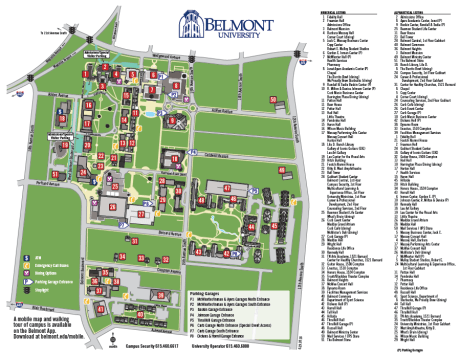
Belmont University, Curb Event Center, Vince Gill Room, 2000 Belmont Blvd

Building #26. Parking is available through the P7 entrance- visitors spaces are well marked. The Vince Gill Room is at the Belmont Blvd. side of the building, attached to the Arena. Signs will direct you there.
Lunch provided

To RSVP, contact diana.page@comcast.net

Rev. Johnson of Fort Worth is founder of Pastors for Texas Children and has inspired the Oklahoma, Kentucky and Tennessee groups He is also the promoter of similar groups in formation in ten other states. He has told us how his Texas group of more than 2,000 pastors and faith leaders has helped prevent the passage of private school vouchers in the Texas Legislature since its founding five years ago. Tennesseans hope to similarly convince our legislators to support our Tennessee schools and reject vouchers. We are starting by introducing pastors and faith leaders across the state with a speaking tour to present our positive public education message. You will hear how the voices of ministers, lay leaders, rabbis, imams, and their congregants are needed to support our public school children.

Also. please consider becoming a partner (member) of our network at http://www.pastorsfortennesseechildren.org/ (website).
Contact pastors4TNchildren@gmail.com for more information about the other four stops on Rev. Johnson’s Tennessee speaking tour: Chattanooga (lunch, Oct. 2), Knoxville (lunch, Oct. 3), Pleasant Hill (evening of Oct. 3), and Memphis (lunch, Oct. 5),

Screen Shot 2018-09-27 at 10.40.34 PM

Screen Shot 2018-09-27 at 11.01.03 PM

Tennessee has one of the most intrusive, micromanaging, incompetent state education departments in the nation. So says the Knoxville school board, and so agrees the school boards of Memphis and Nashville.

The problem right now is the state’s failed teacher evaluation program, but there are many reasons to lose trust in the State Education Department.

Problems with pre-K and kindergarten teacher portfolio evaluations became the issue that pushed board Chairwoman Patti Bounds to say the department “still takes no ownership” of its mistakes. Portfolios are used to evaluate educators who teach pre-K, kindergarten, and subjects not included in TNReady standardized testing. Portfolios can include videos showing student progress during the year.

Earlier this week, the superintendents of the state’s two largest districts, Memphis and Nashville, wrote to Haslam and Education Commissioner Candice McQueen to pause state testing until after the election because “educator and public trust in TNReady has fallen to irretrievably low levels.”

Tennessee has taken pride in the progress of its students on national tests and has toughened up its requirements for student learning and evaluating teachers. But the foundation for its analysis, the state’s new online test, TNReady, has been fraught with technical setbacks since it was introduced in 2016.

State lawmakers were so concerned about the problems with TNReady that they passed legislation ensuring the scores would not be used to negatively impact teachers, students, or schools. School-level scores could be released as early as late next week.

Some Knoxville board members wanted to echo the sentiment of Memphis and Nashville superintendents about TNReady, but settled on highlighting the more timely portfolio issue, Bounds said.

“The portfolio system is a mess,” she told Chalkbeat. “The Department of Education has had multiple years of failure.”

The board will likely meet Tuesday in a special meeting to approve a letter, she said.

First-year problems for the teacher portfolios have resulted in error messages or questionable low scores for teachers. It is unclear how many teachers across the state are affected, but a spokeswoman for the department said about 7 percent got the lowest overall score. The state department attributed the problems to user error while one of the state’s teacher organizations blamed a system glitch.

“Every time something fails, the Department of Education blames it on the teachers. And some of their reasons are just not valid,” Bounds told Chalkbeat.

But wait. There is more.

Year after year, state testing has been a disaster. The state has changed vendors but nothing goes write.

Governor Haslam, who is on his way out, fortunately, has been a disaster for public education.

The State Education Department has been pushing charters, trying to to override the wishes of local school boards.

The Achievement School District was a total failure, wasting $100 million and destroying community schools by handing them off to charter operators, who were unable to help the kids.

Whistleblowers at a charter school in Nashville called for financial scrutiny of their school:

The Nashville charter school New Vision Academy is under investigation by the school district for financial irregularities and failing to comply with the Americans with Disabilities Act.

New Vision Academy came under scrutiny in March after an anonymous whistleblower sent a detailed report to school board member Amy Frogge, who forwarded it to the district.

Metro Nashville Public Schools charter schools executive officer Dennis Queen confirmed the investigation is ongoing.

In addition, the whistleblower report, compiled by teachers, said English language-learning students and students with learning disabilities were not receiving required instructional time. However, on those two areas Queen said the district found New Vision to be in compliance in both of those areas.

According to the whistleblower report, students were charged for textbooks even though the school earmarked thousands of dollars for classroom supplies. The top two executives at New Vision, who are married, make a combined $562,000….

The teachers who detailed the allegations said they want New Vision, which has about 200 students, to address the issues, improve its financial management and admit its shortcomings. The Tennessean is not naming the teachers because they feared retribution from the nonprofit, which does not have a policy protecting whistleblowers.

On Monday, the four teachers who talked to The Tennessean for this story were escorted out of the school. Three were told not to return. One was allowed back into the school Tuesday to finish teaching the final three days of the school year. All four were told the school is accepting their resignations as of this week.


A Rocketship Charter in Nashville was slated to be part of the state’s failed Achievement School District  but it closed a few months after opening.

https://www.tennessean.com/story/news/education/2018/02/01/nashville-achievement-school-district-rocketship-nashville-partners-community-prep/1087161001/

The school expected  to enroll 190 students but only 50 signed up. Demand isn’t there for a school once hailed as a national model.

To add to the woes of Rocketship charters in Nashville, the IRS filed a lien against their property because of unpaid taxes of about $19,000.. Rocketship officials said it was a clerical error.

Most of the charter schools in the failing “Achievement School District” are in Memphis. The bloom is definitely off the rose for charters in Memphis.

The State is compelling districts to turn student data over to charter schools. The Metro Nashville School Board said no. So did the school board in Memphis.

Memphis parents were asked if they would share their data with charters, and thousands of parents said no.

The state is suing the Metro Nashville School Board because it refuses to give its student data to charter recruiters. It will probably sue Memphis too. The state is more concerned about the tiny proportion of students enrolled in charters than about the 90+% enrolled in public schools. This is madness.

The charters say they need the data for their marketing.

What happened to those mythical waiting lists for charters?

If the charters want to compete and take students and resources from the public schools, why should the public schools help them?

PS: Sorry for the typo in the original title; I wrote it on my cell phone last night as I was walking the dog and could not see full title.

Maurice Cunningham, professor of political science at the University of Massachusetts, is an expert on the infusion of Dark Money into education.

He wrote several articles about the millions of dollars that poured into Massachusetts to promote the referendum to increase the number of charter schools in November 2016.

This article is about a Dark Money passthrough called Stand for Children, which began its life as a pro-public school group but turned into a pro-Privatization, anti-union, anti-teacher organization. It highlights the role of Stand for Children in Massachusetts. It does not explore its national activities, where it plays a pernicious part in the attack on public schools, unions, and teachers.

http://blogs.wgbh.org/masspoliticsprofs/2017/10/6/your-dark-money-reader-special-edition-stand-children/

Those who remember the early days of SFC now call it “Stand ON Children.”

It has funneled money to corporate reform candidates in cities from Nashville to Denver. It tried to squelch the Chicago Teachers Union by buying up all the top lobbyists in Illinois. It has funded anti-union, anti-teacher campaigns.

It pretends to be a “civil rights” organization. It is not.

Amy Frogge is an elected member of the Metro Nashville school board. She is a lawyer and a parent. In her first election, she was outspent overwhelmingly by corporate reform forces, although she was unaware of their push for privatization. In her second election, Stand for Children poured huge sums into the effort to defeat her, but once again she won handily.

In this post, which appeared on her Facebook page, she explains why she loves public schools and why her children are thriving in them.


Like many parents, I initially worried about enrolling my children in our zoned public schools, because I heard negative gossip about local schools when we first moved to our neighborhood. But our experiences in local public schools have been overwhelmingly positive. This year, my daughter is a 7th grader at H.G. Hill Middle School, and my son is a 4th grader at Gower Elementary School. They have attended our zoned neighborhood schools since pre-k (my son) and kindergarten (my daughter). Our local schools are Title 1 schools (Gower recently came off the Title 1 list) serving widely diverse populations.

If you have not considered Nashville’s zoned public schools, you really should. These are just a FEW of my children’s experiences in our schools:

My children have taken many educational field trips over the years. My son has traveled to Chattanooga to visit the Challenger Space Center and the Creative Discovery Museum. My daughter has visited the Georgia Aquarium in Atlanta, Discovery Park of America in Union City, TN, and Wonderworks in Pigeon Forge, TN. This year, she is heading to Six Flags for a second time with her middle school band. (Last year, she played at Six Flags over Atlanta, and this year, she’ll play at Six Flags over St. Louis.) As part of this year’s band trip, she’ll also tour The Gateway Arch and Museum of Westward expansion.

Here in Nashville, my children have taken field trips to the Adventure Science Center and planetarium, Traveler’s Rest (to learn about history), the Nashville Zoo, Cheekwood Botanical Gardens, the Country Music Hall of Fame, the Frist Center for the Visual Arts, and the Schermerhorn Symphony Hall (where they learned about instruments from a symphony member and a Nashville sessions player). They have sung with their elementary school choir at the State Capitol, Nashville City Hall, and the County Music Hall of Fame. They have both studied songwriting in a special segment which brings professional songrwriters to their school to set their songs to music. This year, my children both participated in the Project Based Learning Expo at Trevecca Nazarene University, where my son presented a project on the book “I am Malala” and my daughter presented a project on Samurai.

My children have both performed in a 1950s-60s music revue and in numerous choir and theatrical performances. My son played “The Prince” in “Cinderella” last year at Gower and this year will play “Scar” in “The Lion King.” His drama teacher suggested him for a NECAT children’s show, so he also went to a studio this fall to film a television production.

In elementary school, my children helped hatch baby chicks in the classroom in spring. The teacher that hatches chicks also operates an animal camp each summer at her nearby farm, where children learn about both farm animals and exotics- and also just spend time playing in the creek! My children have also attended other summer camps through the school, including Camp Invention, where they built their own pinball machines and more.

My daughter now plays in three bands at her middle school: the 7th-8th grade band, the Honor Band, and a rock band. She recently participated in a band competition at MTSU and was thrilled when her middle school band won awards. My daughter has learned to play three different instruments and also has been invited to sing solos with her rock band (for which she also plays the piano). She has played soccer, played basketball, and currently runs track at H.G. Hill Middle, where she also serves as a Student Ambassador and gives tours of the school to prospective families.

My children have both participated in numerous clubs at their schools, including robotics/coding (my son can now code games on his own), cartooning club, gardening club, and the Good News Club. In Encore, my daughter built rollercoasters to learn about physics, and my son has extracted DNA from strawberries. My son was excited to learn today that he will soon study special effects makeup in his drama class, and he will also soon participate in the school’s “Wax Museum”: In 4th grade, every student dresses up as an historical figure and shares that person’s story with those who come to tour the “museum.”

My children have experienced ALL of this because of public education in Nashville. They are learning SO much- not only academically, but also about their community and the larger world from their friends who come from many different countries and speak many languages. I believe the education my children have received in our often underappreciated zoned schools rivals any they would receive from private schools in Nashville or the more coveted public schools in more affluent areas of Middle Tennessee. My children are both doing well academically, and they are getting all they need to be happy, well-rounded, and confident.

Public schools rock!

Please support our public schools! Our public school teachers, leaders and staff work hard to serve our children well.

Will Pinkston, a member of the Metro Nashville school board, has long been suspicious about the ability of the charter industry to keep its grandiose promises. Now, he says, charter schools in that city are in crisis.

http://www.tennessean.com/story/opinion/2017/03/29/nashvilles-charter-school-industry-unraveling/99747782/

He writes:

“It was just a matter of time before the wheels came off Nashville’s charter school industry. This year, it’s finally happening.

“Advocates for charters — publicly funded private schools — have long argued they’re the best approach for improving K-12 public education. But national research shows, and now a series of new local developments reinforces, that charters are just a collective ruse pushed by special interests trying to privatize our school system.

“The latest example is RePublic Schools. In March a federal judge certified a class-action lawsuit brought by Nashville parents who complained their families are being subjected to illegal hardball recruiting tactics by the charter chain.

“RePublic allegedly sent text messages to thousands of parents. As it turns out, RePublic harvested student and family contact information from a Metro Nashville Public Schools database, then turned over the personal information to an out-of-state vendor that generated the texts.

“Sending unsolicited text messages is a violation of federal law. In their class-action lawsuit, the parents are seeking damages of up to $1,500 per person — leaving RePublic potentially on the hook for millions in penalties.

“Of course, the irony here is: RePublic — which boasts it’s “reimagining public education” — is at the forefront of a movement that claims students and families are flocking to charters. The reality is: Demand for RePublic is anemic, which is why the chain is sending mass text messages in a bid to draw more students and more public money.

“Rocketship is another charter chain that isn’t living up to its own marketing hype. Worse, Rocketship is failing some of Nashville’s most vulnerable kids and, like RePublic, operating in violation of federal law.

“On March 7 WSMV-TV reported that California-based Rocketship isn’t providing legally required services to students with disabilities and English language learners. A report by the Tennessee Department of Education even found that Rocketship is forcing homeless students to scrape together money to pay for uniforms.”

Yet Rocketship continues to seek more charters.

Another charter chain is in financial trouble.

And all these charters drain money from the Nashville public schools.

How much longer will this ruse continue? We have had charter schools for 27 years, and there is still no existence proof that they are better than public schools, except for their willingness to exclude the kids who might lower their scores.

The Metro Nashville School Board was hurried into picking a new school director and doing it fast. The number of candidates were few, the search was hurried, and the choice of Dr. Shawn Joseph is turning into a major embarrassment. Dr. Joseph, it turns out, is embroiled in a major controversy in his previous district, but apparently no one had time to check that out.

Public school parent and blogger T.C. Weber tells the whole sordid story here.

Nashville just went through a bitter election contest in which voters made clear that they want good public schools, not privatization. The school board can’t afford to squander the public’s confidence by letting the new director run roughshod over the elected board. The board is in charge; Dr. Joseph works for them. They are his employer.

Nashville didn’t want a corporate reformer, but made the mistake of hiring an autocratic, power-hungry, tone-deaf bureaucrat.

If the elected board can’t straighten out this mess and revise Dr. Joseph’s contract to assure that he works for the board–the board does not work for him–then it’s time to cut their losses and terminate his contract. Don’t accept excuses for his wasteful spending, his ill-advised hires, his importing of the same aides involved in the scandal in Prince George’s County. If he won’t comply, say goodbye. It’s imperative to admit it when you have made a mistake. Cut your losses sooner rather than later.

Fire whatever search service you used. There are others who can identify superintendents who have served with honor and integrity. Take the time to do it right.