Archives for category: Funding


I remember when the charter idea was first launched, in 1988.

Al Shanker thought charters would be schools-within-schools, that they would be started by teachers, that they would be approved by the other teachers in the rest of the school and the local board, that they would be unionized, and that they would collaborate, not compete, with the existing schools. More than three decades later, we know that charters seldom meet any of these conditions. Ninety percent are non-union. They compete, not collaborate. They may be started by almost anyone without regard to prior experience.

Charter advocates on the right insisted they would cost less, be more accountable, and get better results. Typically, none of these conditions are met except when charters cherrypick the students they want and exclude those they don’t want. Typically, state charter associations lobby to block accountability.

In Ohio, most charter schools are graded either D or F by the state. This very low-performing sector costs Ohio taxpayers nearly $1 Billion per year.

Now the charters want a 22% increase in funding.

Stephen Dyer explains here why they should get no increase at all. 

Not only is their academic performance abysmal, but they are already paid more than the schools that educate 90% ofthe state’s students. And they have higher administrative costs.

A bad deal for students and taxpayers.


A reader in California asks for help to fix one of the charter reform bill that has a big loophole.

He writes:

“Thank you for all you do for public education. In California right now are 4 assembly Bills – AB-1505 – AB-1508.

“AB-1508 in particular is intended to enable local school districts to consider the financial, program and facilities impacts when approving/denying new charter petitions. This leaves a huge gap for districts to have a say in renewing charters that were imposed on the districts by the California State Board of Education despite denial at the local and county levels.

“Would you be able to alert your readers in California to contact the bill’s authors before it goes to the floor for a vote to add language to AB-1508 to apply to charter renewals as well as new petitions?

“If enough Californians can respond, we may be able to make this proposed law even stronger to bring back local control over the 1323 charter schools in operation in the state.

“AB-1508 sponsors are CA Assembly Members Kalra (author), Bonta, McCarty, O’Donnell, Smith and CA Senators Beall and Skinner.”

This is a clever and short video explaining the magnitude of Texas’s school finance problem.

Texas has more than 5 million students. Its schools are perennially underfunded. They took a big hit in 2011 when the legislature cut their budget by more than $5 BILLION dollars, which the schools have never recovered from.

For the past several years, the State Senate and Lt. Governor Dan Patrick have tried to promote vouchers as an alternative to adequate funding but in the wake of the 2018 elections, the voucher plans are dead (thanks in large part to the good work of Pastors for Texas Children and to the spillover effect of the Beto get-out-the-vote operation).

Right now, the charter industry is making a big move on Texas, seeing the state as the next frontier for charter expansion.

But choice is a distraction. The real dilemma facing the Lone Star State is whether the boys in Austin are willing to pay to have a decent education system for all those millions of children, or whether they will stick with their low-tax, corporate-tax-cutting philosophy.

At bottom, my own fear as a native Texan is that the white men who run the state don’t care about those children. Not their children. But those children are the future of the state.


Julian Vasquez Heilig writes in The Progressive about a scandal bigger than buying seats in college. 

What we read about in the headlines was illegal.

What we don’t see in the headlines is education that is legally purchased.

He writes:

“Research is catching up to what is not exactly a well-kept secret: the nicer house an American family can buy, the better public school that family will have access to. While conservative politicians and a group of influential researchers were claiming that money didn’t matter for educational success, in practice, states spent less on the education of poor and minority students on purpose, while the wealthy enjoyed better-funded schools.

“A recent study by the nonprofit EdBuild found that predominantly white school districts receive $23 billion more than predominantly non-white districts—that’s an average of $2,200 per student. Wealthy districts have even grabbed 20 percent of the Title I funds that were meant for low-income districts.

“The implications of these cuts are lifelong for the students. A groundbreaking 2016 Northwestern study on school spending and student outcomes found that low-income children whose schools received a 10 percent increase in per pupil spending each year for all twelve years of public school had a higher school completion rate, and that students earned 7 percent higher wages once they’d joined the workforce, and experienced a reduction in the incidence of adult poverty. They also determined that funding increases have a more pronounced positive impact for children from low-income families. The increased funding, according to the study, was associated with reduced student-to-teacher ratios, increased teacher salaries, and more extended academic semesters.”

Conservatives loveto say that money doesn’t matter, but that’s nonsense.

The Trump-DeVos rhetoric pretends that choice is a substitute for adequate funding.

It’s not.


In this post, Matthew Gardner Kelly of Pennsylvania State University  explains why demands for charter moratoriums are growing.

The root of the problem is money. Public schools in most states were hurt by the recession of 2008 and funding never recovered. Adding competition with charters made the financial situation worse.

“In Pennsylvania, the local district makes a tuition payment to the charter school enrolling each student from that district. The payment is based on per-pupil spending for similar students. For example, if a fourth grader leaves a public school in the Pittsburgh School District to attend a charter, the Pittsburgh School District is required to pay the charter school $16,805.99 – which is the average amount the district spends on a student in the district.

“At first glance, it perhaps makes sense to have money follow the children. The problem is that increased charter enrollments rarely allow a district to save as much as they lose in charter tuition. As a result, without additional revenue from state governments or local taxes, districts are forced to make budget cuts and spend less on the students who remain in traditional public schools.

“Consider an example. Bethlehem Area School District paid $25 million in charter school tuition payments in 2017. It was not possible to save $25 million with the students gone, however, because of the way the students were distributed across the district.

“The students enrolled in charter schools came from 13 different grades in 22 different schools. Since students moving to a charter were rarely all of the students from a single school, grade or class, the district was not able to reduce staff or close classes to help cover the charter tuition payments. If next year’s third grade class goes from 28 students to 26 students in a school, district officials still need to keep that third grade class open. They cannot pay that teacher 2/28th less, heat 2/28th less of that classroom, or reduce the operation of electricity in that classroom by 2/28th.

“Yet, if the class went from 28 to 26 students because two students enrolled in charters, the district needs to make tuition payments for the missing students. When those payments are repeated and distributed unevenly across schools and grades, it adds up to millions of dollars. Students move between districts all the time, but nowhere near the scale– nor with the fiscal impact – that takes place because of charter expansion. Bethlehem Area School District had 1,900 students, about 12 percent of the district’s population, enrolled in charter schools in 2017.”

This kind of fiscal drain is unsustainable. The vast majority of students are harmed so that 12% can go to charters. If it continues, the public schools will be irreparably damaged. This is not sound policy.

The graphic below shows clearly where Trump’s priorities are and where they are not. A big boost to the military and border security. Deep cuts to Medicare, Medicaid, Social Security, the Environmental Protection Agency, the National Science Foundation, Labor, Interior, Agriculture, Justice, Housing, Energy, Education, Transportation, and everything else that has to do with social/human/non-military needs.

oil


A lot was riding on the State Board of Education’s decision about whether to renew the Thrive Charter Schools of San Diego. The schools have a terrible record, which the district documented. The charter lobby was pushing hard for renewal, showing how little it cares about results or accountability or children’s welfare. It was Linda Darling-Hammond’s first meeting as chair of the State Board.

The Board voted to deny renewal. Facts still matter.

The Board voted 7-1 to renew a Gulen Magnolia Charter. A former member of the charter’s board, now on the State Board, declines to revise herself.

Thrive certainly did not lack funding; it received $575,000 from the U.S. Department of Education to open in 2014 and has received millions of dollars in “New Market Tax Credits” from the federal government since then.

To learn more about Thrive, here are some readings.

Thrive’s scores have dropped every year since it opened.

Christopher Rice-Wilson, a charter parent at another charter in San Diego, called for the closure of Thrive and laid out the facts of its poor performance. 

He wrote:

“I did not feel safe… and I learned absolutely nothing.” That was the testimony heard from one former Thrive Public Schools student who is now doing well in fourth grade at a different school. A group of former students and parents have come forward to describe their experiences during their time at Thrive charter schools. Without a doubt, there are many more like them — the school has a 27 percent to 39 percent attrition rate — roughly one-third of the students leave the school each year. And with good reason, especially for San Diego’s most vulnerable students. Simply put, Thrive is failing low-income, black and Latino students.

Looking at the numbers, Thrive failed to demonstrate it meets the academic requirements to renew its charter, especially when compared to the 13 schools Thrive identified with similar grade and demographic data. For low-income students, Thrive had the worst academic outcomes in both English Language Arts and Math. For low-income students, more than 75 percent of Thrive students weren’t able to meet the state’s standards in math. At the middle school level, the situation is even worse: 80 percent of all of Thrive’s middle school students failed to meet the state achievement standards in math, and 90 percent of low-income students failed the same standard.

Similarly, for black students and Latino students, Thrive’s outcomes were worse than almost all other schools in ELA and math. Fewer than 10 percent of Thrive’s Latino students were meeting state standards in math. All of the comparison schools have a much higher low-income population than Thrive, and a higher percentage of English learners, yet still demonstrated better academic outcomes than Thrive. Thrive argues that it excels at serving students with disabilities. However, Thrive’s academic outcomes for these students are far lower than SDUSD’s outcomes, as well as the outcomes for these students countywide.

Our entire school system needs to do better by black students, and San Diego Unified is 42 points away from having all black students at grade-level proficiency on the California Schools Dashboard in English Language Arts. For these students, Thrive is a disaster. Thrive is more than double that number, at 106.5 points below grade-level proficiency for black students. Outcomes in math are similar. Thrive also has a larger achievement gap in math and ELA between black and white students than the district overall. Why renew the charter for a school that expands the achievement gap?

Thrive argues that parents are choosing Thrive because they were struggling in the schools they were attending. But there are over 130 charter schools in San Diego County, and 46 in SDUSD alone. Wouldn’t we see these same poor outcomes at all of those schools? Thrive argues that they are too new for us to look at state standards. Two other charters in the district opened at the same time as Thrive. They were renewed because they demonstrated improved academic performance. There should be one standard for these schools and Thrive should be held accountable.

Thrive has been given every advantage to show their school can succeed. They have benefited from the investment of millions of dollars from wealthy supporters and received $13 million in new market tax credits from Civic San Diego and another Los Angeles entity. All that and still couldn’t prove their ability to deliver achievement for students.

Schools like Thrive are a symptom of a system in much need of reform. Recent research has found that the dramatic growth of charter schools has cost San Diego Unified about $66 million annually. This cost is born by the students who remain in district managed schools — the overwhelming majority of students in our public school system. Given what’s at stake, we can’t continue to support schools that cost more to our system but do not deliver for our most vulnerable students. We need to ensure our scarce resources are invested in educational strategies that create student success, not expand student failure.
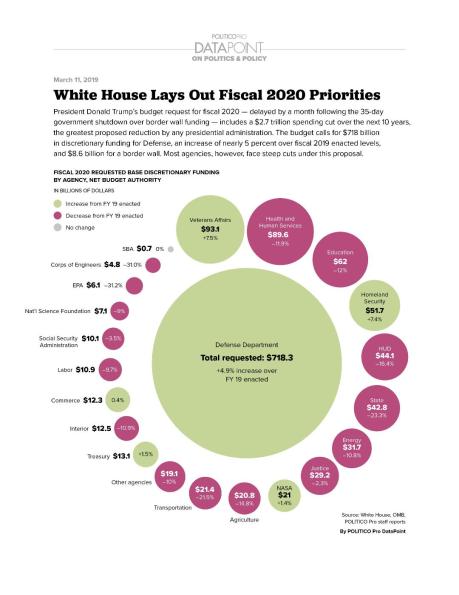


Education Week describes Trump’s proposed cuts for programs in the U.S. Department of Education. Trump proposes eliminating 29 federal education programs while maintaining level funding for Title 1 and Special Education. The key quote in this article is the one from Secretary DeVos, who says the budget is about “education freedom,” by which she means, “So long, you are on your own, don’t expect the feds to help you.” The administration proposes $5 billion for vouchers and an increase in the federal charter school program to $500 million. It is not clear why the federal government needs to spend any money to start charter schools, since this project is now well covered by the Waltons, the Koch brothers, the DeVos family foundations, Michael Bloomberg, the Broad Foundation, the Dell Foundation, the Arnold Foundation, the Fisher Family Foundation, the Gates Foundation, the NewSchools Venture, the Charter School Growth Fund, and others too numerous to mention.


President Donald Trump is seeking a 10 percent cut to the U.S. Department of Education’s budget in his fiscal 2020 budget proposal, which would cut the department’s spending by $7.1 billion down to $64 billion starting in October.

Funding for teacher development under Title II, totaling $2.1 billion, would be eliminated, as would $1.2 billion in Title IV funding for academic supports and enrichment and $1.1 billion for 21st Century Community Learning Centers that support after-school programs. In total, funding for 29 programs would be eliminated in the federal budget. 

On the other side of the ledger, Trump’s budget blueprint calls for $500 million for federal charter school grants, a $60 million increase from current funding levels. The president also wants $200 million for the School Safety National Activities program, which would more than double the program’s $95 million in current funding—of that amount, $100 million would be used to fund a new School Safety State Formula Grant program. There are no requirements for the grant program related to firearms, according to the Education Department. And the office for civil rights would get $125 million, the same as current funding.

On the school choice front, the department says its main proposal has already been introduced: a federal tax-credit scholarship program from Republicans. The Treasury Department’s budget proposal includes $5 billion for the cost of such a program. 

Meanwhile, the Education Innovation and Research fund would be funded at $300 million, a $170 million increase from fiscal 2019. Of that amount, $200 million would “test the impact of teacher professional development vouchers,” according to a presentation from the Education Department, while $100 million would go toward innovative STEM grants. In addition, the Trump budget would provide $50 million for a pilot program under Title I to help districts create and use weighted student-funding formulas—this pilot program was created under the Every Student Succeeds Actin order to help schools focus money directly on disadvantaged students and those with special needs. Funding for the District of Columbia Opportunity Scholarships Program, which provides vouchers to students in the nation’s capital, would increase to $30 million. 

Title I funding for disadvantaged students, the single-largest federal funding program for public schools, remains flat at $15.9 billion in Trump’s budget pitch. Special education grants to states would also be level-funded at $13.2 billion. Also flat-funded are the English Language Acquisition formula grants at $737.4 million. 

“This budget at its core is about education freedom—freedom for America’s students to pursue their life-long learning journeys in the ways and places that work best for them, freedom for teachers to develop their talents and pursue their passions, and freedom from the top-down ‘Washington knows best’ approach that has proven ineffective and even harmful to students,” said U.S. Secretary of Education Betsy DeVos in a statement about the budget proposal.

On a Monday conference call with reporters, Jim Blew, the assistant secretary for planning, evaluation, and policy development, acknowledged that Congress and the Trump administration have not been synced up in terms of education spending priorities. 

“The administration believes that we need to reduce the amount of discretionary funding for the education,” Blew said. “That is based on the desire to have some fiscal discipline and address some higher-priority needs.”

Blew indicated that the priorities should be the disadvantaged children and students with disabilities. 

For more details on Trump’s fiscal 2020 proposal for the Education Department, click here. And check out our chart below to see the effects Trump’s budget request would have on different programs.


When the Democrats regained control of the House of Representatives last fall, a great champion of working people, children, and public schools was restored as chair of a key committee overseeing the social safety net. Congresswoman Rosa DeLauro of Connecticut is determined to protect the federal funding on which millions of people depend. Trump wants to increase military spending.


FOR IMMEDIATE RELEASE

March 11, 2019

CONTACT:

Will Serio: 202-225-3661


DeLauro Statement on Trump’s 2020 Budget


WASHINGTON, DC Congresswoman Rosa DeLauro (CT-03), Chair of the Labor, Health and Human Services, and Education Appropriations Subcommittee, today released the following statement regarding President Trump’s 2020 budget.


“For the third year in a row, President Trump has released a budget that is cruel and reckless. His administration has proposed $21 billion in cuts to programs at the Departments of Labor, Health and Human Services, and Education—cuts that will crush critical programs that serve working people and middle-class families. This is not hyperbole. President Trump actually wants to cut Medicare, Medicaid, home energy assistance for seniors and people with disabilities, groundbreaking medical research, tools that help local communities fight poverty, job training programs, funding to enforce our trade agreements, pre-school grants, teen pregnancy prevention programs, anti-hunger programs like SNAP, afterschool programs, Pell Grants, federal work study programs, and much more.”


“It is disheartening to see a budget that would dismantle so many programs that people rely on every day. It would be a cold day in hell before I helped pass a budget like this—one that hurts the American people in order to lavish tax cuts on millionaires, billionaires, corporations, and special interests. Instead, Democrats will continue fighting for working people, the middle class, and the most vulnerable.”


Some cuts President Trump’s budget proposes within the Departments of Labor, Health and Human Services, and Education include:


Department of Labor

  • Cuts Job Corps by $703 million
  • Cuts the Bureau of International Labor Affairs by $68 million
  • Cuts Women’s Bureau by $10 million
  • Eliminates job training for Native Americans and Migrant and Seasonal Farmworkers (-$143 million)
  • Eliminates Senior Community Service Employment (-$400 million)
  • Eliminates Susan Harwood Training Grants (-$10.5 million)


Department of Health and Human Services

  • Cuts the National Institutes of Health (NIH) by $5.4 billion
  • Cuts the Centers for Disease Control and Prevention (CDC) by $750 million
  • Cuts the Health Resources and Services Administration by $1 billion, eliminating most programs that support training for health professions, including nursing
  • Eliminates the Low Income Home Energy Assistance Program (LIHEAP) (-$3.7 billion)
  • Eliminates the Social Services Block Grant (SSBG) (-$1.7 billion per year)
  • Eliminates the Community Service Block Grant (CSBG) (-$725 million per year)
  • Eliminates Preschool Development Grants (-$250 million per year)
  • Eliminates the Teen Pregnancy Prevention Program (-$108 million per year)


Department of Education

  • Eliminates numerous programs, including:
    • Supporting Effective Instruction State Grants (-$2 billion)
    • Afterschool programs (-$1.2 billion)
    • Student Support and Academic Enrichment Grants (-$1.2 billion)
    • Arts in Education (-$29 million)
    • Special Olympics (-$17.6 million)
    • Supplemental Educational Opportunity Grants (-$840 million)
  • Cuts Federal Work Study by $630 million
  • Proposes a Pell rescission of $2 billion


In addition, the President’s Budget:

  • Cuts Medicare and Medicaid by over $1 trillion
  • Repeals the Affordable Care Act
  • Contains a woefully inadequate paid leave proposal that falls short of what the nation needs
  • Cuts the Supplemental Nutrition Assistance Program (SNAP) by more than $20 billion per year
  • Reduces Temporary Assistance for Needy Families (TANF) by more than $2 billion per year
  • Cuts the Environmental Protection Agency (EPA) by $2.8 billion


###


I posted earlier that there are no teachers on the task force appointed by Governor Gavin Newsom and State Superintendent Tony Thurmond to study charter law in California, but that’s not quite right. The task force is meeting regularly and it would likely be impossible for a working teacher to leave her or his classroom on a weekly basis to attend task force meetings.

However, there are at least two members of the task force who were active teachers: Erika Jones of the California Teachers Association and Cindy Marten, superintendent of the San Diego Unified School District.

I don’t understand why the task force has so  many representatives of the charter industry on a committee to study charter law, when only 10 percent of students in California schools are enrolled in charters. The charter industry is infamous for protecting its turf and fighting any regulation or accountability. This is like asking representatives of Big Tobacco to participate in a discussion of whether to regulate cigarette sales.

Charter law in the state is notoriously lax. A district with a tiny enrollment can open a charter in a district 500 miles away and collect a commission on the students who enroll. If a charter asks a district for permission to open or for a renewal, and the district rejects the application, the charter can appeal to the county board. If the county board says that its application or its record is deficient, the charter can appeal to the state board. Under Governor Jerry Brown, the state board rubberstamped applications despite rejections from the affected district and county. Under current law, the state need not consider the fiscal impact of charters on nearby public schools, a factor which has severely damaged Oakland, Inglewood, and other districts. Under current law, charters are parasites on the districts that are forced to host them, draining away students and resources and leaving “stranded costs” (fixed costs).

California has had a large number of scandals in the charter sector. The most recent occurred when the CEO of the Celerity Charter chain pled guilty to using the schools’ credit card to charge luxury items, including designer clothing, fancy hotels, haute cuisine and limousine service, as well as to fund her Ohio charter school.

These are issues the task force will consider. Will the large bloc of charter supporters on the task force acknowledge the fiscal problems caused by charters for the public schools that enroll most students? Or will they fight stubbornly to maintain the charters’ freedom from accountability? Why did the California Charter School Association get two members of the task force but the California Teachers Association get only one? If charter schools undermine public schools, it is a net loss for the children of the state. If failing charters are allowed to be renewed again and again, it is a disgrace.

Here is the complete task force:

The task force members are:

  • Cristina de Jesus, president and chief executive officer, Green Dot Public Schools California (charter chain);
  • Dolores Duran, California School Employees Association;
  • Margaret Fortune, California Charter Schools Association board chair; Fortune School of Education, president & CEO;
  • Lester Garcia, political director, SEIU Local 99 (Local 99 took $100,000 from Eli Broad to oppose Jackie Goldberg);
  • Alia Griffing, political director, American Federation of State, County and Municipal Employees (AFSCME) Council 57;
  • Beth Hunkapiller, educator and administrator, Aspire Public Schools (charter chain);
  • Erika Jones, board of directors, California Teachers Association;
  • Ed Manansala, superintendent, El Dorado County; board president, California County Superintendents Educational Services Association; 
  • Cindy Marten,  superintendent, San Diego Unified School District;
  • Gina Plate, vice president of special education, California Charter Schools Association (charter lobby);
  • Edgar Zazueta, senior director, policy & governmental relations, Association of California School Administrators (ACSA endorsed Marshall Tuck against Tony Thurmond). 

Recommended readings:

Gordon Lafer on the fiscal impact of charters on California public schools.

Carol Burris on the travesty of the state’s charter law.