Archives for category: Education Reform

John Thompson retired after many years as a teacher in Oklahoma. Although he usually writes about politics, he has recently been writing about what he learned in the classroom.

He wrote:

If we want to prepare our students for the 21stcentury, educators, patrons, and politicians should relearn the lessons of history as to why classroom instruction is only one of the education tools we need to develop. 

After more than two decades of failures, the corporate reform belief that individual teachers can transform public schools has been disproven. But, holistic learning requires a team effort where we bring students out of the school, as well as bringing members of diverse communities into the school. This narrative describes the learning that my young friends and I shared when exploring nature.

The first time I took inner city kids camping and fossil hunting, a couple of minutes into the first lesson I became hooked by my new career. A third grader shouted that she had found a “real live dinosaur nose! It still has blood on it!” 

Sleepy Hollow Camp was the type of progressive institution you would expect from the veterans of the civil rights campaign “Freedom Summer” who helped lead the program. Sleepy Hollow was committed to positive behavioral reinforcement.  We received marvelous professional development for picking up on warning signs before misbehavior escalated, for disengaging when necessary, and for re-engaging kids in a constructive manner. The data from the families’ applications for the program gave us extremely valuable information. Outstanding social workers helped us to interpret the students’ records.  Professional development included cooperative games and culminated in a “ropes course” for building teamwork. 

Sleepy Hollow’s professional development for environmental education was fantastic.  We were provided the hands-on materials about our camp in the Arbuckle Mountains, where “twice this ancient mountain range had been worn away.  But three times it rose from the sea.” We identified plants and animals that flourished “where the American South met the West, and as a result we had as much biodiversity as anywhere in the United States.” 

When teaching such lessons to adolescents, it did not take long for them to recognize them as metaphors for their lives. The children first raised the issue of respecting the diversity of people, as well as biomes. And kids sought the reassurance that people who have been beaten down, like mountain ranges, can rise again. 

After each long day of adventures, an evening campfire was always perfect for celebrating new friendships, reflecting on the day’s discoveries, and contemplating the meaning of life.  

Rashad, one of the teen leaders at camp who was well-known at his middle school for political protests involving Black Nationalism, took charge of the evening talent shows. He excelled at satire, and my lessons often inspired the jokes and dance numbers. In such a setting, the power of children’s moral consciousness in driving the intentionality required for deep learning was clearly illuminated.    

August offered extraordinary meteorite showers as the campfires were dimming.  Walking back to the cabin or the tent, the kids were quiet and contemplative knowing that they were sharing something profound. Those night- time reflections borrowed the language of the Black church.  We were all lying silently in our bunks one night when the cabin’s leader, Tyson, volunteered an account of a family tragedy.  He asked if we knew the story behind the song “Amazing Grace,” and told his cabin mates about the slave trader, John Newton’s, conversion at sea and his becoming an abolitionist.  Tyson then sang for us an incredibly beautiful version of the hymn.

I came to know Richard a bit more intimately after violence broke out after a turtle was killed. Members from another street gang knew how devoted Richard was to wildlife, so they provoked a fight by killing a turtle he had adopted. 

The wiry and high-strung 8th grader began our most intense conversation with a calm account of the death of his grandmother along with six others in a boiler explosion at an Oklahoma City school. Summing up the lessons he learned through mourning, he spoke in a low voice, “I think about things – deep things,” while his eyes darted back and forth, frantically, on high alert for danger.

Richard switched the subject to tales about his days in California living with a rich uncle, an “O.G.” (Old-time Gangsta.) Richard talked about how he would plan ways to invest the family’s wealth to help the underprivileged.  Pumping his fists and striking out for emphasis, Richard repeated again, “I think of things – deep things.”

But everything changed for Richard when his uncle was busted on drug charges and all their money was lost.  He claimed to not being upset by all of that. It brought him closer to real suffering and prompted new ideas for helping the poor.  By this point in our conversation, he exhibited the explosive force of a television evangelist, proclaiming, “I think of things – deep things!”

Back home, his once-powerful uncle still had enemies, and Richard was now more vulnerable and afraid. But that just made him identify more with people who never had power and made him wish he could do good – not just for people, but for all of the earth.  That is why the turtle’s death upset him so much. Again subdued, Richard wrapped up his sermon, “I think of things – deep things.”

Richard’s peers confirmed that his uncle had had money, power, and a reputation, and that I would understand when we returned to the city and saw his family.  It was on the bus ride home that I fully grasped the trauma and fearfulness that dominated Richard’s home life. In those two weeks away, the camp had become a safe zone for him and he grew more and more agitated the closer we got to the inner city.  He sat pensively, practically glued to me for the ride home.  

Richard’s suffering was also apparent to the other students and I was struck by the empathy that they expressed. Even the kids who were the most “down” with the “Crips” — the gang that rivalled his uncle’s “Bloods” — started to treat him with kindness. Something transformative had happened over the course of the two weeks at camp.  

Richard was picked up by his uncle. Someone who had once displayed power and inspired fear was now a broken man and clearly an alcoholic. Richard made a point of introducing me as his friend, and the uncle earnestly voiced appreciation. Though we had just met, the former gang leader grasped my hand and forearm and made it clear that he needed to communicate his deep appreciation for helping his nephew. Like many others, O.G. grieved for the pain he had inflicted upon his family.

This, and countless other poignant conversations, illustrates the challenges faced by children and educators alike in trying to overcome the legacy of poverty. But it also points to solutions. Simply put, there is no substitute for honest and painful discussions with young people about the troubles and transgressions of their past, and often grim and anxious aspects of their present. Long after high-profile tragedies are forgotten by society, trauma endures for many survivors. Despite such stress and tragedy, Richard, his friends, and even his uncle, managed to hold onto their moral core. 

This could be the rock upon which school improvement in the inner city is founded. 
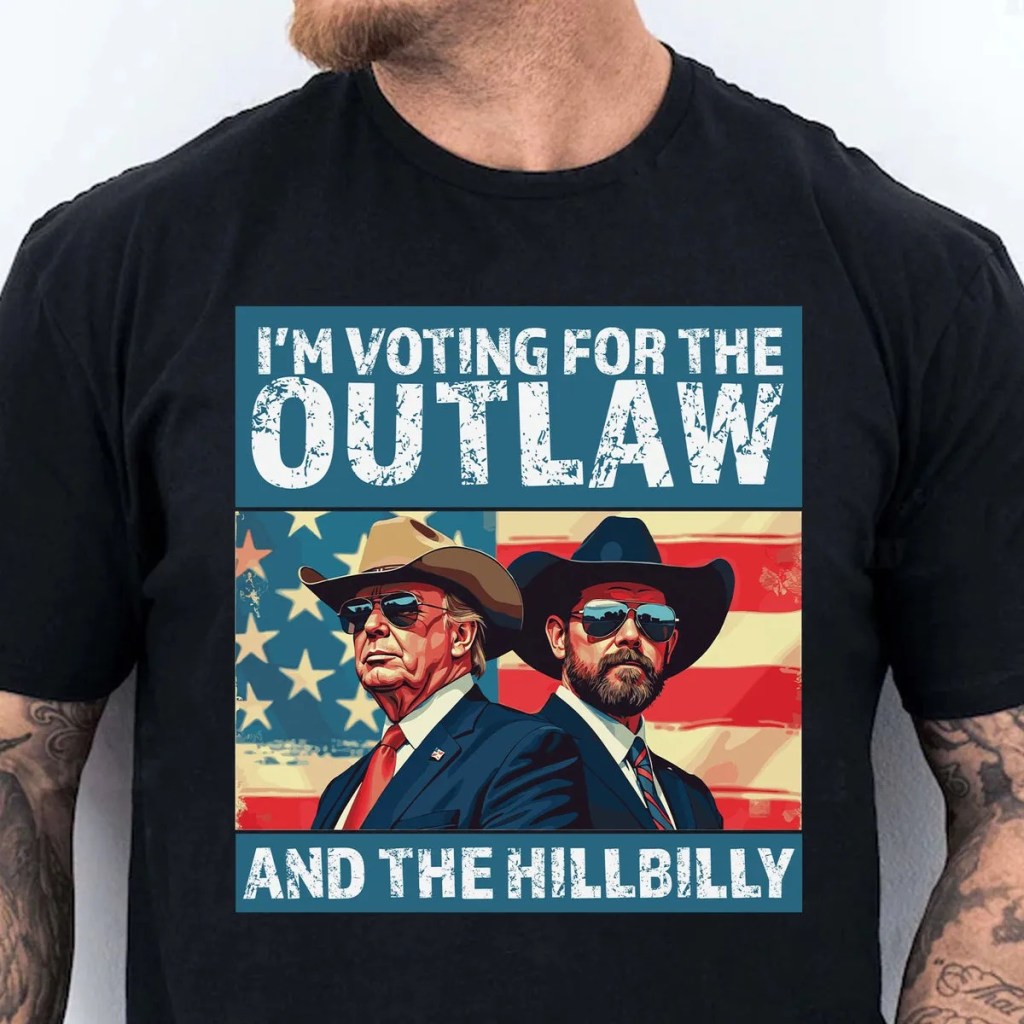
Joyce Vance is a veteran federal prosecutor; she was the U.S. Attorney for the Northern district of Alabama from 2009-2017. She writes a blog called “Civil Discourse with Joyce Vance.” She usually writes about the law, the justice system, and Trump’s efforts to avoid accountability for his misdeeds. But in this post, she addresses the root cause of his appeal: low-information voters who are hoodwinked by his lies and believe he will fight for them. Ha. Not funny.

She writes:

It’s no wonder that Project 2025 calls for putting an end to the Department of Education. Trump’s electoral success depended on so-called low-information voters, members of the electorate who couldn’t or didn’t distinguish between the tough talk and tough guy image the candidate portrayed and the reality of the policies that come with his win. That’s often true for MAGA candidates, who are inexplicably able to attract the voters who are harmed by the policies they subsequently pass, as with tax cuts for the extremely wealthy and the working-class voters who didn’t benefit from them, but made them possible.

The Washington Post had this story today about the hopes of low-income voters who went for Trump in 2024, like a single mom who said she sometimes has to choose between buying toilet paper and milk and told reporters, “He is more attuned to the needs of everyone instead of just the rich … I think he knows it’s the poor people that got him elected, so I think Trump is going to do more to help us.” So far, that’s not looking good.

This very predictable reporting about voters suffering from buyers’ remorse is emerging even before Trump takes office. These people hope he won’t do exactly what he said he would during the campaign and has been focused on during his transition with programs like the Department of Government Efficiency, Elon Musk’s DOGE—cut government spending that they depend on. Whether it’s low-income people, mixed-status immigrant families, people who rely on Social Security, or parents with immune-compromised kids who rely on immunized classrooms, people voted against their own self-interest and are now facing that reality.

There are no do-overs in presidential elections. Successful disinformation campaigns or campaigns where image trumps consequences have lasting effects.

But spin, or disinformation—however you want to characterize it—designed to redirect voters away from focusing on bad facts about candidates can work, and this past election proved it. This T-shirt ad that the algorithm fed me earlier this week is an example of how Trump’s criminal conviction was sold to voters: the mythical outlaw, not the corrupt criminal. It’s hard to believe Americans fell for that, but they did, giving Trump a pass and letting him cultivate an image that was one step further out there than Sarah Palin’s maverick. 

Voters who lack the backbone of a solid education in civics can be manipulated. That takes us to Trump’s plans for the Department of Education.

Stepping on education and staunching the flow of information is a key goal for any authoritarian. Remember when Trump told an evangelical group during the campaign that if they voted in 2024 it would be the last time they had to vote? That’s something that Americans, hopefully, will not fall for, because the 2026 midterms will be key. If guardrails are going to be rebuilt, that’s where an important part of it will happen. And while we’re all burned out from the last election, this next one will matter; we will need to reengage, because a big Democratic win could staunch the bleeding from unfettered acquiescence by the legislative branch to Trump, who currently commands majorities in both chambers. That means the provision of accurate information and accurate analysis of that information to voters who will put it to use is important. But what does that look like in a country that voted for Trump?

One thing that is clear from the ease with which Trump seems to have stripped so many voters of their common sense is the need to restore civics education in this country. That’s a long-term plan and a big topic that we need to take on over time, but it’s not too early for us to begin to think about what we can do in the coming year ahead of the midterms. For one thing, if it’s right for you, even if it’s a stretch, consider running or seeking appointment to a school board. Republicans got the jump on Democrats in this arena. It’s time to catch up. Or, if that’s not in your lane, make the time to show up at school board meetings and demand civics education in our schools. Progress in this area will take time, but we can all set a good example and encourage people around us to do a better job of understanding what matters in government. Ironically, if 2017 is any indication, people caught off guard (although who knows how) by some of the worst excesses Trump is likely to engage in will be ready to be better informed and reengage in democracy. Capturing that moment will be important.

One of the goals of Project 2025 is terminating the Department of Education. There is growing Republican support for that plan at the state level by leaders who want to restore state control (much like conservatives sought restoration of abortion policy to the hands of red state officials in Dobbs). Enter Trump’s nominee to head the Department, Linda McMahon, who ran the Small Business Administration (SBA) for him from 2017 to 2019.

Trump’s appointment of the professional wrestling magnate has drawn little comment as the media has focused on Matt Gaetz, Pete Hegseth, and others. Suffice it to say she does not appear to possess much of a background in public education. She was on the Connecticut Board of Education for one year, but there has been reporting she received that appointment after lying about having a degree in education. When that report came to light while McMahon was running, unsuccessfully, for a Connecticut Senate seat, she said that “she mistakenly thought her degree was in education because she did a semester of student teaching, and that she had written to the governor’s office the previous year to correct the error after another newspaper noticed the mistake.” (I, too, did some student teaching in college, but I was always clear my degree was in political science and international relations.)

McMahon is a longtime Trump ally and financial backer, apparently key qualifications for the job. After two years at the SBA, she stepped aside to run Trump’s America First Action PAC. Other qualifications: Yahoo News reported that “Donald Trump’s nominee for education secretary was once pile-driven by a 7ft wrestler and feigned being drugged unconscious while her husband cheated on her.” Yahoo went on to recount that “Mr. Trump served as a sponsor and host for WWE events in Atlantic City in the late 1980s and years later appeared in the ring himself, when he took a razor to the head of Ms. McMahon’s scandal-ridden husband, Vince, as the wrestling boss wailed. In 2013, WWE inducted Mr. Trump into its hall of fame.” 

The National Education Association ran an editorial opposing McMahon’s confirmation. They called her “unqualified” and wrote that she “spent years pushing policies that would defund and destroy public schools.” That sounds like a good fit if your agenda involves destroying the Department of Education. Start at the top.

NEA President Becky Pringle said, “McMahon’s only mission is to eliminate the Department of Education and take away taxpayer dollars from public schools, where 90% of students – and 95% of students with disabilities – learn, and give them to unaccountable and discriminatory private schools.”

So while we begin to think about ways to repair democracy, medium-term goals like winning midterm elections, and long-term goals like restoring civics education, spare a moment for some short-term plans: write to your senators about McMahon’s nomination. It’s flying largely under the radar screen, and it should not be. Do not obey in advance, and do not make it easy for Trump to destroy democratic institutions like the Department of Education with the complicity of your state and federal elected officials. We have a lot of work to do when it comes to public education. We have to insist that free, publicly funded, high-quality education is available to every child. Our engagement as citizens is everything. Let’s get to work.

We’re in this together,

Joyce

Open the link to see the illustrations.

The Trump presidency will be unlike any in our history, including his first term. This time, the Trump Organization is going all in to monetize his fame and position. Never before has a President gone to such lengths to monetize his name.

Cat Zakrzewski of The Washington Post reported:

The Trump Store has a gift for every patriot on your Christmas list.

It’s a little late for this year’s celebrations, but you can get a very early jump on next year and count down with the $38 Trump Advent calendar. Or trim the tree with a $95 Mar-a-Lago bauble or a $16 MAGA hat ornament, sold in nine colors. (A glass version of the hat ornament is $92.) Stuff stockings with an $86 “GIANT Trump Chocolate Gold Bar” and a $22 pair of candy cane socks printed with “Trump.” Prepare a holiday feast with a $14 Trump Christmas tree pot holder and $28 Trump apron featuring Santa waving an American flag.

The profits from these holiday trinkets do not benefit a political committee or a charitable cause, but the Trump Organization, the Trump family’s privately owned conglomerate of real estate, hotel and lifestyle businesses. As the company encouraged customers to celebrate the holidays with Trump gifts for all ages, President-elect Donald Trump personally profited off of his upcoming term in a manner that is unprecedented in modern history — even during his unconventional first stint in the White House.

The Trump Organization thought of everyone celebrating Trump’s nonconsecutive terms this yuletide season, rolling out a line of merchandise printed with “45-47,” including $195 quarter-zip sweatshirts, $85 cigar ashtrays and $38 baseball caps. Fido can’t go without his gear, of course: The store also sells gifts for dogs, including orange leashes and camo collars emblazoned with Trump’s name. And don’t forget the kids! How about a $38 teddy bear wearing a red, white or blue Trump sweater, $8 MAGA hat stickers or an array of Trump sweets, including $16 gummy bears?

All of these gifts can be wrapped in $28 golden Trump wrapping paper or stuck into Trump ornament gift bags ($14 a pair), and accompanied by a note on $35 stationery featuring bottles of Trump wine.
“Make the holidays that much greater this year with essentials from the Trump Home and Holiday collection,” the website says, over a photo of an Elf on the Shelf toy and a lime-green MAGA hat.

Trump has long delighted in finding new ways to market his name, creating a merchandise empire that includes digital trading cards, pricey sneakers, expensive watches and signed Bibles. But his expansion of offerings in the run-up to the inauguration has further concerned ethics experts and watchdogs, who say his behavior is the opposite of what they expect from a president-in-waiting during the transition….

Throughout December, Trump has used his account on Truth Social to hawk products for the holidays. In between posts laying out his positions on the chaos in Syria and the government spending bill, Trump posted that the “hottest gift” this Christmas is his $99 coffee table tome, “SAVE AMERICA.” The book is sold by Winning Team Publishing, a company co-founded by his son Donald and Sergio Gor, the next director of the White House Office of Presidential Personnel….

Incoming first lady Melania Trump promoted her own line of Christmas ornaments and necklaces during a December interview with Fox News, where she discussed her husband’s “incredible” election victory. She described the ornaments as “very patriotic” and said the design was inspired by the election. The $90 brass ornament features “USA” in red, white and blue, and the gold “Vote Freedom” pendant retails for $600.

A representative for Melania Trump did not respond to a request for comment.
Earlier this month, the president-elect also announced he had launched a fragrance line, which includes the $199 “VICTORY 47” perfume for women and the “FIGHT FIGHT FIGHT” cologne for men. Products for Christmas delivery were sold out as of Dec. 19. Trump promoted the fragrances on Truth Social with a photo of Jill Biden smiling at him during a service this month celebrating the reopening of Notre Dame cathedral in Paris.

“A FRAGRANCE YOUR ENEMIES CAN’T RESIST!” the caption said.

The fragrance website is operated by 45Footwear LLC, the same company that operates GetTrumpSneakers.com, a website currently selling $499 “Trump Won Gold Low Top Sneakers.” The fragrance website says that Trump’s name and associated design are trademarks of CIC Ventures LLC and that 45Footwear uses Trump’s likeness under a licensing agreement.

“Trump Fragrances are not designed, manufactured, distributed or sold by Donald J. Trump, The Trump Organization or any of their respective affiliates or principals,” the website says.

The precise structure of the fragrance deal is unclear. CIC Ventures is a Trump company, The Washington Post has previously reported, and 45Footwear is affiliated with an LLC of the same name that is based in Sheridan, Wyo., according to state records. The LLC was filed by a Wyoming lawyer named Andrew Pierce.

Politicians have long sold T-shirts, hats, bumper stickers and even ugly Christmas sweaters to finance their campaigns or political action committees, and the Trump National Committee is also selling some Christmas merchandise, including a variety of MAGA stockings that feature a photo of Trump in a Santa hat. After leaving office, presidents often make money from speaking fees or by selling their memoirs.
But a president privately profiting off merchandise related to his election is highly unusual.

Government ethics experts say Trump’s merchandise sales are just one example of the new financial conflicts of interest that Trump’s presidency will raise. It is unprecedented for a president to own a multibillion-dollar stake in a publicly traded company, as Trump does in Trump Media & Technology Group. Because the stake represents a significant portion of the president-elect’s net worth, ethics experts are concerned that wealthy individuals, companies and funds associated with foreign governments could seek to influence Trump by pouring money into the business.

Ashton Pittman is the news editor of the Mississippi Free Press and a fine writer. I get my news about Mississippi by reading MFT, reported by people who live there. Pittman describes in this article why he debated whether to leave Twitter. When Musk bought Twitter, he knew it was going to be bad. He had spent years building up a following there and didn’t want to give it up. He investigated other social media platforms, but they weren’t right.

Then came the 2024 election, and Twitter turned into a political platform that favored Trump, where nasty trolls and bots created a toxic atmosphere.

Ashton joined BlueSky and very quickly gained a large number of followers close to what he (and the Mississippi Free Press) had had on Twitter.

He writes:

For a long time, it seemed like nothing was going to replace Twitter, even as it further devolved into a hellscape that seemed as if it were overrun by the trolls of 4chan, the neo-Nazis of Stormfront and the dullest AI bots Chat GPT ever powered. Twitter transformed into X, a place where racism, misogyny, homophobia and especially transphobia run rampant under the guise of “free speech,” but where using the word “cisgender” can get your account restrictedbecause Musk (who has described his very-much-alive transgender daughter as “dead”) considers it a slur.

I had really wanted one of the Twitter alternatives to take off, but one of the biggest impediments was the lack of buy-in from major journalists, publications, celebrities and other figures who could draw audiences away. A familiar pattern developed: People would leave X in hopes of joining another platform, then come back. 

Then came the election. Twitter turned into a Trump propaganda site. And Ashton was done.

But you know what I really enjoy about BlueSky? It doesn’t pigeonhole me. On other platforms, particularly X, you choose one facet of yourself and that’s the following you get, and the algorithm recommends you based on that. On BlueSky, I get to be a Mississippi journalist whose news stories draw engagement from people who care about news, but I also get to be a film photographer whose posts about my black-and-white film adventures spark conversations, too. None of us is just one thing, no matter what some lousy algorithm thinks, and it’s affirming to be able to build communities around shared interests beyond just news and politics. Social media should be social, not anti-social….

My experience as a journalist on BlueSky has reminded me that my job is to provide good information to those who want it, not to argue with trolls and validate attention-seeking behavior from the worst people on the internet. My desire to reach a diverse audience does not have to entail subjecting myself to constant abuse. I am not obligated to stay on a platform where Nazi trolls with 1488 in their usernames and cartoon frogs as their profile images regularly hurl the word “fagg-t” at me and issue veiled threats. I do not have to entertain the endless stream of incels who think “soy boy” is some sort of profound insult. I do not have to accept being under the thumb of an algorithm that prioritizes crypto scams, AI bots and conspiracy theorists over my voice.

And you know what? You don’t either.

Some of the smarter people among us have said that BlueSky is an echo chamber. Well, right now, it’s a place where I hear the echoes of artists, writers, cinephiles, scientists and neighbors caring about their neighbors. And that’s a hell of a lot better than being trapped in a chamber that’s increasingly filled with the echoes of Adolf Hitler.

So farewell, Twitter. I’m off to bluer skies.

Emily Baumgaertner is a science writer for the New York Times. She wrote this article about the deadly diseases that have been vastly diminished–almost eliminated– because of vaccines that targeted them. She notes that resistance to vaccines has created a resurgence in these diseases. If RFK Jr. encourages fear of vaccines as Director of the Department of Health and Human Services, we can expect that these fatal scourges will return, imperiling the lives of millions of children.

She writes:

Some of President-elect Donald J. Trump’s picks for the government’s top health posts have expressed skepticism about the safety of childhood vaccines. It’s a sentiment shared by a growing number of parents, who are choosing to skip recommended shots for their children.

But while everyone seems to be talking about the potential side effects of vaccines, few are discussing the diseases they prevent.

It has been half a century or more since many of the inoculations became routine in the United States, and the experience of having these illnesses has been largely erased from public memory. Questions today about the risk-benefit ratio of vaccines might just be a product of the vaccines’ own success.

Here is what people should know about six once-common illnesses that vaccines have contained for decades.


Measles, a viral infection often spread by a cough or sneeze, is extraordinarily contagious: Nine out of 10 people around an infected person will catch measles if they have not been vaccinated. Measles can be contracted in a room up to two hours after a person with the disease has left it.

Measles is not a mild illness, particularly for children under 5. It can cause a high fever, coughing, conjunctivitis and rashes, and if it leads to pneumonia or encephalitis — brain swelling — it can quickly become lethal. Before the vaccine was licensed in the United States in 1963, almost every child had contracted measles by age 15. Tens of thousands of measles patients were hospitalized each year, and between 400 and 500 of them died.

Two doses of the MMR vaccine together are about 97 percent effective at preventing measles. But epidemiologists say a 95 percent vaccine coverage rate is necessary to prevent transmission of the virus in a community. Over the past four school years, the kindergarten vaccination rate has fallen below that threshold — in some communities, far below.

About 280,000 kindergarten students in the United States are now unprotected, according to the Centers for Disease Control and Prevention, and measles — which was eliminated from the United States in 2000 — has since seen a resurgence. There have been 16 measles outbreaks in 2024, compared with four outbreaks in 2023. In communities where the spread is rampant, even a vaccinated child can occasionally contract the disease, though their symptoms are generally less severe.


The Greek word diphthera means leather — a fitting reference for a bacterial infection that creates a thick, gray membrane over the throat and tonsils, suffocating its victims. There was a time in the United States when up to eight children in a single family suffered that fate — a burden so grave that a science historian called it “childhood’s deadly scourge.”

The toxin driving the disease is produced by a strain of bacterium in respiratory droplets and works by killing healthy tissues, which can lead to difficulty breathing and swallowing, especially among young children with smaller airways. It can also gravely damage the cardiac and nervous systems, resulting in heart failure or paralysis.

Even with treatment, one in 10 people who have respiratory diphtheria die from it, according to the C.D.C.

The infection is now preventable in young children through multiple DTaP vaccine doses, and preteens and adults get boosters called Tdap. Thanks to vaccinations, cases in the United States have gone from more than 100,000 per year in the 1920s to — on average — less than one.

ImageDoctors and nurses swarmed over patients in iron lung respirators in the emergency polio ward at Haynes Memorial Hospital in Boston, Mass., in 1955.Credit…Associated Press


A fully developed tetanus infection can be an alarming sight: fists clenched, back arched, legs rigid from extreme, excruciating muscle spasms that last several minutes. Extreme fluctuations in blood pressure. A racing heart. Neck and stomach muscles tight enough to impair breathing.

Treatment for tetanus must be immediate, and up to 20 percent of people who become infected will die.

It all starts with a bacterium that lies dormant in soil and animal feces until it enters the body through broken skin like a cut. The microbe begins to grow, divide and release a toxin that impairs nerves.

Vaccines containing the tetanus toxoid began being administered to children in the U.S. in the 1940s, when there were more than 500 cases per year. Children are now protected through multiple doses of the DTaP vaccine, which also guards against diphtheria and pertussis (also known as whooping cough). Since 2000, the annual number of cases has been below 50.


The mumps virus, spread through saliva and respiratory droplets triggers a fever and swollen salivary glands in the ears — which is why patients often have a puffy jaw and cheeks — and can, in severe cases, cause deafness.

The disease is dangerously insidious: It can lie dormant for up to a month before symptoms appear, and most people are infectious before their salivary glands begin to swell. Complications are more common in adults than children, but they can include inflammation in the ovaries and testicles — which can cause infertility or sterility — or in the brain and spinal cord, which can put patients at risk of seizures and strokes.

The United States began vaccinating against mumps in 1967 and subsequently saw a 99 percent decrease in cases. But annual cases in the United States — which previously hovered between 200 and 400 — have surpassed 1,000 nine times since 2006. On three occasions, they surpassed 6,000.

ImageThe swelling of a 2-year-old male patient with mumps.Credit…Dr. P. Marazzi/Science Source


The first sign of rubella is often a rash on the face, and while the infection often remains mild in children, it can prove devastating for pregnant women whom the children infect.

When passed on to a fetus, rubella can cause a miscarriage or lead to severe birth defects, such as heart problems, liver or spleen damage, blindness, and intellectual disability. At least 32,000 babies worldwide are born annually with congenital rubella syndrome. About a third of them die before their first birthday.

Tom Ultican is a retired teacher of advanced mathematics and physics. Before joining the teaching profession, he worked in the corporate sector.

He writes here about a shoddy piece of research on charter schools in Denver.

Ultican writes:

Another education study financed by Arnold Ventures and the Walton Family Foundation blurs education reality. Their 2022 model did not pass the laugh test so “researchers” from the University of Colorado Denver tried again. Unfortunately their claims still confuse correlation with causation. This error seems purposeful.

The study of school reform in Denver was conducted by the Center for Education Policy Analysis (CEPA). They state, “For the past three years CEPA has partnered with the Center on Reinventing Public Education to consider a paradigm-shifting approach to family and community engagement efforts in school districts.” It is a study apparently to justify and promote the portfolio model of school management, a system first proposed in 2009 by the founder of the Center for Reinventing Public Education (CRPE), Paul Hill.

In their 2022 study, this same team also used state testing data from years 2004/5 through 2018/19. They explained that the first 4-years of the research employed pre-reform data and the final 10-years were from the portfolio model reform period. The authors reported, “During the study period, the district opened 65 new schools, and closed, replaced, and restarted over 35 others.” (Page 7)

The National Education Policy Center contracted with Robert Shand to review the 2022 Denver study. Dr. Shand is Assistant Professor of Education Policy and Leadership at American University and an affiliated researcher with the Center for Benefit-Cost Studies of Education at Teachers College, Columbia University. Shand also did a review of the new 2024 study.

In his 2022 review, Shand agreed that the test scores for Denver Public Schools had gone up but he noted a few reasons why claiming these gains were because of the portfolio model was unreasonable:

  • Demographics shifting to a larger percentage of white students in Denver coincided with the reforms.
  • Per-student revenues increased in Denver by 22% but only 13% across Colorado.
  • Student-to-teacher ratio in Denver dropped from 17.9 to 14.9.
  • DPS was already showing academic improvement before implementation of the portfolio reforms.
  • Black and Hispanic/Latinx students were growing at approximately 0.06 standard deviations per year pre-reform and 0.03-0.04 standard deviations per year post-reform. (Page 7)

The 2024 Redo

Professor Shand’s summary response to the 2024 report states:

“While the new report does convincingly demonstrate that the gains are not significantly due to changing demographics, it fails to address other critiques of the prior study, including (1) that the portfolio model was undertheorized, with unclear mechanisms of action and insufficient attention to potential drawbacks; and (2) that circumstances, events, and resources besides the portfolio reform and student demographics were changing concurrently with the reform. Additionally, the report’s sweeping conclusion—that Denver’s reform is the most effective in U.S. history—is unsupported. The improved outcomes in Denver during this time period are impressive, but the authors seem overly determined to cite a package of favored reforms as the cause.” (Page 3)

While Shand agrees that demographic changes are not the whole reason for the improved test scores, they are a significant input. The chart above from USAFacts.org shows the typically higher scoring groups Asians and Whites going from 54.2% of the population to 58.9% in the 14 years from 2005 to 2019. During the same period, the Hispanic and Black population shrunk from 42.9% to 38.1% which resulted in a 9.5% shift in the population from a lower scoring to a higher scoring racial mix.

An even bigger impact on the scoring in Denver was the change in economic circumstances. Standardized testing is useless because the results are dependent on one variable, family wealth. Statisticians assign r values between -1 and +1 to results tested. Plus 1 signifies certainty, zero shows no influence and -1 indicates certainty in the opposite direction of expectations. The only input ever found with more than 0.3 r-value is family wealth at 0.9 r-value. The median family income in Denver is up significantly.

Two sources show how strongly Denver’s family income has grown. Neilsberg research shares that between 2010 and 2020 the median income grew from $61,394 to $82,335, a 25% growth. City-Data states:

“The median household income in Denver, CO in 2022 was $88,213, which was about the same as the median annual income of $89,302 across the entire state of Colorado. Compared to the median income of $39,500 in 2000 this represents an increase of 55.2%”

This kind of wealth growth over the 14 years the Denver researchers studied was bound to have a significant impact on testing results, but they ignored it. Add this to the 9% greater revenue for Denver schools and three less students per teacher compared to the rest of the state and of course Denver’s student made comparative testing gains.

Professor Shand mentions the damage caused by school turnaround efforts and closing schools noting the research indicates these are especially harmful events for students in low income or marginalized neighborhoods. (Page 6 and 7)  Shand concluded:

“In sum, this report provides some additional supporting evidence in favor of the tentative conclusion that Denver’s portfolio reform was positive. Importantly, the report also grossly exaggerates both the magnitude of the success and certainty behind the evidence for it. The findings should thus be interpreted with extreme caution. (Page 8)

He is being nice. He should have concluded that this report is school choice propaganda.

About the Report Authors

The lead author, Parker Baxter, is Director of the Center for Education Policy Analysis at the University Of Colorado Denver School Of Public Affairs. He previously was Director of Knowledge at the National Association of Charter School Authorizers. Parker is also a Senior Research Affiliate at the CRPE, where he worked on the District-Charter Collaboration Compact Project and the Portfolio School District Project. He is a former alumnus of Teach for America.

Anna Nicotera is a Senior Researcher at Basis Policy Research specializing in quantitative and qualitative applied research methods. She worked six years as Senior Director, Research and Evaluation for the National Alliance for Public Charter Schools. Nicotera was a Graduate Research Assistant at the National Center on School Choice, Vanderbilt University for four years.

David Stuit holds a Ph.D. in Leadership and Policy Studies from Vanderbilt University. He is a former Emerging Education Policy Scholar at the Thomas B. Fordham Institute, fellow at the Friedman Foundation for Educational Choice (Rebranded EdChoice), and member of the American Enterprise Institute’s K–12 working group. He began his career as a classroom teacher in Denver, Colorado.

Expecting an unbiased piece of research from this group is like learning about the dangers of smoking from Phillip-Morris.

Jan Resseger lives in Ohio. Before retiring, Jan staffed advocacy and programming to support public education justice in the national setting of the United Church of Christ—working to improve the public schools that serve 50 million of our children; reduce standardized testing; ensure attention to vast opportunity gaps; advocate for schools that welcome all children; and speak for the public role of public education.  Jan chaired the National Council of Churches Committee on Public Education for a dozen of those years.

Jan recently wrote this post for the National Center on Education Policy at the University of Colorado.

She writes:

I suppose many of us think about the classes we wish we had signed up for in college.  Right now, as somebody who believes public schools are among our nation’s most important and most threatened public institutions, I wish that in addition to enrolling in The Philosophy of Education, I had also taken a class in political philosophy—or at least Political Science 101. How have groups like the Heritage Foundation, the Lynde and Harry Bradley Foundation, Betsy DeVos’s American Federation of Children and their proxies like Moms for Liberty managed to discredit public schooling and at the same time spawn an explosion of vouchers, which, according to the editors of last year’s excellent analysis, The School Voucher Illusion: Exposing the Pretense of Equity, are failing to serve our society’s poorest children even as they are destroying the institution of public schooling?

Here are that book’s conclusions: “As currently structured, voucher policies in the United States are unlikely to help the students they claim to support. Instead, these policies have often served as a facade for the far less popular reality of funding relatively advantaged (and largely White) families, many of whom already attended—or would attend—private schools without subsidies. Although vouchers are presented as helping parents choose schools, often the arrangements permit the private schools to do the choosing… Advocacy that began with a focus on equity must not become a justification for increasing inequity. Today’s voucher policies have, by design, created growing financial commitments of taxpayer money to serve a constituency of the relatively advantaged that is redefining their subsidies as rights—often in jurisdictions where neighborhood public schools do not have the resources they need.” (The School Voucher Illusion: Exposing the Pretense of Equity, p. 290)

As I watch the wave of school privatization washing across conservative states and read about universal school choice as one of the priorities of presidential candidate Donald Trump as well as a goal of the Heritage Foundation’s Project 2025, I find myself wishing I had a better grasp of how our society has gone off the rails.  I wonder what I would have learned about the difference between democracy and extreme individualism in that political theory class I missed, and I find myself trying to catch up by reading—for example—on the difference between a society defined by individualist consumerism and a society defined by citizenship.

Back in 1984, the late political theorist Benjamin Barber published Strong Democracy, a book defining the principles our federal and state constitutions and laws are presumed to protect:  “Strong democracy … rests on the idea of a self-governing community of citizens who are united less by homogeneous interests than by civic education and who are made capable of common purpose and mutual action by virtue of their civic attitudes and participatory institutions rather than their altruism or their good nature. Strong democracy is consonant with—indeed depends upon—the politics of conflict, the sociology of pluralism, and the separation of private and public realms of action… The theory of strong democracy… envisions… politics as… the way that human beings with variable but malleable natures and with competing but overlapping interests can contrive to live together communally not only to their mutual advantage but also to the advantage of their mutuality…  It seeks to create a public language that will help reformulate private interests in terms susceptible to public accommodation… and it aims at understanding individuals not as abstract persons but as citizens, so that commonality and equality rather than separateness are the defining traits of human society.” (Strong Democracy, pp 117-119)

In that same book, Barber describes the consumer as a representative of extreme individualism—the opposite of the public citizen: “The modern consumer is the… last in a long train of models that depict man as a greedy, self-interested, acquisitive survivor who is capable nonetheless of the most self-denying deferrals of gratification for the sake of ultimate material satisfaction. The consumer is a creature of great reason devoted to small ends… He uses the gift of choice to multiply his options in and to transform the material conditions of the world, but never to transform himself or to create a world of mutuality with his fellow humans.” (Strong Democracy, p. 22)

Two decades later, Barber published Consumed, in which he explores in far more detail the danger of a society defined by consumerism rather than strong democracy. As his case study he contrasts parent-consumers who prioritize personal choice to shape their children’s education and parent-citizens: “Through vouchers we are able as individuals, through private choosing, to shape institutions and policies that are useful to our own interests but corrupting to the public goods that give private choosing its meaning.  I want a school system where my kid gets the very best; you want a school system where your kid is not slowed down by those less gifted or less adequately prepared; she wants a school system where children whose ‘disadvantaged backgrounds’ (often kids of color) won’t stand in the way of her daughter’s learning; he (a person of color) wants a school system where he has the maximum choice to move his kid out of ‘failing schools’ and into successful ones. What do we get?  The incomplete satisfaction of those private wants through a fragmented system in which individuals secede from the public realm, undermining the public system to which we can subscribe in common. Of course no one really wants a country defined by deep educational injustice and the surrender of a public and civic pedagogy whose absence will ultimately impact even our own private choices… Yet aggregating our private choices as educational consumers in fact yields an inegalitarian and highly segmented society in which the least advantaged are further disadvantaged as the wealthy retreat ever further from the public sector.  As citizens, we would never consciously select such an outcome, but in practice what is good for ‘me,’ the educational consumer, turns out to be a disaster for ‘us’ as citizens and civic educators—and thus for me the denizen of an American commons (or what’s left of it).” (Consumed, p. 132)

Barber concludes: “It is the peculiar toxicity of privatization ideology that it rationalizes corrosive private choosing as a surrogate for the public good.  It enthuses about consumers as the new citizens who can do more with their dollars… than they ever did with their votes. It associates the privileged market sector with liberty as private choice while it condemns democratic government as coercive.” (Consumed, p. 143)  “The consumer’s republic is quite simply an oxymoron… Public liberty demands public institutions that permit citizens to address the public consequences of private market choices… Asking what “I want’ and asking what ‘we as a community to which I belong need’ are two different questions, though neither is altruistic and both involve ‘my’ interests: the first is ideally answered by the market; the second must be answered by democratic politics.” “Citizens cannot be understood as mere consumers because individual desire is not the same thing as common ground and public goods are always something more than an aggregation of private wants…. (W)hat is public cannot be determined by consulting or aggregating private desires.” (Consumed, p. 126)

So that is today’s lesson from the political philosophy class I was never able to fit into my schedule in college: “Freedom is not just about standing alone and saying no. As a usable ideal, it turns out to be a public rather than a private notion… (N)owadays, the idea that only private persons are free, and that only personal choices of the kind consumers make count as autonomous, turns out to be an assault not on tyranny but on democracy. It challenges not the illegitimate power by which tyrants once ruled us but the legitimate power by which we try to rule ourselves in common. Where once this notion of liberty challenged corrupt power, today it undermines legitimate power… It forgets the very meaning of the social contract, a covenant in which individuals agree to give up unsecured private liberty in exchange for the blessings of public liberty and common security.” (Consumed, pp.119-123)

A state study of the economic contributions of undocumented immigrants in 2006 concluded that they contribute to the state’s economy. But Governor Greg Abbott is a leading voice for deporting them en masse. The study has never been updated, for obvious reasons. Demonizing these people, rather than recognizing their contributions, is political gold.

When they are gone, who will plant, tend, and pick the crops? Who will be the landscapers and gardeners? Who will work in the restaurant kitchens? Who will fill the need for construction workers? Who will staff the hotels? Governor Abbott doesn’t care. If he were wise, he would demand the ouster of those who have criminal records and seek a path to citizenship for the vast majority who are hard-working, good people. They build Texas.

Alessandro Serrano of The Texas Tribune wrote:

Trump selected a hard-right lawyer, Harmeet K. Dhillon, as assistant Attorney General for Civil Rights at the Department of Justice. She is the former vice-chair of the California Republican Party. Born in India, she is a practicing Sikh. She was leader of Lawyers for Trump in 2020, which tried to overturn the election.

In standard Trump fashion, he has selected a hard-right lawyer who has never fought for traditional civil rights issues, but will vigorously support his anti-“woke,” anti-DEI agenda.

She has opposed corporate diversity programs, COVID safety measures, and gender-affirming care for transgender people.

In sum, her own priorities are exactly the opposite of the division she was chosen to lead. Under Trump, the civil rights gains of the past 60 years will go dormant or be reversed.

Trump said in a press release:

“Throughout her career, Harmeet has stood up consistently to protect our cherished Civil Liberties, including taking on Big Tech for censoring our Free Speech, representing Christians who were prevented from praying together during COVID, and suing corporations who use woke policies to discriminate against their workers.”

Politico reported:

Dhillon founded a law practice, Dillon Law Group Inc., and a nonprofit firm called the Center for American Liberty. She gained notoriety filing free speech-suits on behalf of conservative clients, including the Berkeley College Republicans and a Google engineer who was fired for his memo blasting the company’s diversity policies. She led multiple lawsuits against the state of California in 2020, challenging Covid-19 policies like stay at home orders and mail-in ballots.

In the lead up to the 2024 election, she led the effort to prevent Colorado from knocking Trump off the ballot.

Democracy Docket reported:

On Dec. 28, 2023, the day after the Colorado Republican Party asked the U.S. Supreme Court to weigh in on the Colorado Supreme Court’s decision to disqualify former President Donald Trump from appearing on the state’s primary ballot, Harmeet Dhillon tweeted: “Democrats are conspiring to commit the biggest election interference fraud in world history, right before our eyes, as government officials avert their eyes to the mockery of the constitution and our laws. This is a low point in American history.”

It’s a typical statement for Dhillon: defending Trump, bashing Democrats and alluding to a crime they’re committing that didn’t actually happen. The kind of statement her biggest client, Trump, would tweet. Lately, Dhillon’s been busy with Trump’s effort to remain on the ballot in the 2024 presidential race. The Dhillon Law Group is one of the law firms representing the former president in his legal fights in Maine and Colorado to remain on those state’s ballots. 

Over the past few years, Dhillon — a conservative lawyer and the Republican national committeewoman from California — has become a fixture in Trump’s GOP, appearing on Fox News to rail against Democrats, cancel culture and the “woke” liberal agenda and representing the likes of Tucker CarlsonAndy Ngo and other far-right personalities in headline-seeking free speech lawsuits…

Dhillon and her namesake law firm she founded in 2006 has become one of the leading legal groups working to roll back voting rights across the country. In the past few years, Dhillon — or an attorney from her law firm — has been involved in at least 16 different lawsuits in Arizona, Colorado, Georgia, Maine, Michigan, North Carolina, Virginia and Washington, D.C. challenging voting rights laws, redistricting, election processes or Trump’s efforts to appear on the ballot in the 2024 election, according to our case database.

And, much like her biggest client, the lawyer who’s representing the former president and asserted herself as a legal crusader to roll back voting rights has her own sordid history of controversy. That includes promoting baseless conspiracy theories, connections to controversial right-wing groups like the Federalist Society and Turning Point USA and questionable financial dealings involving her nonprofit, the Center for American Liberty. 

Democracy Docket reported in a post yesterday that Dhillon has a history of opposing laws to strengthen voting rights:

In the past few years, Dhillon — or an attorney from her law firm — has been involved in more than a dozen lawsuits challenging voting rights laws across the country.

How will she defend voting rights when she opposed them in private practice? Will she defend equal treatment of women and oppose discrimination against racial minorities? Will she defend LGBT persons who are discriminated against?

Don’t be surprised when she doesn’t. You have been warned.

This is a sickening article that appeared in The Irish Times about a meeting on Capitol Hill between Congressional leaders and Elon Musk and Vivek Ramaswamy.

Why is it sickening? It shows our elected Congressional leaders preening and groveling in the presence of the world’s richest man and a man who is only very rich.

Our Leaders? Who elected Elon and Vivek?

Why an article from The Irish Times? My good friend and executive director of the Network for Public Education Carol Burris is spending the holidays there and sent it to me.

As you read the article, you can feel the obsequiousness that these elected officials are expressing as they wait for the phony Department of Government Efficiency to tell them what to cut.

“Elon and Vivek talked about having a naughty list and a nice list for members of Congress and senators and how we vote,” reported Georgia congresswoman Marjorie Taylor Greene who offered a beaming smile that suggested she knew which list she’d be making. “And how we’re spending American people’s money. I think that would be fantastic.”

One wonders what Ted Kennedy or Henry Clay or Lyndon Johnson, during their Senate years, would have made of two billionaires with zero political experience or authority, breezing into the Capitol and explaining to them they had a chance to make the nice list.

Speaker Johnson promised that Thursday’s meetings will be the first of many visits by Musk and Ramaswamy. “We believe it’s a historic moment for the country and these two gentlemen are going to help us navigate through this exciting day. Elon and Vivek don’t need much of an introduction here in Congress for certain and I think most of the public know what they are capable of and have achieved.

“They are innovators and forward thinkers and that’s what we need right now. We are laying the new ground rules for the new Congress in the new year, and we are going to see a lot of change here in Washington of the way things are run. That is what this whole Doge effort is about.”

Should they cut Social Security? Medicare? Veterans’ Healthcare? Grants for higher education? Title 1? Headstart?

Everything is on their chopping block.

How many civil servants will they seek to terminate?

Musk cut 80% of the staff at Twitter. Will he aim to lay off a huge percentage of the people who keep government running?

Musk tweeted a few days ago that government “should be rule by democracy, not rule by bureaucracy.”

How is it democratic to allow two unelected oligarchs to decide which programs should be eliminated? Why do Elon and Vivek–who will never need Medicare or Social Security–get to decide whether the rest of us can keep the programs that we rely on? If they get their way, there will be more people dying of health conditions that could been treated, more seniors eating cat food for dinner.

The politicians eagerly await their marching orders.

Sickening.