Archives for category: Charter Schools

The New York Daily News reported that friends of the charter school industry dropped $130,000 into Cuomo’s well-funded campaign as it comes to a close. Cuomo is comfortably ahead in the polls, but he always like to raise more money than he needs. Charter supporters are worried that Democrats might win control of the State Senate, which has supported charter schools. So they need to cement their ties with Cuomo–with lots of dollars.

Cuomo, a charter school backer who took heat on the issue during his Democratic primary against actress Cynthia Nixon, received three of his biggest donations the past three weeks from individuals with strong ties to the industry, including $25,000 each from Jim Walton and Carrie Walton Penner, the son and granddaughter, respectively of Walmart founder Sam Walton.
The governor also received $40,000 from Sonia Jones, a yoga booster for youth and wife of billionaire Paul Tudor Jones, a big backer of charter schools.

He also received $15,000 from the Great Public Schools PAC created by Eva Moskowitz, the CEO of Success Academy Charter Schools, and $15,100 from New Yorkers for Putting Students First, a pro-charter political action committee.

Billy Easton, executive director of the teacher union-backed Alliance for Quality Education, knocked the donations to Cuomo.
“Here we go again with Andrew Cuomo and his pay-to-play relationship with charter schools,” Easton said. “The Wall Street charter donors lost big when the Independent Democrats got wiped out in the primary, they are investing in Andrew Cuomo now in hopes that he will be the one person still carrying their water in Albany.”

Cuomo, according to his latest disclosure filing made public Monday morning, has $6.75 million left in his campaign account after spending $3.1 million, largely on TV ads, the past three weeks and raising $638,687 during the same period.

During her confirmation hearings, Betsy DeVos pledged not to make political contributions while she was Secretary of Education.

But, knowing her penchant for parsing words, we may now assume that she was not covering the political donations of her family, which continue.

This latest review of political donations by Ulrich Boser and Perpetual Baffour of the Center for American Progress shows that the DeVos family gave $2 Million to far-right candidates.

My hunch is that they gave far more than $2 million, through Dark Money PACs that do not disclose the names of their donors.

The report finds:

“Even by the loose standards of U.S. campaign finance laws—and President Donald Trump’s blatant corruption—the donations by the family members of a Cabinet official have been brazen. In February 2018, Richard DeVos, Secretary DeVos’ father-in-law, gave $1 million to the Freedom Partners Action Fund—a political action fund that has long been associated with far-right causes. Over the past year, the DeVos family has also given $350,000 to the Republican Congressional Leadership Fund and another $400,000 to the Republican National Committee.

“The DeVoses have also donated to specific candidates for federal and state office. Wisconsin’s far-right firebrand, Gov. Scott Walker (R), for example, has received more than $635,000 over the past decade from the DeVos family—including $30,000 in 2018. Bill Schuette, Michigan’s Republican attorney general who is running for governor, received almost $40,000 over the past year.

“But it seems that the state of Arizona is of particular interest to the DeVos family’s political agenda. Rep. Martha McSally (R), who is in a tight race for a U.S. Senate seat, landed $54,000 in contributions from the family this cycle—more than any other U.S. Senate candidate received from the DeVoses. Arizona Gov. Doug Ducey (R) has likewise received more in campaign contributions from the DeVos family than any gubernatorial candidate across the country this election cycle, raking in $50,500 in donations.”

In Wisconsin, a vote for Scott Walker is a vote for Betsy DeVos.

In Michigan, a vote for Bill Schuette is a vote for Betsy DeVos.

In Arizona, a vote for Martha McSally is a vote for Betsy DeVos.

A vote for these candidates is a vote for charter schools and vouchers.

A vote for these candidates is a vote to privatize public schools.

Jan Resseger sums up the many reasons to be optimistic about resistance to corporate education Reform.

Among them are the teacher walkouts this spring.

And much more.

The Reformers are no longer making grandiose claims. The evidence is in. They have no secret sauce. Just money. Lots of it.

Summary: Democracy beats billionaires.

Two New Orleans charters, both from the Algiers charter chain, are closing. Read the article to see what is happening to the students. They are moved around like pieces on a giant checker board.

A few months ago, the Education Research Alliance of Tulane University published a report about the success of the New Orleans charter model (Formula: get a natural disaster to wipe out high-poverty neighborhoods and many schools, reduce enrollment by 1/3, change the overall demographics, fire all the teachers and bring in TFA, eliminate the union, replace public schools with private charters, open selective charters for the “best” kids, segregate the poorest black kids, put the structure under an uncritical State board elected with help from out-of-State billionaires, and VOILA! A school miracle!).

But not quite.

Bruce Baker pointed out that the ERA’s glowing report about the privatization of NOLA ignored the significant addition of new funding and the reduction of concentrated poverty after Hurricane Katrina, which together might have accounted for any gains.

Mercedes Schneider analyzed the NOLA data and found that New Orleans has the state’s highest performing schools (selective admissions) and the state’s lowest performing schools. Forty percent (40%) of the charters in the New Orleans district are failing schools, rated as D or F by the state. This latter group enrolls high numbers of poor and black students.

Not a model for the nation, if you care about equity.

According to the data in Mercedes Schneider’s report, the two schools that are closing have 670 students. Only two are white. More than 95% of the students in these schools are poor.

From the article about the closure of the two charters:

Two charter schools located in Algiers are set to close next June after failing to meet the standards required for charter renewal. The Algiers Charter Schools Association announced it will close William J. Fischer Accelerated Academy and McDonogh No. 32 Literacy Charter School in 2019.

In addition, McDonogh No. 32 students will relocate to the Fischer campus on Wednesday (Oct. 24) when the Algiers Charter network returns from fall break. School leaders decided to house both schools in the campus at 1801 L.B. Landry Avenue for the remainder of the school year because of low enrollment at both schools.

In an Oct. 5 letter to parents, Algiers Charter Interim CEO Stuart Gay said the changes are part of an effort “to stabilize our classrooms through the 2018-2019 school year and to ensure the best academic year possible for our students.”

Though the two schools will be under the same roof, students will keep their respective uniforms and the schools will operate individually, each with their own principals, according to relocation details provided by the charter network on its website. McDonogh No. 32 Pre-K, kindergarten and 1st grade classrooms will be located on the first floor of the Fischer building. All other McDonogh classrooms will be located on the second floor.

Additionally, all McDonogh No. 32 students who are currently in 8th grade will receive a McDonogh diploma. Students grades K-7 from McDonogh No. 32 and Fischer will receive “closing school priority” in OneApp, the city’s centralized enrollment system, for next school year. That means Fischer and McDonogh No. 32 students will be first in line when schools start filling seats for the 2019-20 school year, even ahead of other priority students like those with siblings already enrolled or who live close to a school. That priority is only given to students exiting closing schools.

The academy was one of four schools in the city that serves students expelled from other schools.

Tammi Griffin-Major, Algiers Charter’s chief of staff, declined to comment Tuesday morning on the changes and planned closures.

Financial audits from the Louisiana Legislative Auditor’s office show Algiers Charter Schools Association had $45.3 million in revenue last year. Its expenses were more than $44.9 million. The network currently operates four schools — Fischer, McDonogh No. 32, Martin Behrman Charter School and L.B Landry-O.P. Walker College and Career Preparatory High School.

Miracle? Not for these children.

Tom Ultican, retired teacher of physics and advanced mathematics in California, here describes the billionaires and bad policies behind Marshall Tuck’s campaign for State Superintendent of Public Instruction.

He sees the Tuck campaign as a new front in the “Destroy Public Education Movement,” which he has written about extensively.

Here are some of the Big Money contributors to Tuck’s campaign:

The Waltons control Walmart and have been spending heavily to privatize public schools for more than three decades.

Bill Bloomfield is a rich guy from LA who has also poured $7,000,000 into independent expenditures for Tuck.

The Rogers family is the main local force behind the privatization of Oakland’s school system.

Doris Fisher founded The Gap with her husband Don. They have spent extensively promoting charter schools and were the first significant benefactors for the KIPP franchise.

Eli Broad is the only person to found two fortune 500 companies. He announced plans to charterize half of Los Angeles’s schools and published a guide for closing public schools.

John Scully was the former CEO of Apple and consistently supports school privatization.

David Horowitz is a Republican activist who gained notoriety for his anti-affirmative action campaign.

Arthur Rock is Silicon Valley royalty who spends lavishly to support school privatization.

Peter Chernin was COO of Rupert Murdoch’s News Corp. He is also a movie producer of some note.

Reed Hastings is possibly the most dedicated destroy public education billionaire. He sat on the board of the California Charter Schools Association for many years.

Richard Riordan is the billionaire former Mayor of Los Angeles who spends millions on public school privatization.

John Arnold is the ex-Enron executive who did not go to jail. He and Reed Hastings have each invested $100 million in a new national school privatizing organization called The City Fund.

Jonathan Sackler is the heir to the billionaire inventors of Oxycontin. Besides selling addictive drugs, Jonathan invests in the privatization of America’s schools.

Les Biller is a former CEO of Wells Fargo bank. He and his wife have a foundation in Seattle, Washington where they give heavily to charter schools.

Julian Robertson Jr. is a hedge fund manager in Chicago who thinks California really needs Marshal Tuck.

Stacy Schusterman is an energy industry heir from Tulsa, Oklahoma. She has been particularly active in California school board elections.

Michael Bloomberg is the billionaire former New York mayor who spawned Joel Klein, Eva Moskowitz and Michelle Rhee. He spends heavily on California school board elections.

The big money is not in direct contributions like those listed above. It is in the money for independent expenditure committees that do not have contribution limits. For example, the Ed Voice for the Kids Pac has already reported spending over $13,000,000 in support of Tuck (Id 1243091). There are many more of these PACs spending money to elect Tuck such as Education Reform Now Advocacy for Tuck and Charter Public Schools Political Action Committee.

Ultican contrasts the two candidates:

Tony Thurmond was born in Monterey, California. His father was stationed at the Fort Ord Army base. Tony’s father abandoned his family of four children. Thurmond’s Panamanian immigrant mother became a school teacher and moved the family to San Jose.

Tragedy struck six-years-old Tony when his mother died of cancer. Tony and a brother moved to Philadelphia where they were raised by a cousin.

After graduating from high school in Philadelphia, Tony matriculated to Temple University where he was elected student body president and received a BA in psychology. He attended graduate school at Bryn Mawr earning a dual masters in Law and Social Policy and Social work.

The most disgusting statement in the San Diego Union editorial read, “In his interview with us, Assemblyman Tony Thurmond, D-Richmond, who finished second to Tuck in the June primary, seemed just as affable but not nearly as ambitious as Tuck.” In case that was too subtle; Tony is a black man.

After rising above his traumatic childhood and becoming educated, Tony married and returned to California in 1998. For the 20 years preceding his election to the California State Assembly, Thurmond served in various positions at non-profit social service agencies. Tony says it was his public school education that helped him become at 20-year social worker and serve on a school board, a city council and now the California State Assembly.

Tony has two daughters in public school.

Marshall Tuck received an MBA from Harvard University in 2000 and a BA in Political Science from University of California Los Angeles in 1995. He grew up in the San Francisco Bay area and has a wife and son.

He spent some time as a consultant at Mitt Romney’s Bain & Co. He was an investment analyst at the Upper Manhattan Empowerment Zone. He moved to Los Angeles to work at Salomon Brothers as an investment banker focused on both mergers and acquisitions. After a brief stint in sales for a Software company, in 2002, Tuck was hired by Green Dot Charter Schools as Chief Operating Officer.

In 2007, Los Angeles Mayor Anthony Villaraigosa had been rebuffed in his efforts to take control of Los Angeles Unified School District. He did convince a few donors to underwrite the takeover of a small number of schools in areas which had suffered years of poor standardized test results. They created a non-profit called Partnership for LA and Villaraigosa tapped Marshall Tuck to lead the Partnership.

Tuck had by then become the CEO of Green Dot. The year he left for the Partnership, Green Dot schools posted nine of the fifty lowest SAT scores among Los Angeles schools.

Tuck was extremely unpopular at the Partnership. The Sacramento Bee reported, “Teachers passed a vote of no confidence at nine of the schools at the end of the first year, leading to independent mediation.” An online education news paper in Los Angeles, School Matters, reported, “Many of us hoped that when right-wing business banker Marshall Tuck was ignominiously forced to step down as the ‘CEO’ of the Partnership for Los Angeles Schools (PLAS), that we might have heard the last of Tuck altogether.”

Tuck’s authoritarianism and lack of education background has led to serial failures, however, those forces trying to privatize California’s public schools find his style to their liking.

In 2014, when Tuck lost the most expensive SPI race in California’s history, his allies were there to take care of him. Even though he has no training as an educator, he was made Educator-in-Residence at the New Teacher Center (NTC). Bill Gates has granted NTC $26,305,252 since 2009.

This Contest is Very Important If You Value American Democracy

Marshall Tuck is the representative of the Destroy Public Education billionaires who are spending massive amounts of money to get him elected. It is widely understood that elected school boards are the soil from which American democratic government rejuvenates itself. Dark “DPE” forces are undermining democracy in this country by destroying the people’s 200-years-old public education system. They must be stopped.
This is Jan Resseger’s third report on her experience at the Network for Public Education annual conference in Indianapolis last weekend. In this post, she reports on what she learned by attending a panel about the NPE-Schott Foundation study of state support for public schools vs. privatization of public schools.

One of the most fascinating workshops at the conference explored the complexity of researching the groundbreaking, June 2018 report, Grading the States: A Report Card on Our Nation’s Commitment to Public Schools, and the importance of the report, the first comprehensive effort to track and compare the growth of privatization and the characteristics of state vouchers and charters. The report, a collaboration of the Network for Public Education and the Schott Foundation for Public Education, defines its purpose: “States are rated on the extent to which they have instituted policies and practices that lead toward fewer democratic opportunities and more privatization, as well as the guardrails they have (or have not) put into place to protect the rights of students, communities and taxpayers. This is not an assessment of the overall quality of the public education system in the state—rather it is an analysis of the laws that support privatized alternatives to public schools.” (emphasis in the original)

The primary assumption of a report about the privatization of education but whose title incorporates these words, “a report card on our nation’s commitment to public schools,” is that the growth of several privatized education sectors at public expense—charter schools, vouchers, tuition tax credits and education savings accounts—reflects diminishing commitment to the inclusive mission of public education. Sure enough, the report confirms that assumption, most clearly in the diversion of tax funds away from public schools: “Vouchers and charters do not decrease education costs, but instead divert tax dollars ordinarily directed to public schools thus limiting the capacity of public schools to educate the remaining students.”

Last weekend’s workshop featured three speakers: the Executive Director of the Network for Public Education (NPE), Dr. Carol Burris, who was one of the report’s researchers; Tanya Clay House, the report’s primary author and researcher—also an attorney and consultant who has previously served as a Deputy Assistant Secretary in the U.S. Department of Education, the Director of Public Policy for the Lawyers’ Committee for Civil Rights Under Law, and the Public Policy Director at People for the American Way; and Derek Black, an attorney and professor of school finance law at the University of South Carolina…

As a participant in last weekend’s workshop, I was fascinated, as Burris and Clay House described the difficulties they faced as they tried to collect the most basic data about what is now nearly 20 years of expanding school privatization. The two women told of one data set they had assumed the report would cover only to be forced to omit that issue from the report because the the records had not been kept by enough states to make it possible to draw any comprehensive or meaningful conclusion. What became clear to me as I listened is that the promoters of school privatization trusted their own ideological belief that the marketplace would provide its own accountability. They assumed that as parents voted with their feet, parents themselves would identify high quality schools and seek them out; then schools of poor quality would not be marketable. Of course we know from research in Chicago and New Orleans and elsewhere that parents choose schools for all sorts of reasons that have nothing to do with school quality—a site near home or work, the presence of a childcare or after-school program, the reputation of the football team, the advertising on the side of the bus, the incentive of the gift of a computer upon enrollment. Several years ago, Margaret Raymond, a fellow at the pro-market Hoover Institution and director of the Stanford Center for Research on Education Outcomes (CREDO), shocked listeners at the Cleveland City Club by announcing that it has become pretty clear that markets don’t work in what she calls the education sector: “This is one of the big insights for me because I actually am a kind of pro-market kind of girl, but the marketplace doesn’t seem to work in a choice environment for education… I’ve studied competitive markets for much of my career… Education is the only industry/sector where the market mechanism just doesn’t work… I think it’s not helpful to expect parents to be the agents of quality assurance throughout the state.”

The third presenter in the NPE workshop was Derek Black, a civil rights attorney and school finance professor who explored what he believes is the overall significance of the Grading the States report. I was unable to capture verbatim Derek Black’s comments at the workshop, but in a blog post when the Grading the States report was published in June, Black made the same points in eloquent detail: “The report is, in many respects, the one I have been waiting for. It fills in key facts that have been missing from the public debate and will help move it in a more positive direction. In my forthcoming article, Preferencing Educational Choice: The Constitutional Limits, I also attempt to reframe the analysis of charter schools and vouchers, arguing that there are a handful of categorical ways in which states have actually created statutory preferences for charters and vouchers in relation to traditional public schools. I explain why a statutory preference for these choice programs contradicts states’ constitutional obligations in regard to education… My research, however, analyzes the issues from a relatively high level of abstraction, highlighting problematic examples in particular states and districts and synthesizing constitutional principles from various states. This new report drills down into the facts in a way I have never seen before. It systematically examines charter and voucher laws in each state with a standardized methodology aimed at identifying the extent to which each state’s laws represent a de-commitment to public education.”

Black continues: “Each year, the National Alliance for Public Charter Schools (NAPCS) releases a report detailing charter school laws, with the frame of reference being the extent to which states have laws that promote the expansion of charters. The report normatively assumes that charter schools are good and state laws that overly restrict them are bad… Because there hasn’t been any systemic response to NAPCS’s reports, it has been able to skew the conversation. This new report brings balance.”

When the Grading the States report was released in June, this blog summarized its conclusions. Needless to say, I came home from last weekend’s conference in Indianapolis and explored the report in more depth. Here is what jumps out at me as an Ohio citizen this fall, after I’ve been watching the fallout across Ohio all year since the state’s final closure of the giant online charter school, the Electronic Classroom of Tomorrow, after it ripped off Ohio taxpayers and students for 17 years. The report examines charter schools. Forty-four states and the District of Columbia have passed laws to permit charter schools. Of those 38, including my state, earned F grades. The report explains they are “states that embrace for-profit charter management, weak accountability and other factors that make their charter schools less accountable to the public.” “Twenty-eight of these states and the District of Columbia fail to require the same teacher certification as traditional public schools… Thirty-eight of the states and the District of Columbia have no required transparency provisions regulating the spending and funding by the charter school’s educational service providers… Of the 44 states and the District of Columbia with charter school laws, students with disabilities are particularly disadvantaged in 39 states and the District of Columbia, which do not clearly establish the provision of services. Twenty-two states do not require that the charter school return its taxpayer purchased assets and/or property back to the public if the charter school shuts down or fails.” The details on the various voucher programs are equally alarming.

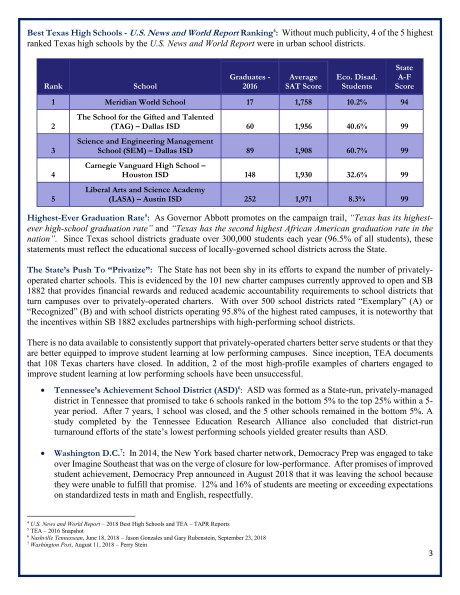
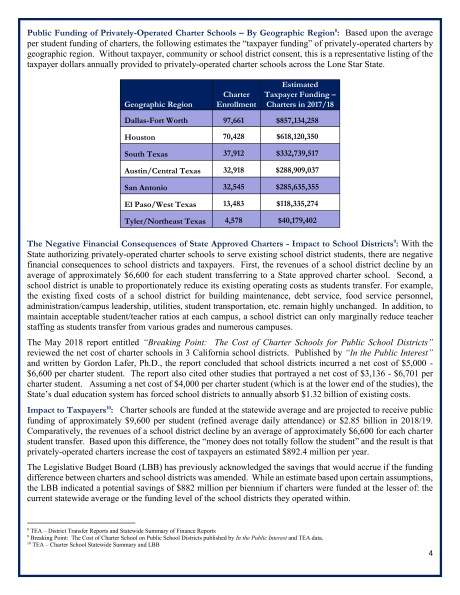
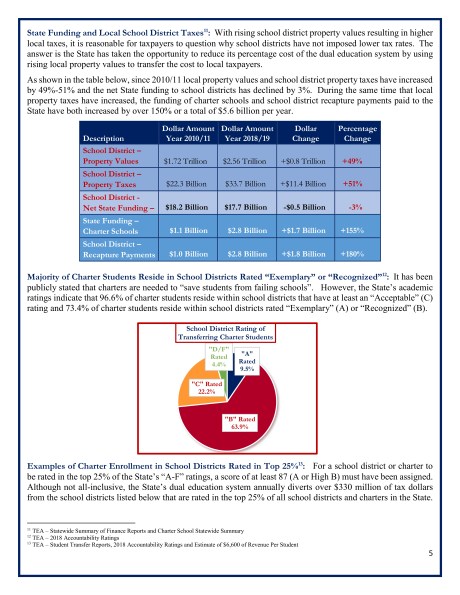
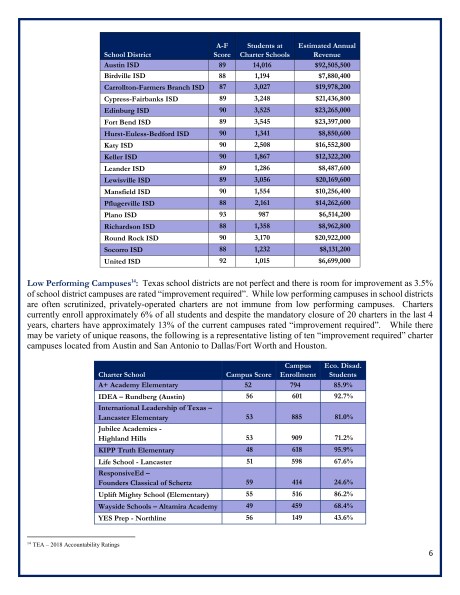
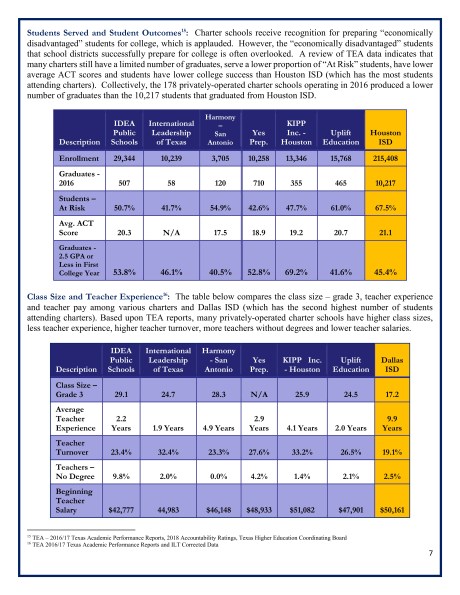
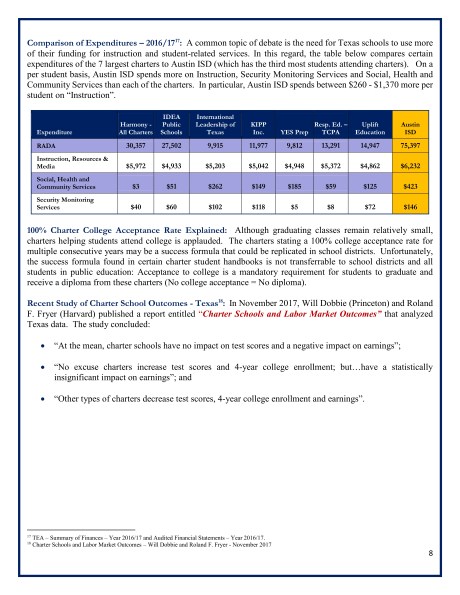
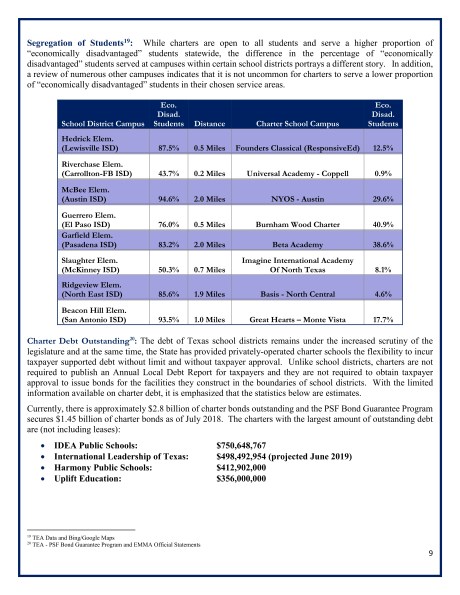
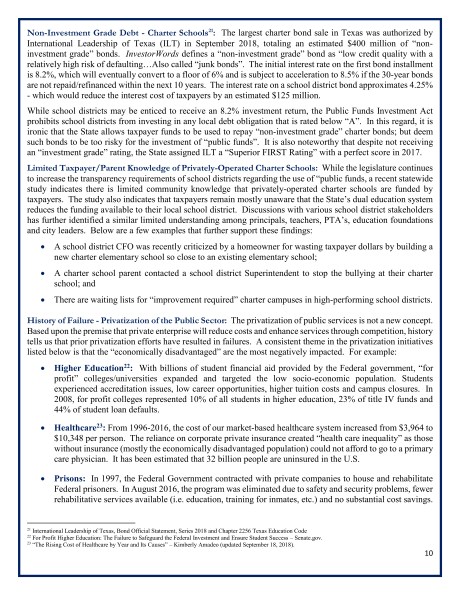
This is an important collection of data about the funding of public schools and charter schools in Texas. Do you think that taxpayers know that they are funding two separate school systems, one governed by elected, accountable school boards and the other governed by private, self-selected, unaccountable school boards? Do you think that the public knows that district public schools outperform charter schools?

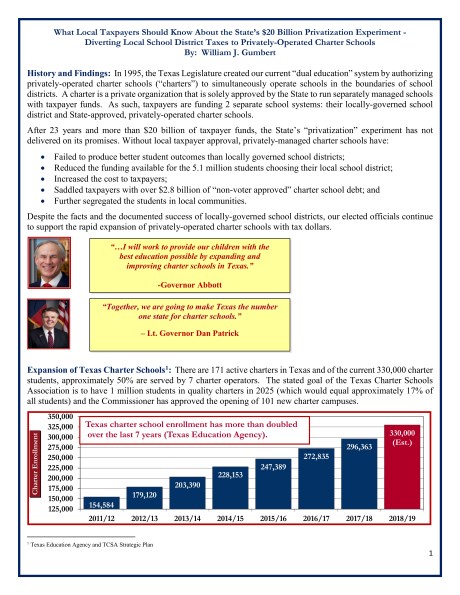
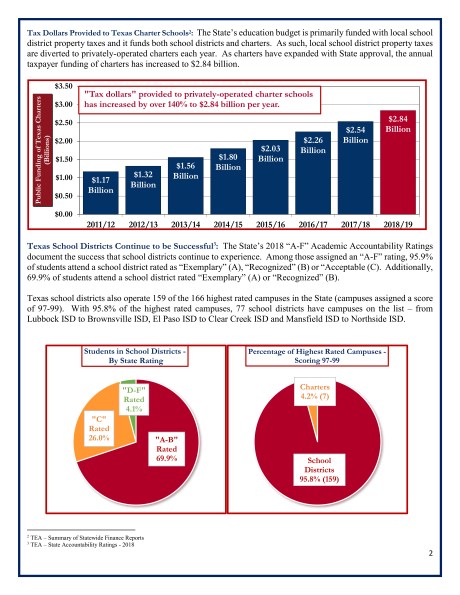
What Local Taxpayers Should Know About the State's $20 Billion Privatization Experiment (October 2018)tax2tax3tax4tax5tax6tax7tax8tax9tax10tax11tax12

Earlier today, I posted about FUD, but I didn’t link to the article I wrote in Huffington Post in 2014.

The article was called “Understanding the Propaganda Campaign Against Public Education.”

Here it is.

Here is the Wikipedia history of FUD.

If you understand the purposeful uses of FUD, you can see the propaganda techniques employed by “reformers” to undermine public education.

The FUD campaign says “our public schools are failing,” “our public schools are obsolete,” “our public schools haven’t changed in a century,” but it is all disinformation.

It is FUD.

Our public schools are NOT failing. Our public schools are NOT obsolete. Our public schools have changed in many ways in the past century

The FUD purveyors will not tell you that charter schools do not get better test scores than public schools and usually get worse scores. They won’t tell you that more than 90% of charter schools are non-union, and that union-busting is part of their funders’ purpose (e.g., the Waltons). They won’t tell you that charter schools are more segregated than public schools, even in segregated districts. They won’t tell you that teacher turnover at charter schools is far higher than in public schools. They won’t tell you that suspension rates at charter schools are far higher than in public schools.

The FUD propaganda machine won’t admit that the research on vouchers shows that voucher schools harm children and lower their academic performance. They won’t tell you that children who enter voucher schools abandon their federally protected rights (e.g., students with disabilities have no IDEA rights in voucher schools). They won’t tell you that voucher schools are not required to have certified teachers. They won’t tell you that voucher schools are excused from state tests in most states and are not held accountable. They won’t tell you that many voucher schools teach racism, misogyny, and discriminate against those who do not share their religious views.

The best schools are public schools!

The way to build strong communities is to build strong public schools!

Ruth Conniff, editor of “The Progressive,” suggests that the Save Our Schools Movement could be the determining factor in the midterm elections.

She writes:

The “education spring” protests, in West Virginia, Oklahoma, Arizona, Colorado and North Carolina, won increases in teacher pay and education budgets, launched hundreds of teachers into campaigns for political office, and showed massive support for public schools this year. In Wisconsin and other states, education is a key issue in the 2018 governor’s race. Public opinion has turned against budget cuts, school vouchers, and the whole “test and punish” regime.

“The corporate education reform movement is dying,” Diane Ravitch, the Network’s founder declared. “We are the resistance, and we are winning!”

As the Save Our Schools movement swept the nation this year, blaming “bad teachers” for struggling schools also appears to have gone out of style.

A Time Magazine cover story on teachers who are underpaid, overworked, and have to donate their plasma to pay the bills painted a sympathetic portrait.

“As states tightened the reins on teacher benefits, many also enacted new benchmarks for student achievement, with corresponding standardized tests, curricula changes and evaluations of teacher performance,” Time reported. “The loss of control over their classrooms combined with the direct hit to their pocketbooks was too much for many teachers to bear.”

That’s a very different message from Time’s December 2008 cover featuring Washington, D.C., schools chancellor Michelle Rhee, standing in a classroom and holding a broom: “her battle against bad teachers has earned her admirers and enemies—and could transform public education,” Time declared.

The idea that bad teachers were ruining schools, and that their pay, benefits, and job security should be reduced or revoked, spread across the country over the last decade. Doing away with teachers’ collective bargaining rights propelled Wisconsin Governor Scott Walker to political prominence in 2011. In October 2014, Time’s “Rotten Apples,” cover declared “It’s nearly impossible to fire a bad teacher. Some tech millionaires have found a way to change that.”

But today, demoralized teachers, overtested students, and the lack of improvement from these draconian policies have pushed public opinion in the opposite direction.

Charter schools, it turns out, perform no better than regular public schools. School-voucher schemes that drain money from public education to cover private-school students tuition yield even worse results—and are unpopular with voters. And testing kids a lot has not made them any smarter.

The bold walkouts and strikes of teachers and the determined resistance of parents and students are making a difference.

The public is getting “woke.”

Billionaires have poured many millions into demonizing teachers, attacking their rights, and privatizing public schools, but they have spent not a penny to increase the funding of our nation’s public schools, not even in the most distressed districts. All they have to offer are tests, charter schools, and vouchers.

It’s a hoax, intended to cut taxes, not to help children or to improve education.

We are no longer fooled.

In 2015, the Washington State Supreme Court held in 2015 that the state’s charter school law was unconstitutional because charter schools are not governed by elected school boards as required by the state constitution. Today, it issued a new decision and upheld a revised charter law.

Since charter schools are still not governed by elected school boards, we will have to wait and read the decision to find out what changed to allow these privately operated schools to receive public funding.

SEATTLE
The Washington Supreme Court has upheld most of the state’s charter school law, eliminating the specter that the classrooms serving about 3,400 students might have to close.

In a decision Thursday, a majority of the court rejected the bulk of a challenge brought by teachers unions and other groups. The court said using public money to operate alternative, nonprofit charter schools over which voters have no direct control is allowed by the state Constitution.

The Washington State Charter Schools Association cheered the ruling as a “win for public education” and a “big step forward in the fight to close the opportunity gap that persists in our state.”

The justices struck down part of the law that restricted the ability of charter school employees to unionize.

It would be ironic indeed if the teachers in these charter schools voted to unionize, since one of the goals of the Waltons, the Koch brothers, and Bill Gates is to build a union-free charter school industry.