Archives for category: Accountability

Imagine a state that adopts a state constitutional amendment that ties student rights to an education to their test scores. Would anyone be so dumb as to imagine that the test scores of students of different races would change because of a constitutional amendment? Remember that Minnesota was the first state to pass a charter law, promising to close the academic gaps. That was in 1992. Thirty years later, the state’s Big Thinkers are still grasping at straws.

.About


EDUCATION EXPERTS AND SCHOLARS: PROPOSED MINNESOTA CONSTITUTIONAL AMENDMENT THREATENS STUDENTS’ RIGHTSFOR IMMEDIATE RELEASE


Today, prominent experts on constitutional law and education sent a letter to Minnesota legislators voicing significant concerns that a proposal to amend the Minnesota Constitution would undermine and weaken students’ right to public education. 
In January 2020, the Minneapolis Federal Reserve proposed to eliminate the current guarantee of a free public education in the Minnesota State Constitution and replace it with language to make education “a fundamental right” to “quality schools” to be “measured against uniform achievement standards set forth by the state.” 


Proponents of the change contend that this new language would reduce gaps in achievement between Minnesota’s white students and students of color. A proposed bill to amend the constitution, H.F. 874, was introduced in the Minnesota House of Representatives on February 8.


In their letter, nationally known constitutional scholars and education law experts outline the negative effects the proposed amendment would have on Minnesota students’ right to public education. The letter explains that while “efforts to strengthen education rights” are welcomed, current Minnesota law already recognizes the rights contained in the amendment. 


The letter points out that the proposed amendment adds new language that may well undermine existing constitutional protections. Most notably, the amendment explicitly links the right to education to state achievement standards, a focus that “may encourage courts to measure rights through the narrow lens of tested academic achievement,” according to the scholars and experts.


In addition, the proposed amendment would eliminate core obligations imposed by the Minnesota Constitution on the state legislature to establish and maintain a statewide system of public schools. These include the requirement that the school system be “general and uniform” and “thorough and efficient.” The letter notes that, in 2018, the Minnesota Supreme Court interpreted this language as prohibiting schools segregated by race, a ruling that is considered “one of the most unqualified restrictions on school segregation that can be found in American law.” The scholars and experts underscore that the proposed amendment could endanger this crucial decision advancing racial justice. 


The letter concludes that “the Federal Reserve’s proposed amendment to the Minnesota education clause threatens to reduce, rather than increase, the rights of Minnesota students.”


Signatories include professors from Stanford, UC Berkeley, UC Irvine, Rutgers, the University of the District of Columbia, University of Colorado, University of North Carolina, University of South Carolina, Michigan State University, West Virginia University, Loyola University New Orleans, and the directors of several national civil rights organizations.


Press Contact:Sharon Krengel

Policy and Outreach Director
Education Law Center
60 Park Place,
Suite 300
Newark, NJ 07102
973-624-1815, ext. 24
skrengel@edlawcenter.org
Share on Twitter
Education Law Center | 60 Park Place, Suite 300, Newark, NJ 07102Unsubscribe gardendr@gmail.comUpdate Profile | Customer Contact Data NoticeSent by elc@edlawcenter.org

William Gumbert has been reviewing the rapid expansion of charter schools in Texas with concern. In previous posts, he has demonstrated that they are likely to underperform the public schools with which they compete. And, worse, they take funding away from the districts in which they are located. Texas is now being flooded by corporate charter chains, replacing community-based public schools. His attached report explains why community-based schools and school districts deserve the support of all Texans.

The Los Angeles Times reported on the latest FBI arrest of one of the domestic terrorists who participated in the insurrection at the U.S. Capitol:

A UCLA student who posted white supremacist views online and founded an ultra-right campus organization has been charged with federal crimes for his alleged role in the Jan. 6 U.S. Capitol insurrection.

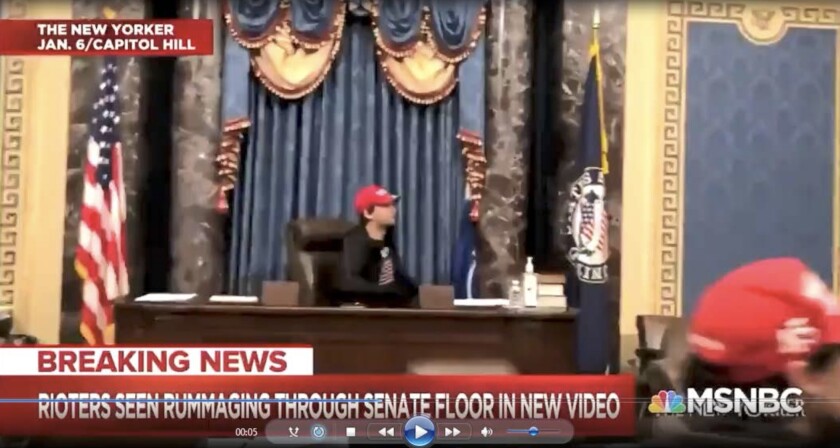
The student, Christian Secor, was captured on video sitting in the chair that Vice President Mike Pence had hastily vacated after a pro-Trump mob broke into the Capitol, according to the FBI. 

FBI agents, assisted by a SWAT team, arrested Secor, 22, at his Costa Mesa home Tuesday morning after searching the residence, said Laura Eimiller, an FBI spokeswoman. 

Federal prosecutors in Washington, D.C., have charged Secor with assaulting or resisting a police officer, violent entry and remaining on restricted grounds, civil disorder and obstructing an official proceeding. 

During an appearance in federal court in Orange County on Tuesday, a U.S. magistrate ordered that Secor be held without bail.

Secor was captured on both video and still images in a red Make America Great Again hat occupying the chair where Pence had sat while presiding over the Senate’s certification of electoral college votes, according to an affidavit by FBI Special Agent Benjamin Elliott.

A man was captured on video camera inside the Senate chambers sitting at the Presiding Officer's chair

At least 11 tipsters identified Secor as the man in the video and still images either standing on the Senate floor or on the dais sitting in Pence’s chair… 

After video of the scene surfaced on the New Yorker’s website, investigators obtained security camera video of Secor in the hallways, Rotunda area and Senate floor, the affidavit said.

Moments earlier, Secor was with a mob forcing his way past at least three police officers and through a set of double doors into the Capitol, Elliott said in the sworn statement. 

“As a result of Secor and others pushing on the double doors … the doors opened and dozens of additional rioters flooded into the building,” Elliott wrote. “The Capitol Police officers were shoved by the crowd, at times trapped between the doors and the crowd, and eventually pushed out of the way of the oncoming mob.”

Agents also found that Secor had broadcast live from the Capitol using DLive, a videostreaming service built on blockchain technology. 

In the livestream, Secor uses the moniker Scuffed Elliot Rodger, an apparent reference to the man who killed six people in Isla Vista, Calif., in 2014 and became a hero to “incels” — a fringe group of sexually frustrated men who blame women for their misery and often advocate for violence against them.

The Sun-Sentinel in South Florida wrote a scathing editorial about the Senate Republicans who failed to convict Trump of inciting an insurrection that endangered the lives of members of Congress as they fulfilled their Constitutional duty to certify the winner of the election.

It begins:

The Republican Party was on trial along with Donald Trump. Both now stand convicted, if not by the Senate, then definitely in the eyes of the nation and the world: The ex-president for planning, inciting and inflaming a deadly insurrection at the U.S. Capitol to keep himself in power, and the party for excusing that monumental crime against the American people.

The seven Republicans who voted him guilty were 10 too few to convict him, but they deserve the nation’s love and thanks for their devotion to the Constitution. So do the House impeachment managers, who made a virtually flawless case leading to the most bipartisan impeachment vote ever, 57 to 43.

The 43 senators whose votes acquitted him chose the wrong side in the eternal conflict between conscience and cowardice. They prostituted our democracy to a demagogue and despot. They made a dead letter of impeachment and set history’s stage for others like him.

Those contemptible senators, including Florida’s Rick Scott and Marco Rubio, have cost their party any claim to the respect and trust of the American people.

The damage is beyond repair. It has betrayed the nation. The moment calls for the remaining responsible Republicans, however few or many, to break away. The case for a new party is as urgent as when the GOP was founded in 1854 to oppose the spread of slavery.

The nation cannot do without the political balance provided by a center-right party proudly bound to constitutional principles, such as the peaceful transfer of power. Until now, no president of either party had defied the expressed will of the voters.

But the party of Abraham Lincoln, Teddy Roosevelt and Dwight Eisenhower has become the party of Trump, who holds it in such thrall that only 10 of its House members and seven of its 50 senators dared to hold him responsible for the worst crime it was possible for an American president to commit.

That so many others could accept his having put their own lives at risk on Jan. 6 can be understood only in the context of their political ambitions. Their careers matter more to them than anything else, least of all their oaths of office.

The party of Trump is extremist and infested with cadres of domestic terrorists like the Proud Boys, the Boogaloo Bois and the Oathkeeepers.

An example of its moral bankruptcy was the vote of the Wyoming party to censure Rep. Liz Cheney, the third-ranking House Republican, for her courageous vote to impeach Trump.

Abraham Lincoln would not recognize what Trump has made of the party, but Adolf Hitler, Vladimir Putin, Fidel Castro and Hugo Chavez very well might.

The House impeachment managers proved beyond reasonable doubt every element of a cynical and criminal conspiracy on Trump’s part.

The editorial continues, and it is worth reading in full.

Mull over this line: “only 10 of its House members and seven of its 50 senators dared to hold him responsible for the worst crime it was possible for an American president to commit.”

As Cong. Jamie Raskin asked on the Senate floor, “If these acts do not deserve impeachment, what does?”

It is hard to imagine anything worse for a president to do, unless he lined up his opposition and shot them. Would the 43 Republican Senators have held Trump accountable if he did that? One wonders.

Steve Chapman is a member of the editorial board of The Chicago Tribune. He wrote here what I was thinking. Trump did profound damage to our democracy, and a majority of Republicans endorsed his vicious attack on our Capitol and on democracy itself. He spent months complaining that the Presidential election was “rigged,” unless he won, in which case it would be valid. When he lost the election decisively, he refused to concede and launched a barrage of lawsuits, all claiming “voter fraud.” His lawyers never produced any proof of fraud, his obeisance Attorney General told him there was not enough fraud to change the outcome of the election, his director of election cyber security told him the election was fair (and was fired for it). YetTrump and his lackeys continued to rage about fraud, even though all his lawsuits were thrown out. He couldn’t even get a win from judges he appointed, which baffled him. Unwilling to admit defeat, he summoned his MAGA followers to DC on January 6, promising them a “wild” day.

Wild, it was, beginning with an incendiary 70-minute speech by Trump, urging the mob to March on the Capitol and “fight like hell” or lose their country. They did as he instructed. They broke through police lines. They were enraged and violent, beating the po’ice who tried to keep them out of the Capitol, which had not been invaded since the war of 1812. They sacked and ransacked the Capitol, while members of Congress, assembled to certify Joe Biden’s election, were hurriedly evacuated. There were only minutes between the physical evacuation of the legislators and the rush of the mob into their chambers. We can only speculate what would have happened if they had seized Mike Pence, Nancy Pelosi, and other members of Congress. It might have been a bloody massacre. Trump watched the horror on television and did nothing to call off his followers. How close we came to a violent coup!

The whole world was watching as our democracy hung in the balance.

Was Donald Trump responsible? Of course he was. Mitch McConnell admitted as much after he voted to acquit him because he was a “private citizen.” This is the same McConnell who refused to start the trial while Trump was still in office.

The seven Republicans who voted to defend our democracy instead of licking Trump’s soiled boots deserve our thanks: Mitt Romney of Utah, Susan Collins of Maine, Lisa Murkowski of Alaska, Richard Burr of North Carolina, Bill Cassidy of Louisiana, Ben Sasse of Nebraska, and Pat Toomey of Pennsylvania. Some of them, like Liz Cheney of Wyoming, were condemned by the leaders of their state Republican Party, for daring to defend the Constitution and their oath of office.

This is what Steve Chapman wrote (in part):

One of the most familiar lessons of the Donald Trump era is that no matter how bad today is, tomorrow can always be worse. We learned over and over that there is no bottom to his capacity for outrageous conduct, and there is no limit to his party’s tolerance for it.

Jan. 6 was one of the greatest catastrophes in the history of the American republic. An incumbent president who had decisively lost his reelection roused his deranged disciples to launch a massive attack on the U.S. Capitol in an effort to keep him in office. It was an attempted coup, nothing less. Lives were lost, members of Congress and their aides were traumatized, and the president who instigated the attack took pleasure in it.

But Saturday’s Senate vote to acquit Trump in his impeachment trial was worse. Forty-three duly elected representatives of the people of their states chose to ignore or rationalize his shocking blitzkrieg. They repudiated their sworn duty to “support and defend the Constitution of the United States against all enemies, foreign and domestic.”

No American president has been so openly contemptuous of the constraints of the Constitution as Trump. He decided long ago to treat any defeat at the polls as the result of fraud, regardless of the reality. If the democratic processes of our system did not give him what he wanted, he would wage war on them. And he did — starting months before Americans went to the polls and continuing for months afterward.

Any elected government can be hijacked by a skilled and ruthless demagogue. But in the design of our system, Congress is supposed to serve as a counterweight to the president, jealous of its prerogatives and independent of the executive branch. The impeachment power is the ultimate check, allowing legislators to remove any president who abuses his office.

But the impeachment power now has about as much importance as the Third Amendment — which forbids quartering of soldiers in private homes during peacetime. Trump’s second acquittal leaves no doubt that for most Republican members of Congress, party comes before country, now and forever...

Congressional Republicans, with a handful of noble exceptions, are more than willing to excuse the inexcusable if it comes from a president who shares their partisan affiliation. Maybe they are afraid of the political consequences they would face for breaking with Trump. Maybe they think what he did to advance the GOP agenda — tax cuts, deregulation, conservative judges — is bigger than what he did to sabotage constitutional government.

Maybe some even relish the idea of right-wing extremists terrorizing elected officials to advance Republican policies. Whatever the motive, the damage is deep and possibly irreparable.

The danger produced by this dismal outcome is not so much that Trump will run again in 2024. Chances are good that by then, he will be indicted and convicted for at least one felony, whether for tax evasion, campaign finance violations, solicitation of election fraud or other crimes. He would have trouble running for president from a correctional institution. Likewise if he decides to flee to a country that has no extradition treaty with the U.S.

The real significance of the Senate’s refusal to convict Trump is that it normalizes behavior that once would have been anathema to either political party. It assures his followers that he did nothing wrong. It eats away at the foundation of our form of government. It invites a future Republican president — shrewder and more disciplined than Trump — to install himself permanently in the White House.

It may sound impossible in a republic as long-lasting and resilient as ours. But since Jan. 6, a lot of things that seemed impossible have come to pass. And they have inflicted a wound on our democracy that may never heal.

Donald Trump should face the full force of the law for his multiple crimes. He may be convicted for interfering with the election in Georgia, for tax evasion in New York, or for many other crimes. But he escaped punishment for violating his oath of office and unleashing a blood-thirsty mob on his Vice-President and the members of Congress, a crime that sits at the feet of the 43 senators too spineless to hold him accountable.

Distinguished economist Helen Ladd and her husband, journalist Edward Fiske, studied the accountability system for charter schools in Massachusetts. They specifically addressed equity issues of access, fairness, and availability of a high-quality education, not test scores. They found considerable variation among charter schools, as one would expect. They also found that some charter schools had unusually high attrition rates and unusually high suspension rates. These should concern policy makers, whose goal is to offer better opportunities for disadvantaged students. Their aim in writing the paper is to alert policymakers to the value of an equity-oriented accountability system that goes beyond test scores.

The Financial Times reports on a new phenomenon: educators around the world see the pandemic as an opportunity to break free of standardized exams.

Tony Stack, a Canadian educator, was developing a new way to assess children even before coronavirus. The decision to scrap end-of-year assessments after the pandemic struck presented the chance to put the “deep learning” approach into practice. “It offered an opportunity for an authentic learning experience, outside some of the constraints of an exam,” said Mr Stack, director of education for Newfoundland and Labrador province. This alternative model, used in 1,300 schools across eight countries, that prioritises skills and independent thinking “set a way forward for a more ethical approach to assessment,” he explained. “Skills that students need to learn through the pandemic cannot be assessed in a single test,” he added.

Most viewed the abrupt cancellation of exams in countries around the world as a regrettable loss that would diminish learning and life chances for a cohort of young people. A vocal group of educators also saw an opportunity to call time on the traditional exams system they say is unjust and outdated. “The pandemic has exacerbated all these problems that were already there with exams,” said Bill Lucas, director of the Centre for Real-World Learning at the UK’s Winchester university.

He believes traditional assessments unfairly standardises children of different abilities, fail to capture essential skills and put young people off through its rote-learning, one-size-fits-all approach. “Survey after survey says creativity, critical-thinking and communications are what we need. Exams don’t assess those things,” Mr Lucas said. “Covid has forced us to ask the question: ‘do we want to go back to where we were or do we want to stop and think?’” Rethinking Assessment, the advocacy group he co-founded to push for change, has attracted support from teachers, trade union leaders, policymakers and academics. Among them is Sarah-Jayne Blakemore, a Cambridge university neuroscientist who argues that exams such as the GCSEs taken by 16 year-olds in England exaggerate stress and anxiety at a time when teenagers’ brains are still evolving. “We need to reassess whether high intensity, high stakes, national exams such as GCSEs are still the optimal way to assess the academic achievements of a developing young person,” she wrote late last year.

https://www.ft.com/content/9d64e479-182c-4dbd-96fe-0c26272a5875

He believes traditional assessments unfairly standardises children of different abilities, fail to capture essential skills and put young people off through its rote-learning, one-size-fits-all approach. “Survey after survey says creativity, critical-thinking and communications are what we need. Exams don’t assess those things,” Mr Lucas said. “Covid has forced us to ask the question: ‘do we want to go back to where we were or do we want to stop and think?’” Rethinking Assessment, the advocacy group he co-founded to push for change, has attracted support from teachers, trade union leaders, policymakers and academics. Among them is Sarah-Jayne Blakemore, a Cambridge university neuroscientist who argues that exams such as the GCSEs taken by 16 year-olds in England exaggerate stress and anxiety at a time when teenagers’ brains are still evolving. “We need to reassess whether high intensity, high stakes, national exams such as GCSEs are still the optimal way to assess the academic achievements of a developing young person,” she wrote late last year.

John Thompson writes below about the ongoing confusion about whether it is safe to reopen schools. Trump and DeVos demanded that schools reopen without the resources to reopen safely. Now, the debate continues, with a mixture of science, hope, and fear. I am not a public health expert, and I offer no advice. But common sense suggests that teachers should be vaccinated first, along with other essential workers. Teaching in a room with a large group of students all day long, it seems to me, is materially different than shopping in a store where one enters and leaves within 15-20 minutes. If we expect teachers to be frontline workers, they should get the vaccinations and PPE equipment they need.

He writes:

Today we’re in a situation in regard to reopening schools that is similar and different to that of the first six months of the Covid pandemic. Then, it seemed likely that schools could reopen by the fall semester as long as we respected public health evidence, and set smart priorities, such as reopening schools not bars. But Trump and his acolytes politicized the pandemic, even leading the way to super-spreadings by holding crowded political and motorcycle rallies, as well as pushing the premature reopenings of indoor dining and partying.

I’m afraid, however, that we’re also in a situation similar to last November when it should have been obvious that the holidays were coming, bringing super-spreads. Rarely do we face school reopening issues that lead to obvious conclusions. However, it would have been crazy to reopen schools as Thanksgiving approached, prompting the surge which would feed the super-surges of Christmas and New Years. Even so, true believers in the claim that educators were being too cautious often continued to ramp up the blame game. In “When Trump Was Right and Many Democrats Wrong” (Nov 18), Nick Kristof criticized Democrats for failing to learn from Europeans who had safely kept their schools open.

Ironically, Kristof’s editorial was published 6 days after Spiegel International’s “Reevaluating Children’s Role in the Pandemic.” It explained in great detail that “a large study from Austria shows that SARS-CoV-2 infects just as many schoolchildren as it does teachers. Other surveys indicate that while young children may show no symptoms, they are quite efficient at spreading the virus.”  

Spiegel explained, “‘Schools are not islands of serenity,’ says study leader Michael Wagner, a professor of microbiology at the University of Vienna. Leaving them open is ‘a significant risk.’” Moreover, “‘Children reflect the infection levels they are surrounded by,’ says microbiologist Wagner. But because they are so often asymptomatic, they are ‘severely undertested,’ leading him to believe that there are a rather significant number of unreported cases.”

In fairness, even if Kristof had read about and contemplated the new situation in Europe, he could not have known that it would foreshadow the most important pandemic challenge we face today. But he no longer has an excuse for sticking with his simplistic attacks on teachers.

As the super-spread that took off in November subsides, and given the fact that President Biden has replaced Trump, it could be argued that we should be able to safely reopen schools over the next 100 days. As was true in the summer and the fall, new scientific research keeps producing evidence that schools can operate safely in person, especially in places where masking, social distancing, and public health guidelines are respected when dealing with community transmissions. Recent studies documented successes in North Carolina, Wisconsin, and European schools. Research keeps confirming that schools for the youngest children are the least likely to spread the virus. And a recent JAMA study concludes “there has been little evidence that schools have contributed meaningfully to increased community transmission.”

On the other hand, the path JAMA describes toward “return primarily or fully to in-person instructional delivery” also requires “steps to reduce community transmission and limiting school-related activities such as indoor sports practice or competition that could increase transmission risk.” For instance, it cites a recent wrestling tournament where, “Among the 130 tournament participants, 38 (30%) had laboratory-confirmed SARS-CoV-2 infection diagnosed, but less than half the participants were tested. At least 446 contacts of these cases have been identified.” These and secondary transmissions are still being studied.

Sadly, we’re also seeing a repeat of the politicization of public health which contributed so much to the super-spreads that made it impossible for so many urban districts to reopen in the fall. One of the worst examples is Derek Thompson’s article published online with the title, “Open Schools, Already.” Thompson began with an oversimplified characterization of the Center for Disease Control’s call to reopen schools “as soon as possible,” and asserted, “the CDC seems to be shouting: Enough! To which, I would add: What took you so long”?

I always follow the links in these reports, and almost always I find a story more complicated than anticipated. But, these reports tend to start with the conclusion about whether schools can reopen safely, followed by a number of disclaimers and warnings. Thompson turned out to be one of the most extreme examples of a respected reporter misrepresenting the complexities documented in the sources he cited. 

Rather than get into the weeds of methodology, before addressing Thompson’s misleading arguments, I’ll just mention a few more differences between today’s questions and those of the summer and fall. New research estimates that 59 percent of transmissions, not 35 percent as previously estimated, are by asymptomatic persons. Moreover, we now have evidence that teens are more likely to spread the virus than originally thought. And a new study of infections in Florida and China shows that children may be more likely to be asymptomatic, and they may be 60% more likely than adults over 60 to spread the infection. 

These findings, combined with the lack of testing and contact tracing in many places, call into question the previously understandable conclusions by some that schools aren’t major contributors to community transmission.

Also, there are new reasons to worry about the unknown, but potentially serious, harm done by Covid to asymptomatic persons.   

Getting back to Thompson’s article as a case study in misrepresenting complex science, North Carolina and Wisconsin offer just two of many examples of studies of small samples of committed school systems that are not representative of many other districts. In “Incidence and Secondary Transmission of SARS-CoV-2 Infections in Schools,” Duke University researchers found that infections were rare in “35 North Carolina schools that offered in-person teaching for at least some of the 9 weeks, with only 17 staying open to students for the entire quarter.” 

The researchers acknowledged that the sample of schools “may select for school districts that enforce adherence to preventative measures, emphasize transparency, and cooperate with peers.” These characteristics “are likely associated with greater adherence to masking, reduced secondary transmission, and lower risks.” And, when two districts faced reduced compliance with masking and distancing, a nonprofit stepped in to reinforce those policies.

In response to my questions on methodology, co-author Daniel Benjamin volunteered that the key to success:

Is that there is 99% mask compliance for every person in the mainstream curriculum that steps on school property. It’s the mitigation strategies—distancing, masking, hand hygiene that are crucially important. If a school district does not do these things, they will likely make the pandemic worse by being open. This is why we don’t advise “you should open” or “you should go remote”…. It’s all about the public health measures.

And while we’re reading more optimistic reports by reliable researchers like JAMA and the CDC, let’s not forget their qualifying statements, such as the CDC’s summary of Wisconsin infections from Sept 3 to Nov16. Schools were the 4th largest source of infections, following long term care and corrections facilities, and colleges; an estimated 14% of infections were linked to schools.

These are just a few of the new pieces of evidence that schools may not be super-spreaders, but they are spreaders. But, how fast do we want to reopen those spreaders as the virus variant comes to the United States? The New York Times cites the CDC and other institutions that predict the more contagious U.K. variant will be predominant by March. If so, will it make sense to not reclose the schools that contribute to spread, even if they don’t drive the increase in infections?  

The reopening of schools in 100 days is a reasonable goal, but decisions on the pace of reopenings and when it is necessary to reclose schools, should not be politicized. My sense, however, is that more of the press, and public health and education advocates are now discussing politics more, and complicated science relatively less. For instance, there has been a steady increase in charter school advocates implicitly or explicitly blaming shutdowns on unions. Robert Pondiscio’s “How Anger Over Covid Closures Can Fuel the School Choice Movement” is just one recent example.

At the same time, more journalists are focusing on the differences between statements by some of Biden’s public health experts, and his apparently more balanced approach, as well that of teachers and unions, than the nuances of medical science conclusions. Moreover,, the Washington Post explains, “CDC researchers looked to Europe’s experience in the fall to inform their conclusion that ‘there has been (emphasis mine) little evidence that schools have contributed meaningfully to increased community transmission.’”

But new research from Europe leads towards a new conclusion, articulated by Celso Cunha, director of the medical microbiology unit at Nova University of Lisbon’s Institute of Hygiene and Tropical Medicine, “By themselves, schools are not the main problem, but it makes sense to close them when the numbers are so high that anything can have an impact on the health system as a whole,” 

The Wall Street Journal also reports:

A consensus is emerging in Europe that children are a considerable factor in the spread of Covid-19—and more countries are shutting schools for the first time since the spring.

Closures have been announced recently in the U.K., Germany, Ireland, Austria, Denmark and the Netherlands on concerns about a more infectious variant of the virus first detected in the U.K. and rising case counts despite lockdowns. …

The Journal quoted the director of the University of Geneva’s Institute of Global Health, “In the second wave we acquired much more evidence that schoolchildren are almost equally, if not more infected by SARS-CoV-2 than others.”

And as Spiegel reported in November, Europeans have had to ask, “Might children, in fact, be mini-superspreaders running around without so much as a sore throat as they pass the virus on to classmates, parents and siblings?”

I sure can’t anticipate the answer to that question, but unless we can discuss it in a non-ideological manner, we might fail at both the reopening of schools within 100 days, and contribute to a resurgence of Covid. 

This article was written by Swedish teacher Filippa Mannerheim and translated by retired Swedish educator Sara Hjelm. It appeared in the Swedish publication EXPRESSEN.

Mannerheim expresses her outrage at the corruption and inequity that have flowed from the Swedish policy of privatization. Her articles are a warning to those of us in the United States, as many states are now considering legislation to copy the Swedish free-market model, allowing anyone–including for-profit enterprises–to supply educational services to student.

Politicians let schools sink into a swamp of corruption 

Published 8 Feb 2021 

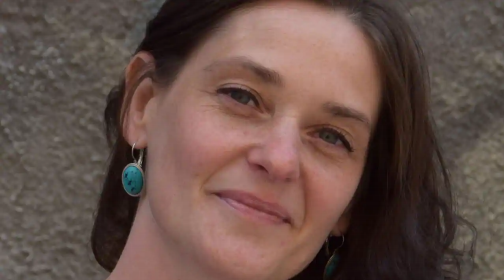
High school teacher Filippa Mannerheim. 
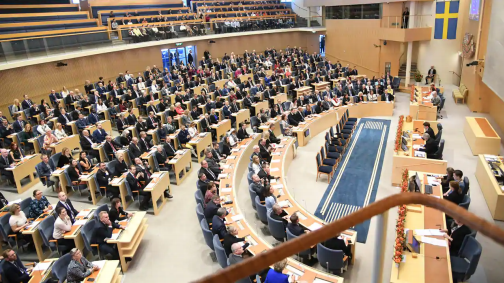
The Swedish Parliament. 
Photo: OLLE SPORRONG

Teacher Filippa Mannerheim sparked a great debate with her indictment against Swedish parliamentary politicians about the market school. 

All parties – except M and KD have responded – and Mannerheim is now writing her closing remarks. 

This is a cultural article, where writers can express personal opinions and make assessments of works of art. 

DEBT DEBATE. 

There was once a farmer who was terribly hard of hearing, something he was ashamed of. One day, while standing carving on an ax handle, he saw the surveyor coming walking on the road. “First he probably asks what I do and then I answer ‘Ax handle'”, the old man thought. Then he asks if he can borrow my mare and then I say: “The riders have ridden her back off”. And when he asks about my old echo, I answer “She is completely ruined and holds neither weather nor water.”  

– Good day! said the surveyor.  

“Ax shaft,” replied the old man.  

This story my father read to me when I was a child and I remember that we laughed a lot at the old man’s determined but damned answers. That the saga is now revived within me again, after 40 years, is no coincidence.  

After reading the six (non) answers from our parliamentary parties after my article “I accuse…!”, I am saddened by school policy. What is positive is that our Riksdag politicians have answers to all my questions. What is negative is that their answers rarely have to do with the questions.  

The Center Party proudly claims (after three months of reflection, while their formulations have gone back and forth between communicators and party leadership), that they at least want to increase freedom of choice and transparency in Swedish schools, but then make proposals that lead to the exact opposite – slippery as eels in their struggle to defend the corporations’ dividends. The Liberals write an answer so full of empty phrases that I have already forgotten what the message was. I think there was something about teachers being very important. 

The Social Democrats and the Green Party agree with me in substance but unfortunately can do nothing, “very boring, really.” The Western Party is outraged, the Sweden Democrats, as usual, blame the immigrants and the 

Moderates and Christian Democrats don’t bother to even put together an answer. Probably they have none.  

– Swedish schools are in deep crisis! Politicians, you must act! 

– Good day, ax handle, little friend. 

What exactly is politics for our politicians? I ask myself. Is it a polished, trembling index finger in the air, or is it a sincere description of the problem and a long-term and well-thought-out vision of what Sweden can become, based on knowledge, a sense of responsibility and an honest will to improve our society?  

Who knows? Not me anyway.  

In another fairy tale I recently read with my 

students, HC Andersen lets the little child 

shout the obvious: “The emperor is naked!” 

Many of us are shouting now, but without our 

rulers hearing us.  

Photo: CSABA BENE PERLENBERG / 

But this is not a fairytale. This is 2021 in a  small but extreme country in the north, where the majority of our parliamentary parties have made it clear to us voters that the Swedish school market, with its destructive consequences, will remain. The limited companies’ expansion at the expense of the municipal school, the unfair school choice system, the extreme and skewed construction of school fees that are running Swedish schools at the bottom, grade inflation, a rejected principle of openness and an increasingly segregated school system – all this we must continue to live with.  

This was not what we thought of the free school reform!  

Nevertheless, the majority of our political parties are determined to continue on the path that has led Swedish, tax-financed schools deeper and deeper into the dunes of corruption. The partners’ profits are too important to be legislated away. At the same time, meaningless messages are drummed out to voters as pale, Orwellian mantras: “All schools must be good!” “Free schools are good!”  

– Good day, ax handle.  

The fact remains: We are the only country in the world with this school model. No party, neither right-wing nor left-wing parties in the rest of the world, pushes the idea of ​​free establishment for commercial companies, an almost unlimited profit, lack of democratic transparency about how tax money is used and free for profit companies to choose and reject which children to teach. The Swedish school system is rigged.  

Several bourgeois opinion leaders and leading writers have happily begun to raise their voices against the market school. Even the Liberals have very recently expressed concern about venture capitalists as school owners. It gives a certain hope. But the fact that an overwhelming majority of our parliamentary parties cannot unanimously express that they are prepared to take responsibility and do something about the problems is nothing but outrageous. They simply do not want to stop being the only country in the world that prioritizes foreign venture capitalists over the country’s children.  

But Swedish schools are not the private property of politicians or limited companies to milk money and power out of. The schools belongs to us. The Swedish people. We pay for the party.  

In the 2022 election, we voters have the opportunity to use our votes wisely with the socially important school issue in focus. If we vote for a party that does not want to change the school system but only pretends to poke at it for the sake of visibility, the system will remain. And it will leave huge traces in our Swedish society.  

Parliamentary politician: I have nothing more to add in the matter. 

My accusation remains.  

By Filippa Mannerheim 

Filippa Mannerheim is a high school teacher of Swedish and history, as well as a writer and school debater.

The following article was written by Swedish high school teacher Filippa Mannherheim and translated by retired Swedish educator Sara Hjelm. It appeared in the Swedish publication Expressen. Sweden adopted a free-market system of schooling in the early 1990s, and the results have increased segregation without improving the quality of education or access to good schools. The free-market model, she writes, began with extravagant promises but has turned into a bonanza for entrepreneurs and profiteers.

Swedish education is a shame – you politicians have failed

Published 17 Nov 2020 at 06.15, updated 18 Nov at 10.05

Teacher and school debater Filippa Mannerheim.Photo: Press

Teacher and school debater Filippa Mannerheim today publishes an open letter on Expressen’s culture page to Sweden’s Riksdag politicians. “It is time to merge across party lines and stop the expansion of limited companies,” she writes.

This is a cultural article, where writers can express personal opinions and make assessments of works of art.


Parliamentary politicians!

I am a Swedish citizen. I am a teacher. I’m a parent. And I am deeply concerned about the future of Swedish schools. 

The Swedish school has been subjected to a world-unique experiment. In the rest of the world, it is unreasonable for limited companies to make unregulated profits on tax money. Despite this, we in Sweden donate hundreds of millions of kronor to shareholders in company groups year after year – money that was intended for our children’s education.

With the deregulation of the 1990s, the ambition was to create thriving, independent schools, foundations, parent cooperatives and small limited company schools with educational alternatives. Today, this vision has turned into an uncontrollable market where venture capital companies are expanding and devouring tax money at breakneck speed. 

The business model is simple: you buy smaller independent schools and incorporate them into the growing groups and then make a profit by targeting marketing to easy-to-teach, independent students, through special dress codes, requirements for high tempo and great drive or through English as a study language. With a sold-out, simpler student base, the corporation schools can reduce salaries, teacher density, resource staff and – to attract even more lucrative student customers – sprinkle with joy-ratings to show the school’s “high results”.

When the profitable students have been absorbed by the independent school, the municipal school is left with a more difficult student base and with the overall responsibility for all the municipality’s students. And when the municipal school’s student allowance must be increased due to the task becoming more demanding, the independent schools ‘student allowance is also increased and the groups’ profits can increase even more. A bomb-proof business model for venture capital companies but a devastating tax waste for the Swedish citizens. 

You, politicians, have made our common school a wet dream for venture capital companies.

Because while the school giant Academedia, now listed on the stock exchange, makes a profit of SEK 556 million before tax, the size of the children’s groups in the preschool increases and greatly exceeds the National Agency for Education’s benchmarks. While the International English School (IES) presents a profit of 254 million, many children are in classrooms without teaching materials and are taught by foreign teachers without Swedish qualification or by qualified teachers who earn SEK 3,000 less a month than their municipal colleagues. While schools and colleges are sounding the alarm about declining knowledge results, joy grades are rising, as grades have become a competitive tool on the market. While the independent school giants receive a rent discount for establishing themselves in the municipalities, children with diagnoses or a mother tongue other than Swedish are rejected, as they are more expensive to teach.

Before the National Agency for Education made all statistics about individual schools secret – because it became a “trade secret” – all this information was available to us. Today it does not do that anymore, which threatens our democracy. 

I accuse you of that.

Swedish schools bleed at the same time as resources are available. But the tax money that was intended to go to student support, small groups, more teachers, more resource staff, teaching materials and smaller classes ends up in tax havens instead. 

You, politicians, have made our common school a wet dream for venture capital companies. It’s shameful. It’s sad. It is unworthy of a knowledge nation. 

After Chile abolished profit-driven independent schools four years ago, we are left alone in the world with our school system. Denmark, Norway, Germany, the Netherlands, England all have independent schools but profits are prohibited or strictly regulated. If the rest of the world can have well-functioning independent schools for parents to choose from, without the owners being allowed to pick out millions in profits – why can’t we? 

The company magnates have the money. Nine politicians have the power. I have, apart from my furious despair over the state of affairs, only my pen and my conviction that the truth about Sweden’s school system must emerge.

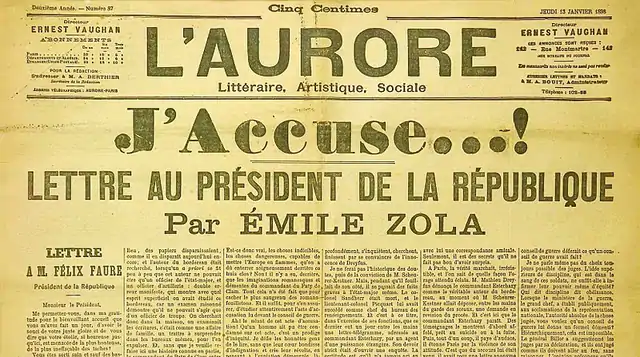
I’m accusing …! was written by Émile Zola and published January 13, 1898. Zola turned in the letter to the President of France and took a stand for the Jewish officer Alfred Dreyfus who had been convicted of high treason.

Parliamentary politicians. This letter has become long and it is time to summarize: 

• I accuse you, the Social Democrats! Your party name is a pathetic remnant from the time when you defended an equal school – for all children from all walks of life. Today you have voluntarily put your gag on one of Sweden’s most important issues – the marketing school. It is not democracy but its exact opposite: it is political pity.

• I accuse you, the Moderates! You are talking about more controls, even though it obviously does not help against the corruption-like elements that the market school has produced, where joy grades, instead of education, have become a competitive tool in the fight for the most easily taught students. You have with your nonchalance betrayed our nation and its youngest citizens.

• I accuse you, Liberals. You call yourself a “school party” and claim that teachers should be authorities in the classrooms. At the same time, you have turned children and parents into school customers and “grade shoppers” and teachers into servile sellers of grades, with the task of keeping customers happy for their own school’s survival. The system is morally corrupt and you are partly responsible. 

• I accuse you, the Christian Democrats. Your reluctance to see how the interest in profit hits the school is depressing. You earn money when you should serve our children. To you, I have only one thing to say: Drive the traders out of the temple!

• I accuse you, the Green Party. In 2013, your congress voted no to welfare gains. After that, your school policy has consisted of hand hearts on Youtube, despite the fact that you held the post of Minister of Education. Your contribution on the school grounds has been an unfunded “Read-write-count-guarantee” and a struggle for more sex and cohabitation education, while the school falls. 

• I accuse you, the Sweden Democrats. You talk about assimilation, community and security. Yet you support a school system that increases segregation and allows jihadist schools run by people with links to Islamism and violent extremism and schools with religious indoctrination of children. And after a special lunch at Riche, you turned to the issue of banning profiteering and sat yourself on lap in the independent school lobby. 

• I accuse you, the Left Party. You have been passive and have not even indicated that you would like to overthrow the government on this issue. The school groups’ profit-taking and expansion is a matter of destiny for our country and no matter how outrageous alone you are here in Sweden, you have the rest of the world on your side. Overthrow the government! This issue is not negotiable.

• I accuse you, Center Party! You put venture capital companies’ right to millions in profits ahead of future generations and call Sweden’s principle of openness – the foundation of our democracy – a “hot pursuit of free enterprise”. You let your friends in business management legally steal our taxes – millions that were meant for education. You pose shamelessly with the groups great in photo, without being ashamed. You have let Sweden down. 

Knowledge, education and upbringing should be at the center of this socially important activity – not money.

My questions to you politicians are the following: What will happen to Sweden when more and more children do not get the education they need? When foreign venture capital companies gain more and more influence over the school and we citizens lose both transparency and the principle of openness? When tax money, through independent school groups, ends up in the pockets of fundamentalists and shareholders in Kuwait, Saudi Arabia and Malta? What opportunities will we have to govern the school in a democratic way when the power of foreign owners over our education system increases through the expansion of the school groups? 

One last reflection. Whatever it may now be worth to you: Schools are not just buildings with children and teachers inside. Schools are not just childcare while parents work. The school is a common community building, where we adults prepare future generations for the future. Knowledge, education and upbringing should be at the center of this socially important activity – not money. 

If we demolish this common building, which you, politicians, are well on your way to doing, society will also fall to pieces, slowly but surely. Your society, just like mine. Your children’s society, just like my children’s society. 

Parliamentary politicians. The time has come. It is time to merge across party lines and stop the expansion of venture companies and take back the tax millions and education to the Swedish people.

While we still can. 

By Filippa Mannerheim

Filippa Mannerheim is a high school teacher of Swedish and history, and a school debater.