Today is the funeral of my former husband, Richard Ravitch. He died on Sunday only days before his 90th birthday.
He was a remarkable man in many ways, not only in his professional, political, and civic life but in his wide-ranging personal interests. Sam Roberts of the New York Times wrote a fulsome account of his life and accomplishments in this obituary.
His grandparents immigrated from Russia to New York City in the 1880s. They came with nothing and lived in tenements on the Lower East Side. His grandfather started a small foundry, making iron gratings, manhole covers, and other such things. Eventually, he entered the construction business and created HRH, which he later turned over to his son (Dick’s father) and son-in-law.
Dick was born in 1933. He attended the progressive Lincoln School and Fieldston School. He started college at Oberlin but transferred to Columbia College to take care of his mother when his father died at a young age. He then went to Yale Law School.
Dick’s parents revered FDR. They were liberal, progressive, and educated (his father went to Tufts, his mother to Hunter). Among their friends were artists, musicians, and writers. Dick learned to love classical music, opera, and Broadway musicals.
We met in 1959 when he was working on the staff of a Democratic congressman in Washington. We married a year later, two weeks after I graduated college. I was 21 and he was 26. We divorced in 1986. We had three sons, one of whom died of leukemia at the age of 2.
After we married, Dick joined his family’s construction company in partnership with his cousin Saul Horowitz Jr., known as JR. JR was interested in construction, Dick was interested in real estate development. As a lawyer, he mastered the federal programs that encouraged middle-income housing. That’s where he directed his energy.
While other developers built only luxury housing, Dick focused on middle-income housing. Whatever he did, he wanted to serve a social purpose. That was his FDR legacy. He wanted to make a difference. Among the buildings he developed are Waterside, on the East River in the 30s; Manhattan Plaza, moderate-cost housing for performing artists on 42nd Street; and Riverbend in Harlem. He built the first desegregated housing in Washington, D.C.
He enjoyed being a developer, but he yearned to have a life of public service. He became the guy that mayors and governors called upon whenever there was a crisis. Governor Hugh Carey asked him to run the Urban Development Corporation, which built low- and middle-income housing. At one point, Dick told me, Donald Trump came to see him about getting tax breaks for the renovation of a luxury hotel; Dick turned him down. Trump threatened to get him fired from his $1 a year job. Dick told him to do something that is anatomically impossible. He considered Trump to be an inconsequential playboy.
When the city was in the throes of a fiscal crisis in 1975, Dick was among a small number of people who helped to end it. I recall a night when Albert Shanker, president of the United Federation of Teachers, came to our home, and Dick spent hours convincing him to use the teachers’ pension funds to bail out the city. The unions saved the city. Dick was always close to labor leaders, including Shanker, Victor Gotbaum, and Lane Kirkland, head of the AFL-CIO. He always believed in the importance of organized labor.
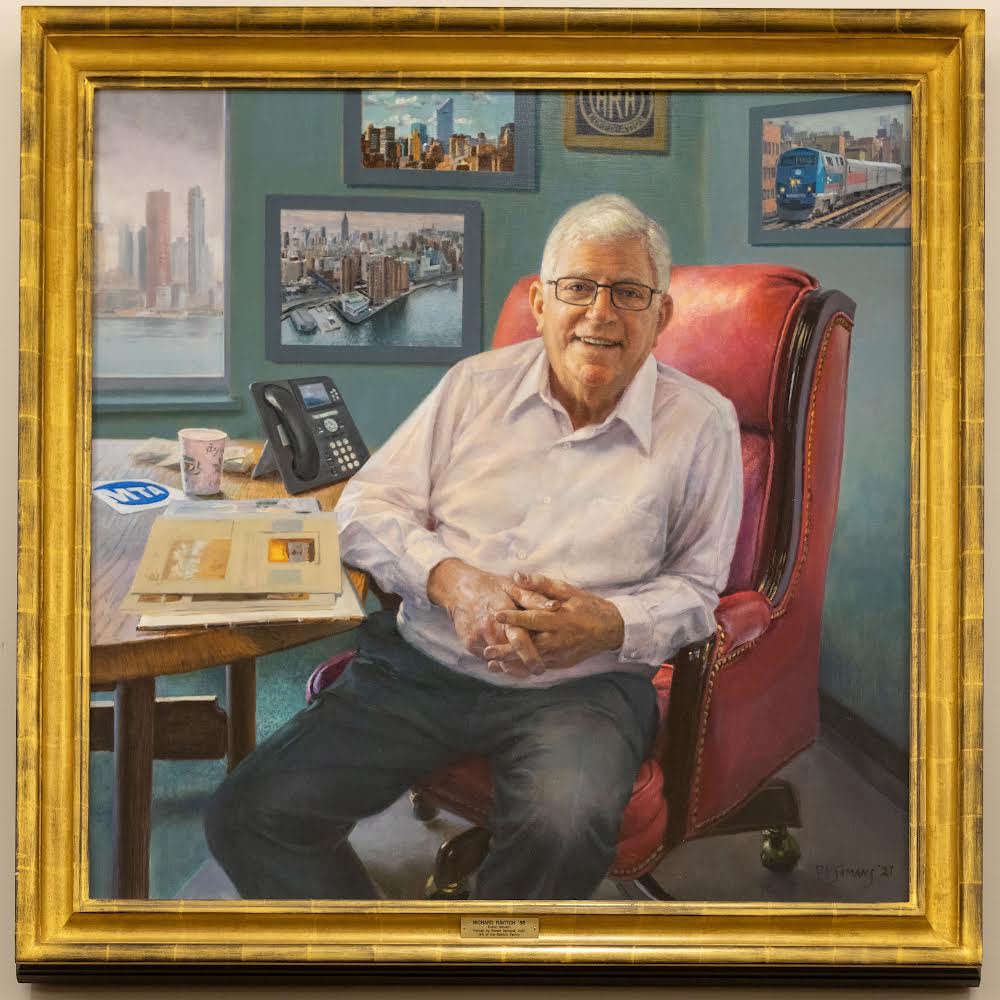
Dick went on to lead the MTA, the state agency that oversees rail and bus transit for the entire metropolitan region. He was in his glory.
After our divorce, there was a period of estrangement but we eventually became good friends and enjoyed talking about our children, our grandchildren, and the world.
He was always very busy solving fiscal crises in different states and cities. When Eliot Spitzer resigned as governor of New York, his Lieutenant Governor David Paterson succeeded him and asked Dick to be his Lieutenant Governor, from 2009-2010.
Dick taught a course in state and municipal finance at Yale Law School right up to last year. He was a philanthropist: he established a chair in pediatric hematology at Mount Sinai on Hospital, named for the son we lost. He served on the Mount Sinai board for more than forty years. He created a program to train journalists to cover fiscal matters at the City University of New York’s Journalism School. A list of the organizations where he was a board member or president would be longer than this post.
Dick was married in 2005 to Kathy Doyle, the CEO of a major auction house. This was a marriage made in heaven. Kathy is a wonderful woman who brought great joy to Dick. She has three beautiful daughters, who adored Dick. Her daughters married and among them had nine children, who were of course his grandchildren. Adding our four grandsons, Dick had 13 grandchildren. He was thrilled to have such a large, beautiful family. And it made me happy to see that he had found a wife who was just right for him.
I mentioned his personal interests. Dick was an accomplished woodworker. He taught himself at first, then took courses. He bought wood turning equipment and heavy duty saws. He loved turning bowls and eventually made beautiful pieces of furniture, reproductions of antiques that he had seen in books. Dick and Kathy’s home is filled with his elegant handmade furniture.
His other passion was gardening. There too he made himself a master, studying the right soil composition and tending to the earth in which he planted.
Dick died just two weeks shy of his 90th birthday. He lived a full and happy life. He was loved by his family, by hundreds of friends, and by uncounted admirers. He was a man of principle and integrity. He believed that political problems could be solved by reasonable people, working things out.
These days, when our politics is so polarized and when many political figures act so unreasonably, I know how Dick would respond. Organize. Build coalitions. Support the good guys. Do what’s right for the underdog. Ignore the extremists who make compromise impossible. Progress requires give and take. Never lose sight of the goal, which is the betterment of life for all people. He loved New York City, New York State, and America, and he wanted to make them better. He was a disciple of FDR to the end.
Rest in peace, dear Richard.
Diane

 Diane Ravitch's blog
Condolences
LikeLike
Condolences. A wonderful man!
LikeLike
May his memory be a blessing.
LikeLike
Beautiful, generous, tribute. I’m a child of divorce so I know how hard you and your former husband worked to have a cordial relationship. You lost a friend. My condolences. Thank you for sharing him with us.
LikeLike
A hug to you, dear Diane.
LikeLike
My condolences. Remembering our loved ones, despite divorce or separation, with respect and reverence is my goal, too. His was a worthy journey.
LikeLike
It certainly is.
LikeLike
Good morning Diane and everyone,
Diane, I’m very sorry for your loss. My aunt, Mary Anne Krupsak, the former Lt. Gov. of New York State under Hugh Carey, spoke of him very fondly. Please accept my condolences. May he rest in peace after a wonderful and full life.
LikeLike
My condolences. You wrote a lovely tribute.
LikeLike
What a lovely tribute. I’m so sorry for your and your family’s loss.
Regards
Wendy
Wendy Lecker, Esq. (she/her)
Senior Attorney
Education Law Center
60 Park Place, Suite 300
Newark, NJ 07102
WLecker@edlawcenter.orgWLecker@edlawcenter.org
http://www.edlawcenter.orghttp://www.edlawcenter.org/
(203) 536-7567(203)%20536-7567
http://www.edlawcenter.org/
Please support Education Law Centerhttps://edlawcenter.networkforgood.com/projects/56713-general-fund
(203)%20536-7567 CONFIDENTIALITY NOTICE The information in this email may be confidential and /or privileged. This email is intended to be viewed only by the individual or organization named above. If you are not the intended recipient or an authorized representative of the intended recipient, you are hereby notified that any review, dissemination or copying of this email and its attachments, if any, or the information contained herein, is prohibited. If you have received this email in error, please immediately notify the sender by return email and delete this email from your system. Thank you.
LikeLike
So sorry about your loss, dear, dear Diane.
“Dick told him to do something that is anatomically impossible.” Would that the country had done the same a little more clearly back in 2016!
LikeLike
Why am I not surprised that such an amazing woman would write such a beautiful tribute to her former husband?
LikeLike
Extremely moving. Diane is indeed an amazing person and a terrific writer.
LikeLike
Agreed. What an honor as well as an inspiration for those of us who carry on.
Take care, Diane.
LikeLike
My condolences on your loss. Dick sounds like he was a “Renaissance man.”
LikeLike
So sorry, Diane. Lovely tribute. Dick’s legacy endures.
LikeLike
Diane What a picture, both literally and how you describe Dick Ravitch’s history, and as a person. The world has lost one of its good guys. Thanks for sharing him with us. CBK
LikeLike
Touching tribute. As was NYT obituary, on the front page no less. Loved this concluding paragraph:
“In a democracy,” he argued, “if you insist on being above politics you cannot govern well.”
The purpose of politics is governing, as he well understood.
LikeLike
Wanted everyone to see pic in case they didn’t click link. Never knew about his role in saving the subway. I’ll remember it every time I get on one from now on.
LikeLike
Would that all our lives would be so full.
LikeLike
Sorry to hear. Sounds like an incredible man from a generation we will never see again.
LikeLike
Immensely touching. Now I know it’s safe to offer condolencees for your loss. Whatever else, your marriage to Dick Ravitch was perfect in one way: the union of two menschen.
LikeLike
Diane, I’m typing with misty eyes after reading your lovely appreciation of your late former husband. Thank you
LikeLike
Condolences
LikeLike
Dick Ravitch’s life MATTERED!
RIP.
Wow, what a man.
Thank you for sharing, Diane.
LikeLike
Dear Diane,
Thank you for your moving and gracious tribute to Dick Ravitch. I knew nothing of him or his life before reading this just now, but what a remarkable, visionary American leader and philanthropist. God bless you and your family as you “walk the valley of the shadow.”
LikeLike
Truly sorry for your loss and the loss to the families.
LikeLike
My condolences, Diane. Richard Ravitch is among the truly great New Yorkers in history, and there is a lot of competition in that category.
LikeLike
Thanks so much for sharing that.
LikeLike
I am sorry for your loss Diane. Sounds like we need more like Richard.
LikeLike
Truly a man of integrity and a giant in the history of New York.
My condolences.
LikeLike
My deepest sympathy to you, Dr. Ravitch. The death of a soul mate is most painful and only time heals but Richard’s greatness remains. Sincerely Mary D.
LikeLike
His was an incredible life well lived!
LikeLike
What a wonderful tribute! As a multi-generational New Yorker who has ancestors who came here from a common homeland in the late 19th century I recognized in Richard Ravitch things that defined the New York we shared that came out of that immigrant tradition, notably a commitment to the greater good and civic duty that we learned from our ancestors who came to this wonderful place after experiencing oppression. They made this city and this country great and passed on a love to, as the ephebic oath said, to “transmit this city not only not less, but greater, better and more beautiful than it was transmitted to us.” All of us owe him an enormous debt for his sense of duty and his ethics that enabled this city to grow and thrive. May eternal light shine upon him and his memory be a blessing to us all.
LikeLike
May his memory be a blessing and an inspiration.
LikeLike
Sorry for your loss.
LikeLike
Long live! Thank you Diane for posting this. Appreciate a life so well lived.
LikeLike
Diane
Beautiful testimony to a thoughtful and courageous public servant, as well as a wise mentor and friend.
Bernie Gifford
LikeLike
Thanks for this generous and moving obituary. barbara
LikeLike
Deepest sympathies, Diane.
LikeLike
Thank you for posting this information about Dick and the difference he made in the lives of so many. Sending you caring thoughts and gentle hugs.
LikeLike
He was a man who added value to others, enhanced the well-being of his community, and made sure he taught others to be “one of the good guys.” My wish for him is he went in peace and did not suffer any long-term illness like so many of my relatives. Here’s to a celebration of his life. God bless, Richard Ravitch.
LikeLike
Thank you so much, Diane, for sharing that beautiful story. And I agree completely with the excellent advice drawn from his life: “Organize. Build coalitions. Support the good guys. Do what’s right for the underdog. Ignore the extremists who make compromise impossible. Progress requires give and take. Never lose sight of the goal, which is the betterment of life for all people.”
LikeLike
So sorry to hear of your loss. Will be praying for God to comfort you and your family.
LikeLike
Diane – Lovely comments about your former husband. Divorce, as difficult as it can be, doesn’t have to mean we lose sight of the good qualities in those we once loved and shared parenting with.
LikeLike
Deepest condolences to you and the family. What an incredible light he had. You might never know the entirety of his impact on this world. Thank you for telling more of his story, Diane.
LikeLike
My condolences to you and your family. I have memories of the days in Westport as our families were neighbors. Thinking of you, Joe, and Michael.
LikeLike
Anne,
I recall that we were neighbors in Westport many years ago.
LikeLike
A legendary New Yorker. My deep condolences, Diane.
LikeLike
“For their works live on after them.”
LikeLike
This is such a lovely, moving and brilliant tribute. My condolences to you and your sons and their families.
I had read the NYT obituary late Monday and thought of you. Thank you for including the wonderful portrait your son commissioned.
I also saw you were quoted in Ginia Bellafante’s fascinating recounting of the “matzoh summit”, published in the NYT today.
May his memory be a blessing.
LikeLike
Thanks for your beautiful memories. Among them, I particularly remember 1975 and the bailout for reasons I can explain another time.
My condolences to you and all your family. His good works and love live on in all of you.
Bobbi Eisenberg
Chairperson, UFT Math Teachers Committee
LikeLike
Condolences for the loss of the amazing Richard Ravitch.
LikeLike
Thinking of you during this difficult and personal time of loss for you and your loving family. Thank you for sharing your memories of two lives well lived.
May he Rest in Peace and His Memory be a Blessing.
LikeLike
I am so sorry for your loss. He sound like a wonderful man who lived a full and rewarding life.
LikeLike
Thank you for sharing your cherished and beautiful memories. Extending
condolences to you and your family.
LikeLike
You have our deepest sympathies, Diane. Hugs and love to you and your loved ones.
May his Memory Be Eternal, as we say in the Orthodox Church. 💝
LikeLike
The world needs more Dick Ravitches.
Wishing you and your family healing. Thanks for writing this–it’s an inspiration in more ways than one.
LikeLike
He sounds like a wonderful human being who stood up for what was right. Condolences to the entire family
LikeLike
This is touching. Thanks for writing it.
LikeLike
Sorry for your loss.
I offer my well wishes to you and your family.
LikeLike
That’s a remarkable portrait, by the way.
So lifelike.
The hands (hardest part) are simply amazing
LikeLike
Thanks to all for your loving, kind words.
Dick’s funeral was moving.
Two governors spoke—Gov Hochul of New York and Gov Murphy of New Jersey. As did his two sons, one of Kathy’s daughters, and close friends and one grandson. The cantor sang “O Mi Tesoro” from Mozart’s “Don Giovanni” and the event ended with everyone singing “Oh What a Beautiful Morning” from “Oklahoma.”
There was a video with photos and videos of his childhood and life.
I felt that he was watching all of this with an enormous sense of satisfaction.
I wasn’t sad.
It was truly a celebration of his life.
LikeLike
A media account:
https://www.cityandstateny.com/personality/2023/06/his-funeral-dick-ravitch-was-lovingly-remembered-political-leaders-and-family/388059/
LikeLike
We celebrate the life of such a person. I know you will miss him.
LikeLike
A very nice tribute.
Condolences to all who loved him.
LikeLike
My condolences to you and your family. This is a wonderful tribute to a man who did so much for do many. Thank you for allowing us to read it. May Richard rest in peace.
LikeLike
What a beautiful tribute to a very talented and loving man! I am so sorry for your loss.
LikeLike
Heartfelt condolences, Diane … he sounds like the very sort of man we need more of today! Your tribute here honours him well, as does Sam Roberts’ piece in the Times.
LikeLike
Thank you for your loving & informative tribute (for those of us who did not live in/know of his work in New York). He was an amazing human being. May his memory be a blessing,
LikeLike
Condolences on your – and everyone’s – loss.
LikeLike
Please accept my condolences. What a lovely tribute. You’re a class act Dr. Ravitch.
LikeLike
She is that!
LikeLike
What beautiful words I would’ve tremendous loss for your family and for New York State. Thank you for sharing .
LikeLike
Wishing you and the whole family the very best, Diane. From your description of his life, I can only imagine memories of Dick are truly a blessing! His life was long and good and an inspiration to others. I know you’ll all miss him terribly.
LikeLike
My condolences, Diane. Your tribute to Richard is written with palpable affection and respect.
LikeLike
Condolences to his friends and family.
LikeLike
My condolences, and I am sorry for your loss. You wrote a beautiful tribute for your ex-husband and the father of your children and grandfather of your grandchildren.
LikeLike
What a lovely tribute, Diane. May his memory be a blessing.
LikeLike
Thank you, Aaron!
LikeLike