Archives for the month of: January, 2022

I received the letter at the bottom of this post at the beginning of January. I thought it deserved a response.

This was my response:

Dear Jonah,

You don’t know me but I have followed your career. As the son of illustrious parents, much was expected of you.

Stand for Children was a great idea, when it actually defended children and public schools.

But somewhere along the way, you changed and Stand for Children changed. In 2007-08, you began to accept gifts of millions of dollars from “ultra-wealthy political donors,” and you began leading campaigns against teachers, their unions, and public schools. You demanded test-based evaluations of teachers, a useless metric that punished teachers who taught the neediest children. You boasted at an Aspen summer meeting in 2011 (which I attended) that you had outsmarted the Chicago Teachers Union by hiring all the best lobbyists. The big political donors gave you money to support pro-charter candidates in school board races.

Early supporters of Stand for Children started to call it “Stand on Children.”

I agree with all the goals you describe in your letter, and I must ask you if you will continue to promote charter schools, even though they drain money from public schools; whether you will continue to support test-based evaluation of teachers, even though it has consistently failed; whether you will continue to support school board candidates who favor charter schools and privatization.

If you truly intend to reject donations from “ultra-wealthy political donors,” if you truly reject all forms of privatization, including charter schools, if you truly mean to demand “that politicians at all levels do everything possible to protect and strengthen public education, support children and families’ well-being, and reduce the prevalence of racism,” then we can stand together. Please let me and the Network for Public Education know where you stand on the issues that could unite us.

Diane Ravitch


On Thu, Dec 30, 2021 at 10:36 AM Jonah Edelman <info@stand.org> wrote:

Diane,

Reflecting on 2021, I see reasons for hope. The widespread availability of vaccines. A return to in-person learning. An economy that rebounded with record speed due to bold government action.

At the same time, there is cause for grave concern. Tens of millions of children and young people are struggling to recover academically, socially, and emotionally from the pandemic. Tragically, instead of using their power to help children and young people get on track, politicians are passing bans on conversations about race and discrimination that deny children the honest and unbiased understanding of the past they need to create a better future. At the same time, extremists are targeting and harassing school board members, principals, teachers, parents, and even students who want an accurate portrayal of U.S. history with diverse viewpoints.DONATE

Public education is the pathway to economic opportunity and the backbone of a healthy democracy.

That is why we must stand together against the politicians, media moguls, and ultra-wealthy political donors who are stirring up fear and hate and conspiring to make public education a political battleground at the expense of our children’s learning and well-being.

And it is why, together, we must continue to use our collective voice and votes to ensure that politicians at all levels do everything possible to protect and strengthen public education, support children and families’ well-being, and reduce the prevalence of racism and the harm it does to us all.

We are deeply grateful for your partnership and support, and we hope you will continue to stand with us in 2022.

Standing together with you,

Jonah Edelman

Stand for Children

2121 SW Broadway #111

Portland, OR 97201

It has become traditional at the end of the year to pay tribute to those who died during the year. Usually, they are famous or celebrities or both.

In this post, John Merrow pays tribute to educators (or people important in the field) who died in 2021.

He begins by paying tribute to the more than 1,000 educators who lost their lives to COVID.

He singles out nine people, “all of whom cared deeply about America’s youth and public education.”

Vartan Gregorian, president of the Carnegie Corporation of New York, former president of Brown University, and former president of the New York Public Library. I endorse John’s admiration for Vartan. I was on the board of the NYPL when he was selected, and he did indeed save a great public institution from bankruptcy, in large part by wooing great socialites, like Mrs. Vincent Astor, to give generously.

He paid tribute also to bell hooks, James Loewen (author of Lies My Teacher Told Me), Shirley McBay, Robert Moses, Richard Robinson, Eli Broad, Denis Doyle, and George M. Strickler Jr.

As you (and John) might anticipate, I take issue with his characterization of Eli Broad as someone who “cared deeply about America’s youth and public education.” I am sorry that Eli died, and I express my sympathy to his wife and family, but I disagreed that he “cared deeply about America’s youth and public education.” He invested many millions in “training” urban superintendents to share his philosophy of top-down management and his belief that schools with low test scores should be closed, no matter how much parents, students, and staff protested. Many of the “Broadies,” as they were known, were complete failures. He devoted many millions to privatization of public schools, in Los Angeles and in cities across the nation. He selected an incompetent Broadie to run the bankrupt Detroit public schools, who increased the district’s deficit. He poured millions into Teach for America, to send inexperienced, ill-prepared teachers into the nation’s neediest classrooms.

John says he was critical of Eli’s passion for charter schools, and it was not surprising that Eli ignored his criticism. Eli was arrogant and believed that he was always right. I can’t find any evidence that he “cared deeply about America’s children” and for some reason, although both he and his wife were graduates of the public schools of Detroit, he was utterly contemptuous of public schools. He did not “care deeply” about public education. He cared deeply about turning public dollars over to private management.

So, thank you to John Merrow, for honoring the educators and advocates who died in 2021. He needed a different category for Eli Broad. Now, what would that be? Billionaires who thought they knew how to redesign American education to make it more like the corporate sector?

Marty Levine used to write regularly for the Nonprofit Quarterly, and he seemed to be the only person writing about philanthropy who understood the danger of the billionaire foundations’ disparagement of public schools and their love of privatization. Now he hashisown blog called Change Counts, which is consistently interesting. In this post, he examines the emotions that drive today’s angry protestors, who disrupt school board meetings and other public gatherings

He begins:

A few months ago, Rachel Pisani explained to Fox News what she was protesting at a recent Loudon County, Maryland school board meeting to Fox News. . “The goal was really parents being able to speak and express their concern about CRT (Critical Race Theory) and the fact that our school board wants to indoctrinate our children. We do not want to co-parent with our government. We want to be able to instill beliefs and instill our faith in our children without hesitation…we are an army of moms and parents that will not stop until we’re heard. So, they can mute our mics, they can arrest us, they can kick us off of public property. We’re not going to stop…This is insanity in America. This isn’t freedom of speech. It’s not freedom of religion. It’s racism and it’s cloaked in socialism.”

I have spent more hours than I care to count watching videos of public meetings where folks like Ms. Pisani are fired up to fight against CRT, or COIVID-19 policies, or library books, or gender-neutral policies. The subjects vary but the protests all seem to converge around a battle to protect the individual’s freedom. Speaker after speaker step forward and crowds shout to angrily decry the harm that is being done to them, their children, their community, and their nation by the elite, liberals, socialists, and communists. The voices are disrespectful, angry, often threatening

The frustration, the sense of being wronged, of being ignored, of being dismissed and devalued resonates with me. But these protestors are different. They are not the marginalized. They are not battling to change corrupt systems or right past wrongs. They are fighting to prevent change, to keep the status quo. They speak of harms and threats I cannot see and do not feel. They see themselves as the marginalized and the oppressed; I see them as powerful, fighting to retain their position of privilege and control.

Unlike racism or poverty, they are battling manufactured problems.

The issues on their signs serve as smokescreens from the real motivation of these protestors. These are people who are motivated by their fear of loss not by a desire to make their community better for all. They fear that they will not get some benefit because it will go to some “other” who is not as deserving as they are. They fear that they will be replaced by others who have not paid their dues and waited for their turn

To mask the game, the victimizers cast themselves and those that they are enlisting in their struggle as the victims. The Heritage Foundation has a “model bill”, one that it wishes Republican state legislators will enact, that speaks to this manufactured threat. The bill which holds back progress is couched in the very issues it opposes. When passed, it ensures “that administrators, faculty, and other employees of public elementary and secondary education institutions maintain policies in accordance with Title IV and Title VI of the Civil Rights Act of 1964.” 

The sheer audacity of this rationale for new legislation is breathtaking. The 1964 law was needed to give the Federal Government the power to desegregate the nation’s educational system over the objections of those still fighting to keep black Americans in the back of the bus. Title IV gave the Attorney General to intervene to end desegregation based on race, color, religion, or national origin; Title VI made the funding of all Federal programs conditional on ensuring that there was no discrimination.  For the forces behind the protesters, this is the wizard’s curtain above all curtains.

This inoculation of righteousness is designed to mask the fear or replacement they believe will motivate protestors and voters to hold their line. It is designed to feed the fear of a changing country, of an uncertain time. It builds a fantasy that things were never really bad, that there are no real problems needing to address, that there is no challenging work that we all must do together. It clouds a reality that some have benefited from the pain and suffering of others and that repair of past harms is needed

The orchestration of this “grassroots” uprising of outrage are those who have the most to gain from keeping us, as a nation frozen, in the past. They are those who fear their wealth and power is at risk if America addresses its wounds and lives its vision.

Standing behind these efforts are a group of ultra-wealthy men and women fighting to maintain their wealth and privilege at a time when it is clear how much richer the rich have become while everyone else falls further behind.Politicians can be purchased with campaign support; social movements are fueled by funds using the benefits of our nation’s charity rules which allow the wealthy to not only spend heavily but gain the benefits of a tax savings to boot!

A recent conference organized by ALEC (The American Legislative Exchange Council) to bring legislators and advocates together to build support for the manufactured outrage over CRT was paid for, according to the Center for Media and Democracy, by “ the Lynde and Harry Bradley Foundation, a $934.4 million foundation funding right-wing campaigns to influence lawmakers in statehouses across the country.” And several other nonprofit organizations, also supported by Bradley, provided their expertise to fuel the fire. Included were “Garrett Ballengee, senior policy and research analyst at the Cardinal Institute; Jonathan Butcher, education fellow at The Heritage Foundation; Lance Izumi, senior director for education at the Pacific Research Institute; Libby Sobic, director of education policy at the Wisconsin Institute for Law & Liberty (WILL); and Jim Copland, director of legal policy at the Manhattan Institute.”

As Levine notes, the angry protestors are manipulated by the very rich and powerful. They are foot-soldiers in a well-funded effort to preserve the status quo. The ultra-rich play to their fear of being “replaced” by the others, whom they believe are undeserving. That they borrow the language of the civil rights movement to attack efforts to reduce racism is outrageous. But we have seen this movie before, when Arne Duncan, Joel Klein, President Obama, Michael Bloomberg, and then Donald Trump and Betsy DeVos told us that ”school choice was the civil rights issue of our time.”

He writes:

Peter Greene reports on real estate transactions in the Florida charter industry, just one transaction that provides an insight into the financial interests getting rich by exploiting public dollars meant for education. Lots of millions changing hands, but nothing about children or education. This is the kind of “news” that makes my blood simmer.

It turned up as an item in the South Florida LBJ Business Journal, and the lead tells you just where we’re headed. The campuses of three charter schools in Broward County were purchased for a combined $49 million by a company in Boise, Idaho that specializes in charter school real estate investments.That just says a lot. Let’s look at some details.

The big deal involves–well, several companies. We’ve got AEP Charter Renaissance. These folks sold a school they bought back in 2017. That charter school was located in a former Target store in Tamarac that had been bought by an investment capital group and a development group for $6.3 million; AEP Charter Renaissance bought it for $22 million. That purchase was part of a two-school deal that merited this kind of language in industry blurbs:

Part of the Colliers team’s successful strategy required educating prospective buyers on each individual Charter Management Organization (CMO) and nuances of each charter school including charter terms, for this asset class considered a special purpose building. “This is a highly-specialized asset class which inherently requires a longer and more thorough phase of due diligence,” noted Colliers Senior Vice President and Education Services Group Member Achikam Yogev. “Because of the complexities, charter schools have traditionally sold individually and rarely as a portfolio, but the continued interest in this asset class has paved the way for more creative strategies and more complex deals being done on behalf of our clients.”

By “industry,” of course I mean real estate and investment, because none of this has to do with education. At any rate, AEP Charter Renaissance just sold that school (which has somehow shrunk to 85,233 square feet) for $26 million. AEP Charter Renaissance is managed by Charter School Capital, whose CEO and co-founder Stuard Ellis is based in Portland. They serve “charter school leaders, back-office/business service providers and brokers & developers” and they make a lot of money doing it. Also, “AEP” stands for “American Education Properties,” of which Ellis is also the CEO. FWIW, his degree from University of California, Berkley (1988), is in Political Economies of Industrial Societies. You can watch Ellis provide a history of charter school capital.

To learn more about the highly profitable news in the charter industry, open the link and read the rest of this post.

The North Carolina Supreme Court dealt a legal blow to charter schools. It ruled that they are not immune from civil suits, as public schools are. This punches a hole in the charter industry’s claim that they are ”public schools” but under private management.

RALEIGH, N.C. (AP) — The North Carolina Supreme Court ruled on Friday that nonprofit charter schools can’t avoid facing civil fraud claims alleging mismanagement of taxpayer money by arguing they are immune from such lawsuits like a state agency.

The justices reversed a 2019 Court of Appeals decision that had dismissed claims against Kinston Charter Academy, which closed abruptly to 190 students and their teachers in 2013. A 2016 lawsuit by then-Attorney General Roy Cooper sought financial damages for the state and monetary penalties against the academy, its CEO and the chair of its board

Kinston Charter Academy and leaders were accused by Cooper’s office of violating the state’s False Claims Act and deceptive trade laws. State attorneys allege the school provided a bogus upgraded enrollment estimate to state education officials that meant receiving additional funds, even as leaders knew the school would not last the 2013-14 school year.

Academy CEO Ozie Hall and his wife, board leader Demyra McDonald-Hall, unsuccessfully sought to get the lawsuit dismissed by a Wake County trial judge. They in turn asked the Court of Appeals to step in, saying the academy was protected from liability under the doctrine of sovereign immunity, which exempts state government from most lawsuits unless an agency consents to be sued.

A three-judge panel of the intermediate appeals court agreed with the academy, saying it was entitled to such immunity and that it didn’t fit the definition of a “person” who is the target of state litigation under the False Claims Act.

Associate Justice Sam Ervin IV, writing the lone opinion for the Supreme Court, emphasized that the General Assembly declined to describe charter schools as agencies of the state in the law authorizing them in the 1990s, but rather entities that “operate independently of existing schools….”

“The obvious purpose of the False Claims Act is to ensure that public funds are spent in the manner for which they were intended instead of being misappropriated, misspent or misused,” he wrote, while reversing most of the Court of Appeals decisions. The Supreme Court did uphold the Court of Appeals ruling that Ozie Hall cannot be dismissed from the complaint for now on claims that he was immune as a public official. The case, which now returns to Wake County court, has not gone to trial.

The academy, which had struggled financially for years, enrolled barely half of the 366 students that it had estimated it would enroll in fall 2013, contributing to an overpayment by the state of more than $344,000, Friday’s opinion reads. The lawsuit also alleged students were misled into thinking the school would remain open.

Leonie Haimson assesses Bill de Blasio’s record on education after eight years as Maor of New York City. He succeeded Mayor Michael Bloomberg, who served for 12 years and completely upended the schools, first, by getting the state legislature to give the mayor total control of the city’s public schools, then by closing scores of schools and replacing them with hundreds of small schools and charter schools. De Blasio had served on a local school board and offered the hope of restoring stability and ending Bloomberg’s era of constant disruption. (New York City has a two-term limit for its mayor but Bloomberg persuaded the City Council to make an exception for him and themselves).

Leonie Haimson, executive director of Class Size Matters, reviews de Blasio’s record here.

She begins:

When he first ran for Mayor, Bill de Blasio portrayed himself as a leader who would make a host of progressive changes in our schools. He promised to be a far different leader than Michael Bloomberg, who had expanded high-stakes testing, proceeded to grade teachers and schools primarily via test scores, closed dozens of public schools displacing thousands of students, and helped charter schools expand in their place.

Bloomberg and his schools chancellors had done all this by ignoring community opposition, and despite any tangible evidence that this was the right way to improve education, particularly for disadvantaged students. Though Bloomberg had promised during his campaign to lower New York City schools’ excessive class sizes, they increased sharply during his administration, and by the time he left office he said he would “double the class size” if he could, and that would be “a good deal for the students.”

De Blasio said he would do things differently: to listen to and be responsive to parent and community concerns, de-emphasize test scores, and focus on improving public schools rather than providing space and funding to help charter schools expand. Instead of closing schools, he pledged to increase equity and strengthen learning conditions, including by lowering class sizes.

And yet his record on each of these issues was decidedly mixed. He did attain his primary goal in education – to provide universal, publicly-funded pre-kindergarten to every four-year-old, but in a manner that could have been better achieved, as will be discussed later.

There were some bright spots in the de Blasio record, including the Community Schools initiative, begun in the fall of 2014, in which schools partnered with community-based organizations to provide after-school programs, mental health supports, and other resources. By 2018, more than 200 community schools had been established. An independent study found that in these schools, there were lower rates of chronic absenteeism, more students graduating on time, and in elementary and middle schools, higher math scores and fewer disciplinary referrals.

Open the link to read the rest of this important article.

Alexandra Petri writes humor columns about the news for The Washington Post. She wrote about Ted Cruz’s abject apology on the Tucker Carlson Show for calling the 1/6 insurrectionists a bad name. He called them terrorists, as he had done many times. Uh-oh. The Trump Party insists that the crowd who entered the U.S. Capitol, smashed windows, pummeled police officers, and ransacked the building were friendly and patriotic tourists, walking peaceably through a revered building. The very few troublemakers were Antifa or the FBI. Cruz forgot the party line, and he is very apologetic.

Petri wrote:

Have you ever watched a wind sock deflate until it is just a sad polyester shell crumpled on the pavement? Have you ever left some soft cheese near a hot stove and come back to find a demoralized puddle in its place? Have you ever failed to properly care for a houseplant so that not only do you watch it die, but you spend several weeks witnessing it wither, crumple and lose all dignity?

Relatedly, did you see Ted Cruz on with Tucker Carlson on Thursday night?

Here is what I will say about that interview: Personally, just personally, if I were having exploratory surgery to make certain that no hint of a spine remained in any nook of my body I might have overlooked, I would not do it on national television. If I were plucking my voice out and giving it to Tucker Carlson to add to yet another of his magic seashells in the hopes that, in exchange, he would give me legs for 2024 — I would do that somewhere where the cameras were not rolling. I know that Ted Cruz has always loved soup, gelatinous, oozing, always taking the shape of its container. However, I did not want to watch him become soup. Some processes ought to be private.

I would take more joy in watching Ted Cruz be berated for his words (one of the few unalloyed delights that remain to us) if the words in question were not his description of Jan. 6, 2021, as a “violent terrorist attack”; I would also take more joy if the person doing the berating were not Tucker Carlson, complaining that this was no way to describe the very fine people who had so kindly vouchsafed their presence in the Capitol and if Carlson were not wondering why Cruz would utter such hideous slander.

“You told that lie on purpose,” Carlson began by saying, “and I’m wondering why you did.”

“I wasn’t saying the thousands of peaceful protesters supporting Donald Trump are somehow terrorists,” Cruz said, truckling. “I wasn’t saying the millions of patriots across the country supporting Trump are terrorists.” He went on: “Tucker, I agree with you. It was a mistake to say that yesterday, and the reason is what you just said, which is we have now had a year of Democrats and the media twisting words and trying to say that all of us are terrorists.”

The interview could not have been a more vivid reminder that the Republican Party has been undergoing a Change for some time. It would be bad enough if everyone in the GOP shocked the country by simply showing up one day transformed: new blandly smiling faces, new gelatinous substance barely holding their bodies upright, new minds wiped perfectly clean. But it’s somehow worse that it is all happening in public.

We have to watch the slow melting away of the original worried face, the replacement of the vestigial spinal column, the painful extraction of the memories. It is sickening to see, even if the victim is Ted Cruz. If anything, it’s more stomach-churning, because he is so eager and so transparent about it. He is thrilled to be undergoing this lobotomy! He tweeted out the interview himself!

There are some metamorphoses you simply do not sign up to look in on. If you had told me a decade ago that I would have to watch Ted Cruz oleaginously beseech Tucker Carlson to allow him to see the five fingers the party prefers rather than the four he knows are really there, I would have gone into another line of work.

Yes, here are the new parameters for acceptable Republican speech, and here, right on time for his scheduled reprogramming and groveling, is Ted! He knows which way the wind is blowing, and he will do his best to become a windbag that blows in that direction, whatever humiliating deflation is required first.

The Network for Public Education will host its annual conference in Philadelphia on March 19-20. The conference has been repeatedly delayed by COVID. We now feel confident that we can meet safely in person. Please join us!

Carol Burris writes:

We have reopened registration for our conference to be held in Philadelphia on March 19 and 20. We believe that when the current Omicron surge subsides, we will enjoy a safe and healthy conference. We appreciate that so many of you have remained registered these past two years.

If you previously registered for the conference, and never asked for a refund, there is no need to register again.

However, you must register for your hotel room. You can do that here. These are discounted rooms and they will go quickly.

If you have not registered, or, canceled your registration, you can register here.

Because we need to preorder food, which is a large part of the registration cost, no refunds will be issued after February 21.

In order to attend, you must be fully vaccinated. That is a requirement of both the hotel and the Network for Public Education. At this point, there is also a mask mandate in place (surgical or KN95 please).

It has been a difficult and long haul for all of us. Hopefully, we are nearing the pandemic’s end. We can’t wait to see you again! Let’s draw strength from each other this March.


New Board Members Welcomed by NPE and NPE Action

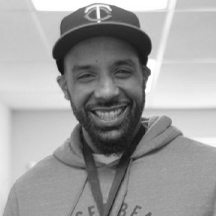
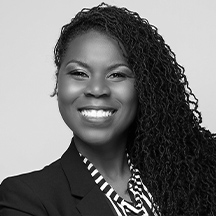
President Diane Ravitch is happy to announce that Cassandra Ulbrich and Keith Benson have joined the Network for Public Education Board while Gloria Evans Nolan joined the NPE Action Board.

You can read about these three accomplished public education advocates below. Last month we announced the addition of Georgina Cecilia Pérezto the NPE Board. We thank retiring Board members Denisha Jones, Susan Ochshorn, and Roxanazww as Marachi for their service.

Casandra E. Ulbrich, Ph.D.was elected to the Michigan State Board of Education in 2006 and re-elected in 2014 to serve a second eight-year term expiring January 1, 2023. She serves as the President of the Board.

Casandra has spent the majority of her career in higher education administration, currently serving as the Vice-Chancellor for Institutional Advancement at the University of Michigan-Dearborn. Prior to joining UM-Dearborn, Casandra was the Vice President for College Advancement and Community Relations at Macomb Community College for eight years, where she oversaw the college’s marketing and communications, public relations, cultural affairs, and foundation, as well as serving as the College’s Title IX Coordinator. Casandra began her career as a Press Secretary to the former U.S. House Democratic Whip David Bonior, acting as the official spokesperson for the Congressman.

Dr. Keith E. Benson is the author of Education Reform and Gentrification in the Age of #CamdenRising: Public Education and Urban Redevelopment in Camden, NJ (2019) and is currently the President of the Camden Education Association. A dedicated community and public education advocate, Keith taught in Camden City public schools for fourteen years prior to being elected to the Association’s presidency. Keith is also an adjunct professor at Rutgers University-Camden.


Gloria Evans Nolan has joined the NPE Action Board.

Grounded in her experience as a St. Louis Public School graduate and parent, Gloria is now serving as Interim Parent Liaison in the St. Louis Public School district. She has over 17 years of experience working in non-profits and fostering excellence in the lives of young people through her work supporting mentoring teams, managing school partnerships, and developing volunteers and caregivers.

Nolan holds a Masters’s Degree in college student personnel administration and a Bachelor of Science in therapeutic recreation. Gloria is a fierce advocate, championing equity and transformational policy change in true public education. Gloria draws her inspiration from being a devoted wife of Kevin Nolan (also known as Cocoa Santa) and the mother of Dylan & Evan.


There is no doubt that the privatizers will continue their fight to destroy public education in 2022. We already see voucher bills introduced and we are watching for charter expansion legislation as well. You can be assured that we will keep on fighting for our democratically governed public schools, the pillar of our democracy. Happy New Year and we hope to see you in March!!

Thanks for all you do,

Executive Director


The Network for Public Education is a 501 (c)(3) organization. You can make a tax deductible donation here.

You can follow us on twitter and like us on Facebook.

Sent via ActionNetwork.org. To update your email address, change your name or address, or to stop receiving emails from Network for Public Education , please click here.

Donald Cohen is the executive director of “In the Public Interest” and co-author of an important new book The Privatization of Everything. He titled this column, which originally appeared in the Washington Post.

He writes:

Reforming public education with market-based reform is “like using a hammer to cook an omelet”

Trying to fix public education with market-based reform is like using a hammer to cook an omelet. It’s just the wrong tool.

That’s one of the main points in The Privatization of Everything, a new book that I co-authored with Allen Mikaelian, which explains why market rules don’t apply to every single aspect of human activity—including education.

The recent announcement by former New York mayor Mike Bloomberg that he’s investing $750 million to expand student enrollment in charter schools was a harsh reminder that the decades-long experiment with market-based education reform isn’t working. Charter schools have been in existence for decades, but they haven’t proved to be the panacea their supporters claimed.

To the contrary, many communities see charter schools (and voucher programs) as harming district schools that educate most American schoolchildren.

That’s why what a growing number of public schools are doing to actually improve educational outcomes—and create strong ties among families, students, educators, and communities along the way—is so promising and refreshing.

Over the past few years, public schools from places as diverse as the suburbs of Tampa and Los Angeles have been implementing what’s called the “community school” approach.

Community schools bring together local nonprofits, businesses and public services to offer a range of support and opportunities to students, families and nearby residents. Their goal is to support the entirety of a student’s well-being to ensure they are healthy, safe and in a better position to learn.

These benefits then extend to the surrounding community—which has been especially crucial during the pandemic.

Like, Florida’s Gibsonton Elementary, which organized an effort to have the local government install new streetlights near campus, immediately increasing attendance—which, among other things, helped improve test scores.

And Texas’s Reagan High School, which doubled enrollment, increased graduation rates, and avoided closure by launching mobile health clinics and parenting classes, changing its approach to discipline, and expanding after-school activities.

And so many more community schools around the country.

Many of these schools are succeeding because the community school approach treats public education as the public good that it is. Like with coronavirus vaccines and other public health measures, no child should be excluded—there should be no winners and losers.

In his recent op-ed for the Wall Street Journal, Bloomberg concludes, “We need a new, stronger model of public education that is based on evidence, centered on children, and built around achievement, excellence and accountability for all.” I agree.

Read the full version of this article in the Washington Post.

You can buy The Privatization of Everything: How the Plunder of Public Goods Transformed America and How We Can Fight Back at your local independent bookstore or from Bookshop.org.

Stay in touch,

Donald Cohen
Executive Director
In the Public Interest

Denis Smith was a teacher and an administrator in West Virginia. He moved to Ohio where he worked in the State Education Department. His last position before retiring was in the office of charter schools (misleadingly called “community schools” in Ohio, even when they operate for profit).

He writes here in the Charleston (West Virginia) Gazette-Mail, the state’s largest newspaper.

The link works but doesn’t permit me to copy any print.

Here’s the basic story. The Republican legislature passed a charter law, and the Republican Governor (billionaire Jim Justice) signed it, despite promising the state’s teachers he would veto it.

He appointed cronies to the state’s new West Virginia Charter School Board. The board picked five new charter operators. One of the charter operators is Ron Packard, CEO of Accel, former CEO of K12 Inc., which is listed on the New York Stock Exchange. Accel has charter operations in many states. Its teachers are paid less than the national average but its CEO collected $19 million in a four-year period. Its bottom line is profit, not education or community, writes Smith.

Circuit Judge Jennifer Bailey of Kanawha County issued an injunction barring the schools from opening because they violate state constitution. She ruled that the creation of a new school district within an existing school district is unconstitutional, unless a majority of voters in the existing district approve in an election.

Smith writes that the West Virginia law is “a flagrant attempt” to use public funds for private profit. He writes that public schools are democratic institutions owned by the community and operated by elected school boards. The initiation of charter schools is a blatant effort to destroy the public schools, a radical and wasteful decision that was never put to voters.