Angie Sullivan teaches first- and second-grade students in a Title 1 school in Carson County, Nevada. She sends her email reports to legislators and journalists. She is the conscience of Nevada.
She writes:
Attached is a report I put together in an attempt to review what data I could find on Nevada Connections Academy.
I did include some research on the parent corporation also for background which may or may not give you insight into the Nevada Connections Academy.
Opened in 2007 – Nevada Connections has never been successful.
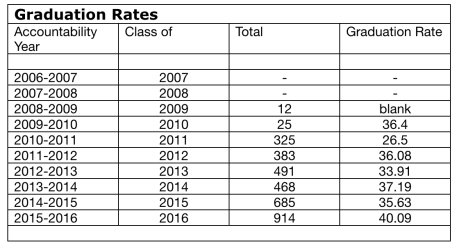
Ten years later the Nevada Charter Authority is attempting to shut down this charter because of poor graduation rates.
Ten years.
I have been studying this information for months and have yet to see any accountability by Nevada Charters. Claims that they can be closed are not backed by real evidence. Nevada Charters close due to bankruptcy and fraud. They do not close due to severe and consistent academic under-performance.
As you review the data – you will notice that in most years and most grade levels half or more of the students are failing.
Graduation rates have been abysmal.
If I am reading the hard to understand reports correctly, in 2016 Nevada most likely paid $6,000 X 2400 = $14,400,000 to Nevada Connections Academy for High School Seniors and 40% or 914 graduated.
Total enrollment in Nevada Connections Academy was report at 2,851. Overall the Nevada Tax Payer spend $17,106,000 for less than half its students to be proficient.
The school also has a swinging door with half its students turning over. Due to lack of regulation and oversight – plus the “missing” students every year at testing time – I have to ask if the Nevada Tax Payer is paying for students not even in the program any longer.
Understandably parents and students do not want their charter school to close.
Parent and students do not want my public school to close either. Yet, I am held accountable. My school can be turned around or taken over by the Achievement School District. This failing charter has been doing poorly for 10 years and what has happened?
Nothing.
Parent and students base their “choice” of school on things other than standardized testing and numbers. I understand this very well. And they will protest if this school is closed. However, I am using this an example which is fairly similar to half of Nevada’s Charters which are on the lowest performing list.
Half of Nevada’s charters are on the lowest performing list. The worst graduation rates in the state are in the State Public Charter School System.
This charter is one of many in Nevada not doing well.
Half of Nevada’s charters are on the lowest performing list.
Parents need access to charter information at the same level public schools are required to give information to parents. In an annual report published on-line. Charters which spend on marketing to produce enrollment numbers need to be giving their data and graduation rate information to student prior to enrollment. No one should have to dig around in the Nevada Report Card for a month to try to determine if a school is academically achieving. If these charters are actually serving students not expected to graduate – if they are alternative schools – they should tell parents up-front the likelihood of graduating from these schools.
Charters need to be audited. Public schools have the SAGE Commission. Charters should have a similiar body which looks at return on investment and other financial measures.
I just attempted to watch an audit or something like an audit on-line from the charter authority.
Besides cheerleading for charters – I’m not sure the audit produced much information. It certainly did not expose anything I have discovered in the last few months. Watch the video for yourself and ask yourself if the Nevada Charter Authority is able to hold any of Nevada’s Charters accountable with the information presented.
Due process is the reason charters are not closing?
Perhaps there is simply zero political appetite to close a perpetually failing charter?
While charters may protest accountability in the name of freedom and choice. . . this needs to be balanced by accountability to the tax payer who pays the bills.
It is not fair to have a strict accountability system for public systems while charters are allowed to run amuck in the state of Nevada.
The unfairness of a legislated system that turns public schools into charters but does nothing about all the failing charters spending million in tax payer money in the state – is foul.
The Nevada Charter System is a failing school system in the state. That is clear according the data.
If Nevada Connections cannot be closed after 10 years of failure, which charter will ever be held accountable?
Angie
See the whole report here.

 Diane Ravitch's blog
LikeLike
The Office of Inspector General of the U.S. Department of Education has issued a report that, because of their lack of accountability to the public, charter schools pose a risk to the Department of Education’s goals. The report finds that “Charter schools and their management organizations pose a potential risk to federal funds even as they threaten to fall short of meeting the goals” because of financial fraud and the artful skimming of tax money into private pockets.
And the Washington State Supreme Court, the New York State Supreme Court, and the National Labor Relations Board have ruled that charter schools are not public schools at all because they aren’t accountable to the public since they aren’t governed by publicly-elected boards and aren’t subdivisions of public government entities, in spite of the fact that some state laws enabling charter schools say they are government subdivisions. That’s common sense to any taxpayer: Charter schools are clearly private schools, owned and operated by private entities. Nevertheless, they get public tax money but have virtually no public record accountability of what they do with the tax money they divert from genuine public schools.
Even the staunchly pro-charter school Los Angeles Times (which acknowledges that its favorable reporting on charter schools is paid for by a billionaire charter school advocate) complained in an editorial that “the only serious scrutiny that charter operators typically get is when they are issued their right to operate, and then five years later when they apply for renewal.” Without needed oversight of what charter schools are actually doing with the public’s tax dollars, hundreds of millions of tax dollars that are intended to be spent on educating the public’s children is being siphoned away into private pockets and to the bottom lines of hedge funds.
There are many tactics used by many charter school operators to reap profit from their schools, even the so-called “non-profits”, such as private charter school boards paying exorbitant sums to lease building space for their school in buildings that are owned by corporations that are in turn owned or controlled by the charter school board members or are REIT investments that are part of a hedge fund’s portfolio. There are many other avenues of making a hidden profit from operating private charter schools.
In addition to the siphoning away of money from needy schools, reports from the NAACP and ACLU have revealed facts about just how charter schools are resegregating our nation’s schools, as well as discriminating racially and socioeconomically against American children of color; and, very detailed nationwide research by The Center for Civil Rights Remedies at UCLA shows in clear terms that private charter schools suspend extraordinary numbers of black students. Based on these and other findings of racial discrimination in charter schools, the NAACP Board of Directors has passed a resolution calling for a moratorium on charter school expansion and for the strengthening of oversight in governance and practice.
Therefore, in order to assure that tax dollars are being spent wisely and that there is no racism in charter schools, charter schools should minimally (1) be required by law to be governed by school boards elected by the voters so that the charter schools are accountable to the public; (2) be a subdivision of a publicly-elected governmental body; (3) be required to file the same detailed public-domain audited annual financial reports under penalty of perjury that genuine public schools file; and, (4) be required to operate so that anything a charter school buys with the public’s money should be the public’s property.
Those aren’t unreasonable requirements. In fact, they are common sense to anyone taxpayers and to anyone who seeks to assure that America’s children — especially her neediest children — are optimally benefiting from public tax dollars intended for their education.
LikeLike