Andy Puzder, owner of multiple fast-food restaurants, is the likely choice of Trump for the post of Secretary of Labor. He advised Trump during the campaign and raised money for him.
He believes that machines can replace people, and that will be an effective way to cope with rising wages and costs.
He objected to a federal increase in the minimum wage for fast-food workers, although he is paid millions every year.
“Government needs to get out of the way,” Puzder told Yahoo! Finance in an interview Monday. “If government gets out of the way, businesses will create jobs and wages will go up.”
So far, the federal government has largely stayed out of the way. Congress has not taken up President Barack Obama’s call to raise the minimum wage to $10.10 an hour from $7.25. And with the exception of a few companies, like Costco, In-N-Out Burger and Boloco, businesses haven’t taken the initiative to create higher paying jobs.
Puzder made $4.4 million in 2012, according to Forbes. That’s about 291 times what a minimum wage worker makes in a year, if they’re earning the federal minimum and working full-time. The average fast food CEO made 721 times what minimum wage workers took in in 2013, according to a recent report from the Economic Policy Institute.
We need a system where people are paid enough during their working years to put money away in order to retire peacefully in old age.
We need to change the current system, where people like Puzder make more in one day($17,192) than one of his minimum-wage employees would earn after working full-time for an entire year ($15,130).
This system was created by people like Puzder and political leaders who, like him, blame the very people who are just trying to make ends meet. But we have the power to change how the system works.
Not surprisingly, the road to change doesn’t involve taking away supports from the people who need them most. It involves creating good jobs for the people who need them most; jobs that provide a fair wage and benefits—that give people options rather than forcing them to choose between bad and worse.

 Diane Ravitch's blog
I wonder if those machines will also replace consumers that buy the products corporations churn out for consumers to buy when there are no more human consumers with jobs.
LikeLike
Good one, Lloyd.
LikeLike
Agreed.
LikeLike
It is a strange phenomenon, if you pay people more, then they tend to spend more.
LikeLiked by 1 person
That is the Keynsian philosophy.
If people in lower income brackets get an increase in wages, they will spend their wages for needed goods, not save it like the high income people do, and who often park their huge savings in off shore banks so as not to pay tax in the US.
The idea of keeping most of American workers at poverty level wages is anathema to how the actual free market is supposed to work by keeping money circulating….plus fair broad taxation for the greater good (infrastructure, schools, hospitals, etc.) When the wealthiest pay the least taxes, how will there be any funding for roads, bridges, and other societal needs? At poverty level wages there is not much to tax. Death to the Middle Class.
Trump’s historic shift in the laws devised to protect the majority of Americans, as with the EPA, health care, earnings, etc. truly trumpets the demise of democratic ideals.
LikeLiked by 1 person
On Sunday “60 Minutes” did a story on Joe Max Higgins, and his manufacturing projects in Mississippi. Paid for by three neighboring counties, Higgins is a pitbull of manufacturing development. Central eastern Mississippi is called the “golden triangle, ” due to the manufacturing revival. Higgins has done it by being determined, working with community colleges to train labor, and lots of give backs to companies. Some workers are making up to $48 dollars an hour, very high wages for this area. Today’s blue collar workers are being hurt by globalization and mechanization. Higgins showed a steel mill with 600 good paying jobs, but twenty years ago, this same factory would have employed over 6,000 people.
LikeLike
With the insane quest to replace humans with AI’s, one day those 600 jobs will also be gone along with millions of truck, taxi, and passenger jet jobs as all of those jobs, drivers and pilots, are also done away with by automation and AI’s.
The 0.1 percent, in their endless Milton Friedman/Donald Trump short -term, greed-is-great thinking, are running off a cliff like lemmings and taking us all with them.
LikeLiked by 1 person
That’s why we have to fight for students’ rights to a qualified human teacher. Otherwise, these same people will be happy to have our young people sitting in front of screens all day paying the 0.1 per cent.
LikeLiked by 1 person
Quite a few reports have exposed the fact that it has not actually been the exporting of jobs to other countries, but more the losing of jobs through a use of technology which has hurt so many of those who voted for Trump — who has promised to “bring their jobs back.”
LikeLike
Trump promised to bring back jobs that were lost to other countries that never left, that went to robots/automation instead
Did Trump lie?
Did he really mean to bring jobs back?
If so, was his promise to return as many of the 13 percent of jobs as possible that were lost to other countries while ignoring the more than 80 percent that were lost to automation in the U.S.?
Trump often makes promises in generalities at a 4th grade literacy level that are open to interpretations that might not mean what he meant if he meant anything at all.s
Every time I read about one of his promises that Trump claims he never made, that was caught on video and saved, he replies that he didn’t mean what people think he meant.
Maybe the U.S. should deport the robot job thieves by shooting them toward Mercury, the planet closest to the sun, or dropping them into the deepest depths of the ocean.
LikeLiked by 1 person
Lloyd,
I heard Paul Krugman speak the other night, and he scoffed at Trump saying 700 jobs. He said that on any given day, 75,000 people lose their jobs. People are fired and hired. 700 jobs are symbolic and have no meaning.
LikeLike
ciedie aech
That is not quite true , Like much of the memes about Public Schools and education. These jobs are not going to China or Mexico for their Robots. They are leaving for cheaper labor . Yes the modern American Steel Mill employees 600 where it used to employ 6000 but that happened mostly in the 70’s and the 80’s .
As the work force grew in the 80’s to the late 90’s the percentage of manufacturing jobs shrunk ,but the actual # of workers employed stayed relatively constant.
Trade agreements were not about tariffs which are already low. . They were about protecting investments by multinational corporations. You do not want to build a steel mill in Mexico or China to have the next Government nationalize your investment . Like wise you want assurances that the supply chain will be protected, from strikes, civil disturbances or new labor provisions .
As the Clinton era Trade agreements kicked in manufacturing employment plummeted almost 6 million jobs in about 7 years before the great recession. They dipped further in the recession and came back to pre recession levels. If the Robot story were true then productivity would be rising because obviously productivity the cost per hour in labor to produce a product is cheaper when unpaid robots are doing the work. Productivity increases have been running at a pace far below the level of previous decades .
So Robbie the Robot is not taking these jobs YET!!!!! Far more white collar jobs have been lost to computerization. The modern office building used to be packed with cubbyholes of workers .In Downtown manhatten you could not get a seat at a lunch place .
You know you are in trouble when the cafeterias start to shut down.
I am not saying that when a new factory is built it will not be even more efficient and automated than before and we may be looking at even greater job losses .Losses that threaten an even greater portion of the work force than today. . The 800 Carrier jobs could dwindle down to 80. The truck driver, cashier and fast food service employee replaced by AI or Robbie .
That is not necessarily a bad thing just as the Luddites were replaced or the Blacksmith. The question is how we share the fruits of that production. if you believe that individuals are responsible for all of our advances in technology in medicine. Than you insanely reward those who make a drug or invent and implement robotics.
If you believe that technology is evolutionary and that mankind would develop all of these advances anyway, than you figure ways to share our wealth equitably . You develop other means of funding scientific research and development. Then share the fruits of those developments equitably. When Jonas Salk invented Polio vaccine he held no patent. Today would he be selling to the highest bidder at a thousand a pop. Bill Gates did not invent the computer, he did not invent software, he did not even invent DOS he got it at a bargain basement price from another inventor. .But none of them stood a prayer with out Edison developing the light bulb. .Which 23 others were working on it at the same time . Simultaneous invention is common through out history . . .
Just like they didn’t do it alone neither did I. Most of the line of thought I just expressed comes from one of the former Chief economists at The Economic Policy Institute . Dean Baker . Who is not alone in this line of thought either. Joined by many progressive economists.
http://cepr.net/publications/op-eds-columns/the-job-killing-robot-myth
LikeLike
Where the left falls down on matters pertaining to employment is when they talk about increasing the minimum wage as an isolated issue. Three to five million, largely blue collar or near middle class jobs are currently unfilled in this country due skills deficits in the nations workforce. Most of these jobs pay more $15 an hour and many include health benefits. In the precision manufacturing industry for example, every new job created creates two other jobs. Even though there needs to be an increase in the minimum wage, a $15 dollar an hour increase in most parts of the country is excessive. A one dollar an hour increase in pay for a full-time employee is an additional $2,000 per year. This is a lot for the average pizza shop owner, for example, to absorb given their slim profit margins.
We as a nation need become better educated on the diverse issues that factor into employment in this country so that we can impact the lives of the un and under-employed on a more broad based and substantial level.
LikeLike
There’s no skills deficit. That’s a zombie myth perpetrated and perpetuated by the oligarchs to justify hiring foreign workers at lower wages with no benefits. It never seems to be the right time to have a higher minimum wage. There are always excuses to delay raising the minimum wage, always. $15/hour its not a huge salary except in the red right-to-work (FOR LESS AND LESS) states, many of them former slave states.
LikeLike
For the oligarchs it’s never the right time for paid sick leave, paid family leave or raising the minimum wage. We are ALWAYS told that but, but, but, but, but, but, but the small business man just cannot afford all these costs. BALONEY. Is Walmart a small business? This obstructing and blocking of raising the standards for minimum wage workers has been going on forever.
LikeLike
I work directly with small manufacturing businesses in New England who can’t find trained workers to assist them in growing their companies. Most of their workforce is on a 50-60 hour a week schedule and most of them are near retirement. This in not a myth.
Most people understand the realities associated with finding skilled labor in this country especially when they look to find a plumber or carpenter.
LikeLike
We are tied in last place with Papua New Guinea for nations without guaranteed paid maternity leave. https://www.washingtonpost.com/news/worldviews/wp/2016/08/13/the-world-is-getting-better-at-paid-maternity-leave-the-u-s-is-not/?utm_term=.cde67803d6f0
LikeLike
Rachel Maddow last night spoke of Trump wanting to have Carrier pay workers matching wages to the Mexican worker…only $6 an hour. His tweets yesterday insulting the union prez AND the Carrier workers as inferior, was off the wall. Perhaps his assets should be appropriated and divided between minimum wage workers…but, oh yes, he now has GENERALS in charge to protect him, and under the Military Commissions Act he alone can send the military into the streets of America to enforce his edicts with a stroke of his pen signing an Executive Order.
We are in such trouble in America. We are in the midst of potentially a full fledged fascistic nation and we are led by a madman.
LikeLike
Ellen,
What is most shocking in the past 24 hours is that the President-elect would take to Twitter to sneer at another person. In my life, I can’t remember a president attacking a citizen personally because he disagreed with him. Other than Harry Truman criticizing a music critic who wrote a negative review of his daughter’s singing. If Trump is going to use Twitter to beat up on individuals, this is scary. The union leader at Carrier (the target of the tweet) began getting threatening phone calls from zealous Trumpniks.
LikeLike
Ellen Lubic
I believe that Trump did not tweet the 6 Dollar figure, the president of that local explained that there was no offer he could make to the employer that would equal six dollars an hour for their costs in Mexico. A cost that must have included shipping and building plant and equipment. Mexican workers are not getting 6 an hour . He offered not 7 million over 10 years but 23 million a year in cuts the company wanted 65 million . Equivalent to reducing wages to 6 an hour.
The sad party is that this move was over several years. I suspect the ones that are keeping their jobs were not slated to go in 17 anyway . I would bet anything these jobs are gone once the dust settles and Trump is on the ropes having crashed the economy. Or simply abandoned the pretense of representing the White working class. After setting them back a century .
dianeravitch
You just answered why there was mob infiltration into certain segments of the labor movement. Those that could not supply their own muscle. As he said he is not worried . I have a good suspicion why.
http://www.usatoday.com/story/news/politics/elections/2016/12/08/donald-trump-carrier-union-president-tweets/95133454/
LikeLike
I hope you all listened to Rachel Maddow tonight giving new poll info on Trump voters who don’t think he should show his taxes, and other amazingly egregious things. Also, there is not going to be a declaration by him of giving up his businesses, as witness, his name on screen credit for the new Apprentice show. And the vast amounts being spent at his hotels by those who want to curry his favor as OUR prez as recently as the Middle Eastern potentates did yesterday.
My article, now many months ago, on Trump as Ignoramus, can be found at many sites, wherein I talk about the greatest worry is who are these fools, morons, and greed merchants who support him. As an aside I got some real threats from some his supporters for pointing my flashlight at them. Now they insist the stock market has gone DOWN from the 7000s when Obama took office, and they are too dumb to understand it is about to hit 20,000 in a Dem regime.
And some here still think automatic voter registration is a GOOD thing. I think that every voter should have to pass a test of how the US government works….anyone who fails does not know enough to vote and thereby destroy America with their ignorance and greed. Can you imagine the dangers this whacko/demagogue/liar will produce over the next four years? And his equally dangerous Cabinet? And SCOTUS?
Where are the Repubs, and where are the Dems, who stand against his self serving and illegal behavior? Why aren’t Paul Ryan and Mitch McConnell saying, ‘Trump, you can’t be Prez without divesting your businesses, and without showing us your tax returns so we can even know how vast your conflicts of interest are’? These are the cowards and jerks who run OUR country.
And Rudy, I don’t give a farthing what you think…I think you are a Trump plant here.
LikeLike
Ellen,
I share your worry about ignorant (and often nasty) voters. Some of the meanest, least-informed kids at our school are Trumpers –and given the fact that they rarely pay attention in their classes, I don’t think this ignorance is going to abate. This is our world. The Enlightenment is having a hard time penetrating this hard-core of close minded, mean people. Not to say that all Trump voters are this way, but Trump and other demagogues will always have this rump citizenry to swing to their side unless we can figure out a way to make Enlightenment penetrate deeper into the peasantry.
LikeLike
I would add that our elementary schools, by giving up on transmitting valuable knowledge about the way the world is (in lieu of lame “reading skills”), are digging our hole deeper. We need to start informing kids young. Instead, we’ve decided that education is not about informing –it’s about the skill of finding supporting evidence, etc. Young adults, starving for an understanding of the world, look on the Internet and finally find true teachers –Nazi teachers!
LikeLike
Where’s your beloved free market? If there is a “skills deficit” and tons of jobs going unfilled because of it, shouldn’t the going wage for those jobs increase to the point that enough people will be motivated to get the training/credentials/experience to fill them? Apparently these employers with jobs to fill simply aren’t paying enough, are they?
But, in a way, you’re right. Minimum wage should never be talked about without tying it to maximum wage. There should be a formula between the two, maybe 100 to 1? For every $100/year the top dogs at any given company make (including all forms of compensation, such as benefits, stocks, options, etc.), the lowest paid worker has to earn at least $1/year. So if Mr. Fancy Pants CEO wants to pay himself $100 million, that’s fine, but then he has to pay his workers one million.
LikeLike
Whose “beloved free market” are you talking about? I have spent about four years here writing as a Keynsian and an educator who teaches the history of economics, against the unfair ‘free’ market.
LikeLike
And what you are suggesting is called “profit sharing” and long ago it worked as with United Airlines…it has been dead and buried in the US as “socialism”….and In Japan they used to have a top limit ratio of the boss to the workers compensation, but that too is gone.
LikeLike
ohn
First off John you are conflating a monthly number from BLS with some sort of long term problem. That number represents the difference between layoffs each month and hiring. It is the time it takes to fill jobs throughout the economy . If my if I quit my job tomorrow my employer has to go out and seek a qualified candidate to fill my position, whether I am a Butcher Baker or lollypop maker. The candidates are not standing on line waiting for me to quit. It can take several months. That number has stayed relatively the same in good times and bad. Obviously in bad times there should be more people available.The fact that it has not shrunk in bad times is a clue.
What it does not represent is 3 million jobs (the actual # from BLS) with desperate employers who can not produce because they have no workers.
We live in a capitalist system . The main tenet of that system is the law of supply and demand .
“Simply when there is a shortage of skills those with the sought after skills are able to arbitrage those skills between employers and wages rise”
If Boeing or Microsoft is laying off software engineers you can not say that there is a shortage because you can not find a software engineer willing to work for you at an entry level wage. .
Not even the Great Larry Summers can find any evidence of a rise in wages that would indicate a shortage of skills in more than 1 or 2 percent of the economy .
“But what if we go educate our selves and get those skills and then they are not needed like our last job.” That was Krugman “Sympathy for the Luddites”
Somebody Tell Rex Tillerson that there are a whole lot of Petrochemical Engineers looking for a job. I suspect the state of North Dakota is not so booming along with Valenzuela.
.
But as Cappelli will argue below, what ever happened to the concept of training employees and moving up within an organization. I worked as a supervisor for 30 years in an industry with highly skilled employees who had to go through a five year apprenticeship. Many projects required a different skill set and we trained these skilled journeyman to do work they my never had seen before . So in my retirement I would be happy to assist that manufacturer to solve his problem. But the dirty little secrete is either train people or pay more for people with the skills.
So regardless of what an employer may say if he had demand for his product he would grab junior off the street or pay up
http://www.epi.org/publication/shortage-skilled-workers/
LikeLike
How about location? What if jobs are available on the east coast, but the skilled workers that are unemployed and looking for work live on the west coast?
LikeLike
Lloyd Lofthouse
Another point Lloyd,
But what are those coastal industries. Yes we could have layoffs of skilled machinists at the Boeing plant in Seattle. Who do not want a non union job for a third the wage package south of the border in Right to Work South Carolina.
What those workers in South Carolina will find out, like they did with textiles. Boeing can fly that completed jet any where in the world it has to be delivered from a plant in India.
LikeLike
We can debate what the actual numbers are but skilled machinists, carpenters, and plumbers to name a few are in short supply. Forty three percent of all the manufacturing that went to China has now come back and lots of companies in this area could grow their businesses if they had the right people, instead they are demanding more of their aging workforce and passing on many potentially lucrative opportunities. I am an administrator at technical high school and during the financial meltdown of 2008 we had no decrease in placing students in skilled employment situations. Since that time our placement numbers have only grown. Again these jobs pay above minimum wage and typically have health benefits. From where we sit there are vast opportunities for skilled workers in the region and I believe that this is not that unusual across the nation.
LikeLike
If there was national subsidized health insurance for everyone, then no minimum wage might work. The fruits of the machines labor should at least pay for health insurance and education for the people. About 10K per year for health insurance for every American and 10K per year for education from 3 to 20, or something like that is what it costs.
LikeLike
Rising costs of labor?? How bout the rising salary of the CEO and stock holders who keep making more and more money year after year but the minimum wage is stuck in neutral. I remember when CEOs made 100K a year and received 10K bonuses every year. Today, CEOs earn tens of millions of dollars and get multi million dollar bonuses every year!! Now that is what I call high cost of labor…..
LikeLike
A bill heading to Gov. John Kasich for signature today (Senate Bill 331) includes a real mash-up of regulations and amendments.
It givie a thumbs up to the retail sale of puppies from large-scale, unlicensed breeders.
It makes bestiality illegal in the state
It makes cockfighting a felony
It makes it easier for wireless providers to install “ small cell” equipment on city utility poles.
It prohibits cities from putting terms in business contracts to ensure employees have proper working conditions….
and
It prohibits cities from going higher than Ohio’s minimum wage, $8.15 in 2017 (even though Cleveland residents are set to vote on a phased-in $15 minimum wage in May).
Note that all of these amendments consolidate power at the state level, leaving cities and local communities with less freedom of action.
group.http://www.dispatch.com/content/stories/local/2016/12/08/bill-helps-out-petland-limits-minimum-
LikeLike
Thanks for reminding me why I never liked John Kasich at a time last year when he was posing as the sane Republican.
LikeLike
I believe I have said there are no moderate Republicans What makes trump so dangerous is that he will work with Republicans to decimate the working class. I voted for the last moderate Republican Jacob Javits . He left office in 81.
I will post the Bill Maher Reagan was the Original teabagger again.
LikeLike
I wish I felt sorry for working people here in the rustbelt but I don’t.
All the information they needed on Trump was his complete lack of character. They chose to ignore that and now he’s going to screw them like he’s screwed everyone he’s ever dealt in his business career.
It’s pretty simple: you don’t hire people who lie and cheat and steal as much as Trump does. Lying and cheating and stealing are wrong and if Trump would do those things to other people he will do them to his supporters.
LikeLike
First lets understand most of those who voted for Trump were not working class voters of any color . Many were retired no longer dependent on employment, many of those delusionally see themselves as untouchable pensions and all(they will be surprised.) .
A certain significant percentage are traditional Republican voters to whom the Republican agenda is in their best interest. Then there is that working class voter, not only in the Mid West , but here on long island. Where the percentage of manufacturing jobs can be counted on the toes 6.7% much of that a stretch like Reagan wanting to classify McDonald’s jobs as manufacturing.
For this group ignorance and racism is the motivating factor and if there was a way to inoculate the rest of us from the suffering. I would take great joy in watching them suffer including the friend I just got off the phone with. Needless to say he will be going to an otolaryngologists in the morning
LikeLike
So you wanna’ work the warehouse? Try competing against the Amazon “workers” here in America.


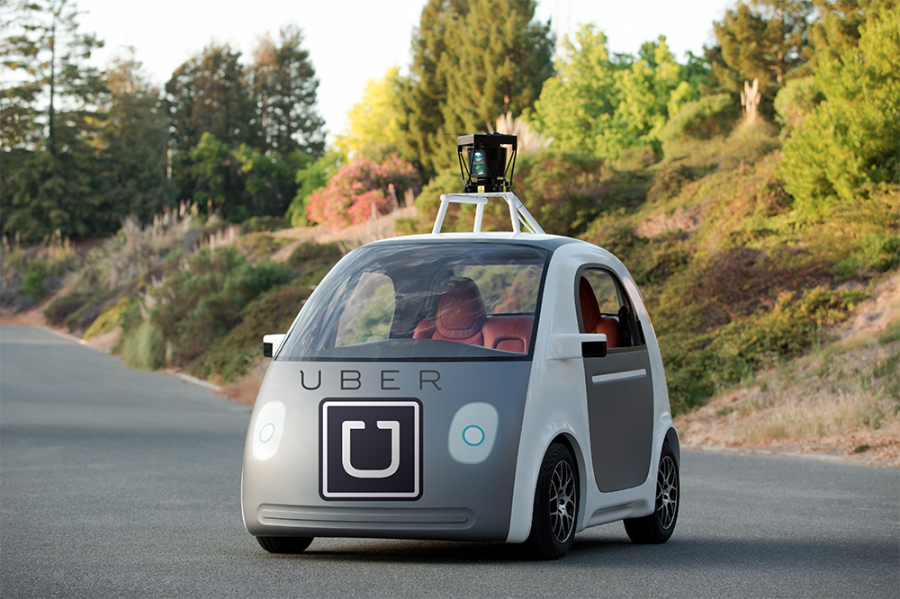
So you’d rather drive the UPS truck?
Screw it. I’ll just be an Uber driver.
LikeLike
Just yesterday there was a spot on NPR about some silicon valley geeks worrying about the time they feel is coming, when machines will do most of the work. They are donating money to try out an idea about a guarenteed income for all citizens.
I have often wondered how capitalism is supposed to work in the environment of stable or shrinking population. Free markets need to expand somehow if the concept of markets works at all. Throw in a rise in productivity, and you can make many widgets for a low cost. But there is no market that will absorb this. Someone has to be able to buy.
The post war generation found itself in the enviable position of bei the only manufacturing base in the world untouched by the war. The result, along with labor unions who demanded the money be shared, was an economic engine that will probably never again be matched. Now that all the members of that generation are going away, the economy cannot figure out how to create wealth in the population that will act the way that generation did to stabilize the market.
The history of technology is that something always does the job better than people. But without people, why make anything?
LikeLike
If people are furloughed due to automation, won’t we reach a point where many people will be unable to buy the goods or services? It is all down hill from there.
LikeLike
They thought they had a solution for that in early 2008 . The despicables like Larry Kudlow thought that a new global middle class would make up the demand lost by American consumers. Revealing what idiots they were. It was a buying opportunity in fine companies like AIG . Of course knowing that the American taxpayer would bail out the bungling billionaires in the future, probably made it a wise move .
LikeLike
I personally think it is time to hit these “politicians” where they live. Boycott their companies and let them know it is in direct response to their attitudes/lack of ethical behavior. There is no difference between them and Scrooge. Everyone looks in horror at the way he acts in the movie but we have many, many Scrooges today.
LikeLike
United Steelworkers Union Chief, Chuck Jones, exposes Trumps’ double dealing side (which, if you’re a New Yorker, is like saying the sun rises in the east). Trump puts out this tweet:
“Chuck Jones, who is President of United Steelworkers 1999, has done a terrible job representing workers. No wonder companies flee country”
And, instead of rallying cries in defense, Jones gets completely lambasted by ardent Trump supporters.
And the delicious icing on the cake is that Trump has announced he wants to appoint a union bashing, pro-mechanization at the expense of human workers millionaire as his Secretary of Labor. Unlike the destruction of a great public education system, this will actually be reported in the mainstream press.
The writing is spray painted in huge letters on the wall. What more does anyone need to see?
LikeLike
Doesn’t anyone see that automation creates jobs? The steam shovel put many ditch-diggers out of work. The ditch-diggers had to find alternate employment.
It is great that robots are replacing human workers. I would rather buy a widget that was made in the USA by an American robot, than buy a widget that was made by a Mexican robot. US Workers get paid $30 an hour, and Mexicans get $30 per day. Is it any wonder that US companies are fleeing to Mexico and India and China, for lower wage costs. Robots will stop this migration, and return the jobs to US locations.
Great.
LikeLike