The world of education is continually susceptible to hoaxes, frauds, and panaceas. The media pounces on miracle schools, miraculous teachers, and methods that turn every student into a genius.
Tom Ultican, retired teacher of physics and advanced math in California, cannot tolerate scams and overblown claims.
His latest commentary is about “the science of learning,” which comes with the usual fanfare.
He writes:
On September 24, The 74 headline read, “What Happens When a 48K-Student District Commits to the ‘Science of Learning’ – In Frederick County, Maryland, test scores rose, achievement gaps shrank and even veteran educators slowly embraced the decidedly not-faddish fix.” This statement is mostly baloney used to sell the “science of learning.”
The article opens with a new first grade teacher discussing her next day’s math lesson with the school’s principal, Tracy Poquette. The third paragraph says,
“Poquette recommended the whiteboards. ‘You’re going to ask them to hold them up,’ Poquette coached Able, miming holding a whiteboard in the air. Then you can see their answers, and how they got to that. Every student is responding.”’
This seems fine but it is hardly innovative. This technique comes from the 20th century or maybe even the 19th century. The next paragraph states, “The sessions are meant to accelerate student learning and take some of the guesswork out of becoming an effective teacher, part of a larger district plan to incorporate research from the fields of neuroscience, educational psychology and cognitive science — often referred together broadly as the ‘science of learning.’”
They are selling baseless malarkey. Neuroscience and cognitive science still do not provide much usable insight into how students learn or what the best teaching methods are.
The claim of rising test scores is deliberately misleading. The scores may have risen a little but this is a case in which the cause is pretty clear. In statistics, the r-value correlation has a value between o and 1 for determining the effects of different inputs on education testing results. An r = 0 means there in no relationship and an r = 1 means the input is 100% determinative. Inputs like teacher, curriculum design, class size, etc. can be evaluated. The only input ever found with more than o.3 r-value is family wealth at a 0.9 r-value. Between 2021 and 2022, Frederick County, Maryland had “the largest net positive change in total income in the state.” As indicated by statistical analysis, of course test scores raised some.
These fraudulent claims about the “science of learning” are being financed by wealthy people wanting to implement competency based education (CBE). With its concentration on developing mastery of small discrete information bites, CBE makes kids learning at screens more possible. Since 2010, the annual GSV+ASU conference, which is a big deal with tech billionaires, has been striving toward this goal. At their 2023 conference in San Diego, Carnegie and ETS announced a new partnership to create functional testing for competency based education (CBE).
GSV appears to have convinced Tim Knowles and the Carnegie Foundation to abandon the Carnegie Unit to open the way for CBE based testing and badges.
The Claims and Propaganda
Trish Jha, a research fellow at the Center for Independent Studies in Australia, just published a more than 15,000 word essay explaining why the “science of learning” is needed. She claims:
The proponents of the “science of learning” claim that Pestalozzi, Herbart and Dewey, the fathers of progressive education, were wrong. They tell us that “problem based education” is counterproductive and that discovery approaches are harming children. They claim that direct instruction and drilling small bits of information to mastery are what children need.
“Australian education needs to position the science of learning as the foundation for policy and practice.”
“Unfortunately, key pillars of Australian education policy do not reflect the science of learning, due to the far-reaching impacts of progressive educational beliefs dating back to the 18th century.
These beliefs include that:
- Students learn best when they themselves guide their learning and it aligns with their interest;
- Rote learning is harmful;
- Learning should be based on projects or experiences, and that doing this will result in critical and creative thinkers.
But these beliefs are contradicted by the science of learning.”
Ms. Jha asserts, “The teaching approach best supported by the evidence is explicit instruction of a well-sequenced, knowledge-focused curriculum.” She sites E. D. Hirsh as one of her experts supporting this thinking.
It is part of a worldwide effort by wealthy people to digitized education under the cover of “science of learning”. In 2018, the Center for American Progress (CAP) wrote:
“This brief builds on the growing momentum for both the science of learning and school redesign. Last month, for instance, the XQ Institute released a policy guide for states on how best to redesign their schools. The document argued, among other things, that students should be able to learn at their own pace, progressing as they demonstrate mastery of key concepts.
And CAP went on to quote XQ:
“[Competency-based education] isn’t about replacing what goes on in the classroom with less-demanding experiences outside of it. This is about integrating innovative approaches to teaching in the classroom with opportunities for students to develop practical, concrete skills in real world settings. And it’s about awarding credit for learning—demonstrated learning—no matter where or when the learning takes place.”
The XQ institute is the creation of noted anti-public school and teacher-disparaging billionaire, Laurene Powell Jobs.
For 50 years, mastery-based education now called CBE has been a major flop. Established on the mind-numbing drill and skill approach, CBE undermines authentic learning. It has never worked.
Deans for Impact a Billionaire Created Example
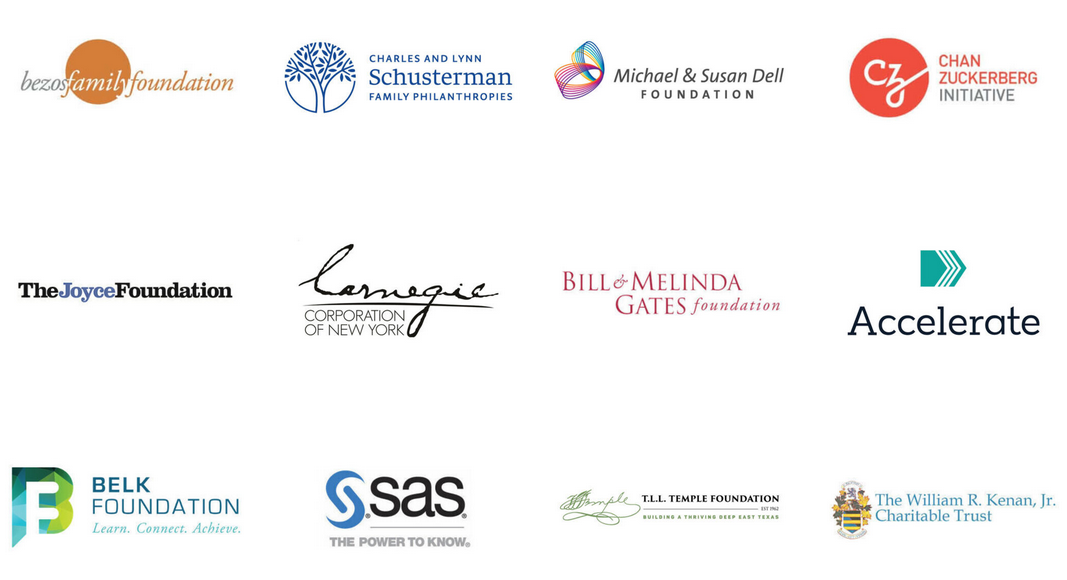
The Deans for Impact Supporters Page
Teach for America (TFA) is viewed by many people as the billionaires’ army for school privatization and the New Schools Venture Fund (NSVF) is the Swiss army knife of public school privatization. Deans for Impact (DFI) was created in 2015 with personnel from TFA and NSVF.
DFI founder, Benjamin Riley, was a policy director at NSVF. Riley stepped down as executive director of DFI in August 2022 and was replaced by another NSVF alumnus, Valarie Sakimura. Francesca Forzani, the current board president, spent 4 years as a TFA teacher in Greenville, Mississippi. The list of people from public school privatization promoting organizations who have served on the DFI board of directors is extensive:
- Michele McLaughlin 10 year in TFA management
- Peter Fishman 3 years at NSVF
- Ted Mitchell founding board member and 2ndCEO of NSVF
- Mayme Hostetter President of Relay Graduate School
- Tracey Weinstein worked for Michelle Rhee at Students First
- Rebekah Berlin TFA teacher for 2 years
- Tequilla Brownie TNTP CEO for 11 years
- CeCe Zhou TFA teacher for 5 years
- Kelly Butler Co-Founder of Mississippi’s Barksdale Reading Center
Supporters of DFI have been very generous since the founding in 2015. The last year for which tax records are available was 2022. Federal tax forms 990-PF show:
- Bill and Melinda Gates Foundation (TIN: 56-2618866) $3,482,504
- Charles and Lynn Schusterman Family Foundation (TIN: 73-1312965) $2,135,000
- Michael & Susan Dell Foundation (TIN: 36-4336415) $2,375,000
- The Joyce Foundation (TIN: 36-6079185) $2,400,000
- Carnegie Corporation of New York (TIN: 13-1628151) $875,000
These are huge sums of money but not for billionaires.
The Carnegie Corporation did not contribute to DFI until Timothy Knowles became president of the Carnegie Foundation for the Advancement of Teaching in 2021; probably not a coincidence.
Deans for Impact states:
“DFI believes all teacher-candidates should know the cognitive-science principles explored in The Science of Learning. And all educators, including new teachers, should be able to connect those principles to their practical implications for the classroom.”
Of course cognitive scientists do not agree on these principles and the neuroscience pitch is fantasy, but DFI is coming through with its deliverables.
Deans for Impact is just one small example of the many organizations billionaires have created to do their bidding.

 Diane Ravitch's blog
How utterly bizarre, on the face of it, that the approach of some set of instructional materials should be called “THE Science of Learning.” It’s like calling a child’s baking soda volcano kit THE Science of Chemistry. Idiotic.
LikeLike
Can we blame it on Pearson?
LikeLike
Here is something to blame on Pear$on
Our ridiculous one-size-fits-all school system, made more so by competency based supposedly “school AND career ready” instruction routinely fails enormous numbers of students who do not fit the mold required for success in it. It used to be that in the U.S., such kids could take a high-school equivalency exam, the GED, and then, based on that, go into a voc ed or apprenticeship program. But then Pear$on bought the GED, raised the fee, and made the test MUCH, MUCH harder and COMMON CORE-Y, so that now kids have to take the test AND PAY FOR IT many times, and many never pass it.
So, their dreams for the future are effectively killed. Pear$on makes kids say, “Mother, may I?” Then it rakes in the money and laughs in their faces.
THIS IS EVIL. PURE EVIL.
If I were a school administrator, I would institute a ban on all Pear$on products because of this.
LikeLike
The entire idea is to increasingly privatize education so that it no longer becomes a public good. Common Core was the first attempt.
The irony is that we hear that every parent knows what education is best for their child as if there is some need for differentiation. Then the same people tell us that everyone must learn in one particular (and very boring) way.
So which is it?
LikeLike
BTW, E.D. Hirsch, Jr., initially signed on as a supporter of the Common Core because he was promised by its promoters a great return to reading substantive texts. (David Coleman knew next to nothing about U.S. education; he didn’t know, for example, that almost every public school in America was ALREADY using a hardbound literature anthology series full of “classic,” substantive texts. Alas, Hirsch did not know this, either, and Hirsch also worked on his Core Knowledge Sequence in ignorance of the curriculum requirements of states and territories, which made using his Sequence impossible, because illegal, almost everywhere.) However, Hirsch withdrew his support for the Common Core when he saw that it ended up being instantiated in skill-and-drill CC-aligned exercises on snippets of text AND WAS THE EXACT OPPOSITE OF THE substantive, cumulative, knowledge-based instruction that he had long championed.
The people who invoke his name to support this bullshit are lying. Alas, at his age, he is unlikely to sue these bullshit artists.
LikeLiked by 1 person
An example: All states and territories mandate particular subjects to be taught at particular grade levels. For example, the sequence Earth Science, Life Science, and Physical Science is a TYPICAL state mandate, or REQUIRED SEQUENCE OF INSTRUCTION, for years 6,7, and 8. A school has no choice, under state law, but to follow this sequence. But Hirsch had students doing a little of each (Earth, Life, Physical) at each grade level. I had he and his wife to dinner one evening and asked him why he did this, given the state requirements, and he humorously quoted Samuel Johnson, saying, “Ignorance, Madame. Sheer ignorance.”
This is not to take anything away from the Core Knowledge Sequence, which is outstanding.
LikeLike
cx: him and his wife
LikeLike
Many many charter schools use Core Knowledge; it’s fantastic! At the school my kids attended they got to annotate and keep their books every year, so that when they graduated they had start to their own library.
LikeLike
Oh the good ol’ WEP. I paid SS for many years and once I became a teacher, (second career) I got less than half of what I paid. My question: where did the rest of my money go?
LikeLike
You should get a refund.
LikeLike
Funny how no one can answer that question. Years ago, a teacher decided to retire because she knew she had her SS and teachers retirement. She later found out, she had to go back to work because of the WEP. Also see: https://www.mercurynews.com/2023/04/16/they-spent-their-lives-teaching-californias-children-now-they-say-theyre-spending-their-retirement-paying-for-it/ What a nightmare, but I believe the law changed and saved them. Thanks everyone for our dedication to helping children, right?
LikeLike
Agreed, Jacqui. It’s excellent. Most of its critics reveal, very quickly, that they actually know little or nothing of it.
LikeLike
The Limits of Learning | Bob Shepherd | Praxis (wordpress.com)
LikeLike
When I was working as a textbook planner, writer, and editor, I saw firsthand how publishing houses would invite famous academics to “consult” on instructional programs–paying them large sums of money for doing almost nothing except endorsing the product. Often, the famous academic would appear as THE AUTHOR or ONE OF THE AUTHORS of a textbook program WITHOUT HAVING WRITTEN A SINGLE WORD OF IT. So, often, the academic has a financial interest. But even when he or she does not, it’s a mistake to assume that the academic knows what he or she is talking about. See my essay “The Limits of Learning,” above.
LikeLike
Here we go again. As long as there’s tons of money to be had from “drill for skill,” whether in person or on computer, and despite being effective in very limited areas, while boring students into cognitive stupors in most others, the “Science of Learning” war is bound to keep coming back. It was raging in the 90s when I was in grad school & working on my doctorate in precisely the “Science of Learning” areas of study (Educational Psychology, Neuroscience and Cognitive Science). However, most experienced teachers know better, so the money grabbers (and yes, that includes Pearson) did not ultimately win the day, so we should not be surprised that they’re back for another round of their BS for gold.
LikeLike
BTW, even though my doctoral studies were in Ed Psyc, my cognate was Neuro Psych, and Cognitive Science was a large component of my program, those three areas were not specifically called “The Science of Learning” at the time. Back then, the debate was primarily between Behaviorism vs Constructivism. By combining these three disciplines today and emphasizing “Science,” those pushing this are trying to legitimize drill and kill at computers AS IF that’s rooted in science when it isn’t. It should also be a tell for experienced teachers because it’s not educators who are behind it, but the same self-serving neoliberal non-educators as those who were pushing Common Core.
Tagging all that as “science” won’t cut it anyways because, for those in the know (and as my doctoral advisor used to regularly warn), “Science is always subject to revision…”
LikeLike
Remember when Behaviorism was called “Behavioral Science” –back when they told teachers (especially of kids in Special Ed) that it was OK to slap students for non-compliance? There was no valid science (nor compassion) in that, so people should not be swayed by the science misnomer.
LikeLike
My kids were deemed failures because they never stayed “within the lines.” Charvet I don’t get it. Did you think about it this way? Say, according to your transcript, you love Choir. Instead on an essay, could you write a song to say what you need to say. And, if it is good you can perform at graduation (they did and it was awesome) Oh, by the way the young lady went on to college and wrote her thesis on the importance of arts education. The other student chimed in and said, “I will write the music and play guitar for you. My kids acted it out; drew it out; built it out (from throwaway materials) and proved proficiency in an alternative way. They were kinesthetic learners and excelled in my arena with “hands on learning.” Oh, where do they do that at my alma mater, Cal Poly San Luis Obispo, CA. I saw a student build a cardboard half pipe to scale showing me he understood high math skills. In fact, I saw kids do and make things most “accelerated students” could never do. Point is: Let them think; let them explain; let them move. This proves my point (at 1:35). Enjoy. https://www.youtube.com/watch?v=Og1EsIj-bTs
LikeLiked by 1 person
There’s not one intelligence or six of them or seven of them. There are literally thousands and thousands of them. All these interacting functional parts of the brain. There’s a little neurology for you, you “science of reading” (HAAAA) numbskulls.
And school cares about two of them.
People who don’t grok this have no clue what we face if we are to envision schools that can work for all the different types of kids there are. A dynamic, breathtakingly diverse economy needs these diverse kids, with their diverse propensities and interests. Not widgets turned out by the college and career factory. We need cosmologists and cosmeticians.
DUH
LikeLike
@Bob, yeah, but what do I know?
LikeLiked by 1 person
a freaking lot, rc
LikeLike
“This proves my point.”
Exactly, RC!!!
LikeLike
@Bob — In all the meetings I attended about how a child learned, I would catch myself looking around the table. I saw a bunch of adults telling the child how they learned. In my later years (when I didn’t care about retribution), I would look at the child and say, “Don’t you just love how everyone is planning your future but no one asked you what would work for you?” You know, I always had the kids write “graduation essays” and have them reflect on a whole bunch of “life things” and the number one comment, “I know I should have done more, but I mostly wanted someone, just someone to really listen to me. I mean say nothing, and just listen.”
LikeLiked by 1 person
xoxoxoxoxoxo
LikeLike
(The science of reading and learning) “They are oligarch created deceptions bringing bad pedagogy and the end of free universal public education.”
This whole approach smells of Gates’ anywhere learning where the solution is always computer assisted learning. Anywhere learning implies that there is no need for a brick and mortar buildings, teachers, community cohesion, the interests of students or social skills. The end goal is for students to remain at home in their own foxhole and stare at their screens until they “master” their subjects. We recently tried all of this during the Covid pandemic. It was mostly an epic failure that resulted in social-emotional damage, depression and lagging academics among our isolated young people.
Gates fails to understand that humans are social beings with a need to communicate with others. Something is off in this man’s social-emotional development IMO. I say this after watching a few of his interviews. He and the other tech moguls are super bright so they completely grasp their personal gain from endorsing such a deadly dull, stultifying approach to learning. The truth is they do not care about other people’s children. They care about their own bottom line $$$. Computers are useful tools in the hands of teachers, but they cannot replace human teachers or presume to teach all students well.
LikeLike
Yup. This whole competency-based computerized instruction movement is someone’s autism writ large and foisted on the rest of the populace.
LikeLike
Gates, huh? –who, like many others leading this movement, was fortunate enough to go to (and send his own kids) to schools that did not treat all students as if they are square pegs needing to be forced into round holes.
I think your points above, Bob, about there being many kinds of multiple intelligences are right on target. I was fortunate because that’s consistent with both my undergraduate and graduate training (at different universities). That’s where it was emphasized to us in Teacher Ed programs that individual (and cultural differences) matter a lot, so effective teachers need to have MANY tools in their tool boxes, in order to respect and be able to reach each learner –rather than assume something is wrong with kids who don’t fit their concept of a student mold. I was also trained in the Reflective Practitioner model at both colleges about the importance of assessing each day how things went and adjust my teaching methods according to individual students’ successes, failures, learning differences and needs. Believing there is only ONE right way to learn and teach is just plain ignorant in my book.
LikeLiked by 1 person
Bill Gates and his children went to the same elite private school in Seattle. Small classes.
This is the curriculum in the high school:
Lakeside School’s Mission Statement
The mission of Lakeside School is to develop in intellectually capable young people the creative minds,
healthy bodies, and ethical spirits needed to contribute wisdom, compassion, and leadership to a global
society.
We provide a rigorous and dynamic academic program through which effective educators lead students to
take responsibility for learning.
We are committed to sustaining a school in which individuals representing diverse cultures and experiences
instruct one another in the meaning and value of community and in the joy and importance of lifelong
learning.
Introduction
The Upper School Curriculum Guide is our blueprint for mapping our mission to our curriculum
for grades 9 through 12. We take seriously the charge to provide a “rigorous and dynamic academic
program” that helps students to develop “the joy and importance of lifelong learning.” Our teachers
design and deliver challenging, student-centered classes that strive to be meaningful, relevant, and
engaging. Our goal is to develop creative, independent, and critical thinkers who can engage in open
inquiry, collaborate effectively, and conceive thoughtful solutions to questions, issues, and problems.
The Upper School’s educational program is broad and deep, with a series of core classes in grades 9
and 10 and a vast array of electives in grades 11 and 12. While we have only 587 students, we offer
135 different classes in English, history and social science, math and computer science, world
languages, natural science and engineering, physical education, human development and health, and
the visual and performing arts. Each class delivers substantial academic content paired with the skills,
competencies, and mindsets to allow students to make meaning and sense of what they are learning
and apply their knowledge in novel and productive ways. Courses are designed to be both
challenging and supportive, an effective combination for maximizing students’ learning and growth.
This guide details our requirements for graduation, academic policies and procedures, a full list of
course offerings from every department, and information about our co-curriculum and academic
support programs. We encourage all our students and families to become familiar with the
important material contained herein which will serve as a roadmap for their academic experience in
the Upper School.
LikeLike
Amen, ECE. You rock.
LikeLike
All I know is learning to read via computer is very difficult for young children as opposed to “turning book pages.” I remember the kids eyes getting very tired with scrolling and learning to scroll at an even pace. Then, everyone had to use computers. But if your school district was too cheap to pay for bandwidth, the dreaded blue circle of death would continuously be present while the kids screamed, “Charvet my computer isn’t working.” Yeah because everyone is trying to get on the “Informational Highway” at the same time. Then, teachers were responsible for monitoring proper computer use because the kids (super savvy) knew how to get past firewalls, IM each other, and go to web sites that were “No, Nos.”
All while the teacher was supposed make sure their black board configuration was up for the day; all standards were posted, Johnny was wearing his glasses, Billy took his meds, and 99% was not on their phones or trying to do Tik Tok challenges. And when your students are 95% kinesthetic learners and need tangible items to help them learn, it was mandated to use Study Sync and assorted other computer crap because it was the panacea for learning. Not to mention students didn’t take the keys off and move them around. Somehow a teacher was responsible for the maintenance of the computers as well. Lots of hours spent after school cleaning up messes. And just when I finally figured out the “new thing” we got more new things because it was better than the old thing. I digress.
LikeLike
Ah. Yes. Memories.
LikeLike
I know I’m in the minority, but I have a few issues with Ultican’s argument. I was first introduced to the “Science of Learning” from following the reforms implemented by schools, and to some extent the government, in England, particularly Michaela Community School. That led me to Hirsch, Willingham, Rosenshine, Kirschner, and the book Powerful Teaching. None of what I read involved the overuse of technology, in fact, I noticed a great deal of caution, even opposition, to the use of technology in the classroom. This was a relief to me because I was worried about the increasing use of “credit recovery,” where kids who had failed classes were put in front of a computer and spent hours reading short passages and answering multiple choice questions. They then were given a “70” for the course. I witnessed kids just right-clicking the question and finding the answers on Google.
Additionally, what I know of the “Science of Learning” is the farthest thing from Competency Based Education (CBE) which I also strongly oppose. In my state, the “experts” at the state department who are pushing CBE are the same people pushing inquiry learning, project based learning, skills based learning, and the demotion of teachers to facilitators. I’ve always associated CBE with progressive education methods.
This leads me to believe that perhaps we are not using the same definition for the “Science of Learning.” When I think about the science of learning, I think about the following things:
-correcting the overemphasis on “inquiry based,” “discovery based,” or “project based” teaching methods and balancing students need for “inquiry” with their need for highly structured and guided instruction by a teacher with deep subject knowledge because “experts” and “novices” do not think in the same way.
-importance of a highly sequenced and knowledge rich curriculum with high quality instructional materials.
-teaching strategies informed by cognitive neuroscience, such as retrieval practice, spacing, interleaving, and feedback-driven metacognition.
-teaching reading using structured literacy instead of balanced literacy.
I have found that the above transformed my teaching and probably saved me from quitting. All I was taught in ed school was theories from Rousseau, Dewey, and Piaget. What the “Science of Learning” did was give me actual, practical strategies and techniques that I could use in my classroom that actually worked.
LikeLike
Helping students learn more efficiently and effectively is what all teachers should be doing. However, in this country all roads lead to the commodification of education. When you read the article, you just have to see the billionaire tech giant lineup to understand that the main objective is to get more young people staring at screens unaware that their privacy is being violated and their data are being sold. We have repeatedly seen the same list of oligarchs giving their stamp of approval on everything that undermines public education. When they mention self-pacing instruction, they are talking computers.
LikeLike
I totally agree about self-pacing instruction meaning computers. I guess my point is that the strategies/methods/philosophy commonly called the science of learning isn’t the same thing as self-pacing and doesn’t even require self-pacing. In fact, the schools that are most associated with the science of learning are criticized for being “old fashioned” with students sitting in rows of desks, learning the same lesson at the same time, from a “sage on the stage”-the exact opposite of this computerized, self-pacing, CBE vision of school from the article.
LikeLike
Amen!
LikeLike
And so it continues, for folks literally invested in an inequitable system they will promote anything except undermining the inequity that is the primary variable causing vast differences in learning outcomes.
LikeLike
Nailed it, Arthur
LikeLike
How has progressive education undermined “inequity?” More students are NOT learning to read than ever, mostly poor children.
LikeLike
Over two decades ago, the National Research Council, summarized the research on How People Learn. https://www.google.com/books/edition/How_People_Learn/5FV0AgAAQBAJ?hl=en&gbpv=1&pg=PA2&printsec=frontcover
It was not a prescription for classroom instructional strategies, but it did have broad implications. Among the finding were that:
1) Student arrive in the classroom with preconceptions about how the world works that need to be engaged lest students memorized information that is easily forgotten. 2) Students need to develop conceptual frameworks to which information and fact need to be connected. This allows students to incorporate and retain new information they encounter; 3) Students can be taught strategies to monitor their understanding and learning progress to advance their learning.
To the best of my knowledge these findings have not been contraindicated. Nor has the fact that a host of variables mediate what we know about learning and what students learn. Anyone who ignores those powerful influences, denies that we know a thing or two about learning, or that they have a foolproof prescription how to teach undermines science and teacher professionalism and ultimately students.
LikeLike
Yes! That is the real “science of learning.” At one time–when I was attending k through 12, then college at Ohio State–it’s what we did, how we learned, and what we practiced for years–until the right-wing, digital thinkers took over. Human beings are not machines; they learn best when the learning is part of their experience. We are analogue. And analogue, experience-centered learning is more useful and enriching in our lives. Digital education is deemed to be cheaper, safer to entrenched wealth and established institutions.
LikeLike
Off topic but what the heck is going on in Chicago
https://abc7chicago.com/amp/post/entire-chicago-board-education-resign-office-mayor-brandon-johnson-says/15393339/
LikeLike
Trying to learn more about Chicago
LikeLike
This blog is where I come for a needed breath of fresh air. It’s where people who are too intelligent and too informed to buy into the propaganda of corporate “reform” mingle. It’s where there are people who support me in my efforts to resist the BS, when even my friends and family, in innocently well-meaning ignorance tell me to simply go along to get along.
Thank you for understanding the nonsense of a “science” of learning. It’s so fatuous, it’s almost not even worth the levelheaded, logical debunking. Thank you all.
And a side note: I’ve been writing letters regarding education for years to presidents, senators, congresspeople, state legislators, and school board members. They always responded with the same, thank you for sharing but we’ll have to agree to disagree. I wrote a letter to California Congresswoman Laphonza Butler recently, however, encouraging her to help revive for California teachers the Social Security benefits that were stripped many years ago by a bad law. She responded in agreement! That’s a first. Thanks to her too.
LikeLike
I’m going to echo Michael Locklear above: “This leads me to believe we are not using the same definition for the ‘Science of Learning’.” Can’t help wondering if there are many varying definitions right here in the US. This occurs to me because of Tom Ultican’s post.
He starts with a “The 74” article that does not mesh with the rest of his argument. He cites a detail from a teacher conf with trainer, noting it’s fine but hardly innovative. But you could say that about all the methods being used in that MD county described in the article—evidence-based, sound, even old-fashioned (in a good way). There’s nothing recommending computerized CBE packages in the classroom; quite the opposite. (When teachers asked about ‘personalized learning,’ the deputy supt reminded them the county is, for the time being, focused only on evidence of effectiveness.) The subtitle of article noted the county’s approach is a “decidedly non-faddish fix.”
Sounds more to me like this county is recapturing long-used, well-established practices which too many US schools have abandoned due to NCLB, CCSS, and the tech-dominated ed-industry. Admirably: lots of guidance/ mentoring, especially for those in 1st 3 yrs of teaching, and an integrated admin approach led from supt level (obviously not the now-typical business types) .
And an outright rejection of the cyclical buy-in to ‘silver bullets’! E.g., they’ve replaced one-shot vendor-presented PD sessions with in-house training/ mentoring and group study. [The article includes a section on a CO county which appears to be on the same page.]
I admire Ultican’s putting a key piece of data into the mix, re Frederick County MD’s score increases 2018-2023: the county gained the most wealth of any in MD between 2021-2022. And I grant The 74’s article intersperses a lot of buzz around neuroscience and cognitive science, how the brain learns, connecting brain research to teaching prep. But if you just look at what this county is doing in public schools since they kicked off the initiative in 2015, it appears to be sound, and not part of the dismal scene Ultican accurately describes in the rest of his post.
LikeLike
It’s really not new. They just put other names on it, calling it “science” and “competency based education,” but it’s still old fashioned drill for skill / direct instruction / mastery learning etc (largely pre 20th century approaches plus outgrowths of behaviorism), only now the computer is the sage on the stage. Much authentic, discovery-oriented and problem-based learning are unlikely to occur there, so they trashed all that.
I’m not opposed to a certain amount of computer-based learning, though that depends heavily on the software being used. However, as attested to by the experiences of several teachers here, it’s not the panacea espoused by the proponents of this movement –many of whom have skin in the game and/or stand to benefit financially from it. Plus few if any are educators beyond serving as TFA teacher temps.
LikeLike
My experience with these computer-based instruction programs has been that after using them a couple times, kids would rather have each hair on their heads pulled out by tweezers than to fire up this mind-numbing crap again.
LikeLike
Sadly, that’s not difficult to imagine. Rote memorization and repetition can have their place sometimes, but most often I’m a strong believer in active learning / constructivism. “Education is not the filling of a pail, but the lighting of a fire.” –Plutarch
LikeLike
My response to
Tom Ultican: “The Science of Learning” is Another Hoax
e.g. Mr. Ultican states, ” They are selling baseless malarkey. Neuroscience and cognitive science still do not provide much usable insight into how students learn or what the best teaching methods are.”
To reiterate all my comments in response to past conflicts, I offer you a page on my reading web site: “Philosophy, Methodology & Support ting Components of Reading.”
https://maryidefalco.com/1.Phil._%26_Methodology.html
Tom Ultican is a retired teacher of physics and advanced math- quite
different than having a doctorate in neuroscience as my daughter has.
Neuroscience is not “mostly baloney.”
As John Dewey emphatically stated,about interaction for learning; learning can’t be on an abstract, passive mode. Learning is social. We don’t see with your eyes, or hear with your ears. We perceive with your whole being which is based upon our experiences. He was a philosopher but in his day philosophy and psychology merged into one study.
As I stated on my web site:
6 Principles to Guide Policy
“1. Young children learn through active, direct experiences and play.
2. Children learn skills and concepts at different times, rates, and paces. Every child is unique.
3. Young children learn best when their cognitive, social, emotional, and physical selves become highly engaged in the learning process.
4. Assessments of young children should be observational in nature, ongoing, and connected to curriculum and teaching. They should take into account the broad-based nature of young children’s learning, not isolated skills, and the natural developmental variation in all areas of young children’s growth and development.
Assessments in early childhood should be as infrequent as possible to maintain high program quality. Standardized tests are highly unreliable for children younger than 3rd grade and should not be used in early childhood settings. The linking of test scores to teacher evaluation or to program evaluation leads to an increase in standards and test-based instruction, and less developmentally appropriate play-based, experiential education. Administrators need to emphasize quality educational experiences and teaching, not test scores in the early years.
5. The problems of inequality and child poverty need to be addressed directly.
6. Quality early childhood education with well-prepared teachers is the best investment a society can make in its future.”
A Constructivist Classroom
is a classroom where all learning is contextualized; builds on prior knowledge. Children’s minds are activated in bridging prior knowledge to the new. Students interact with the text, fellow students, and teacher. Learning begins with the child and ends with the child.
LikeLike