Archives for the month of: October, 2022

The endorsement of the Miami Herald matters in Florida. I hope it matters enough to elect Val Demings. Its editorial board gave a resounding endorsement to Congresswoman Val Demings, a former chief of police. Her story is inspiring. She was born to parents who worked as a maid and a janitor. Her first job was as a dishwasher. She is articulate, accomplished, and deeply committed to the ideals this country professes.

The race for Florida’s U.S. Senate seat is the most consequential on the Nov. 8 ballot. Its outcome will determine not only the direction of the state, but could impact which party controls the Senate. Republican incumbent Marco Rubio, 51, Miami’s homegrown son, has been in the Senate since 2011 and has been a politician for 24 years. Despite all the experience under his belt, his intelligence and innate political talent, he hasn’t lived up to the expectations that this son of Cuban immigrants would usher the GOP into a new era. In 2013, Time declared him “The Republican Savior,” calling him the new voice of the GOP.

But today, he appears more comfortable playing the role of apologist for Donald Trump — the newer, dangerously bombastic voice of the GOP — despite being ridiculed by the former president during his 2016 presidential run and more preoccupied with his own political future than representing his constituents.

In 2020, for example, Rubio went so far as to praise Trump supporters in Texas who used their vehicles to try to run a busload of Joe Biden backers off the road. Someone could have been killed. Floridians have a better alternative. The Herald Editorial Board recommends Democrat Val Demings, a Central Florida congresswoman who previously served as the first female police chief of Orlando.

Her voice is grounded in the real world, bringing toughness, yes, but also an empathy for struggling Americans that we have not heard from the more-removed, more-political Rubio. Although Republicans have tried to cast any Democrat as a “socialist,” she’s a moderate with a practical approach to the issues and a rich life and professional experience.

Born in Jacksonville to a maid and a janitor, Demings started working at 14 as a dishwasher, later became a social worker and changed careers to become a police officer. She rose through the ranks of the Orlando Police Department to become, in 2007, a ”police chief with a social worker’s heart” — without losing her “tough on crime” responsibilities, she told the Editorial Board.

Demings, 65, can connect the dots between Capitol Hill’s ivory tower and the real world. She was first elected to the U.S. House in 2016 and, in 2020, was picked to be one of the House managers who argued for Trump’s impeachment in the Senate.

Her policing background should appeal to voters concerned about public safety. Her social-worker roots should resonate with voters looking for someone who understands the plight of Floridians working hard to make ends meet in this economy.

“The best indicator of future performance is to look at past performance,” Demings told the Editorial Board. “My dedication, my commitment to the oath of office as a police officer, a police chief, member of Congress, and certainly as a senator, I take it extremely serious. And I will show up for Florida.”

Demings already has landed some solid wins as a U.S. representative. Rubio speaks dismissively of her bill to name a post office in honor of a police officer in her district who was shot and killed in the line of duty, something she pushed through with bipartisan support and of which she is rightly proud.

But Demings has sponsored and pushed through other, substantive legislation. “The first piece of legislation that I passed — and was signed into law by President Trump — was legislation that would help fund mental-health programs for law-enforcement officers,” she told the Editorial Board. “They see the worst of the worst every day and have to deal with it and then go home to their own families.” Blue lives obviously matter to her.

In 2019, Demings also sponsored, with Republican U.S. Rep Elise Stefanik, of New York, the Vladimir Putin Transparency Act, directing U.S. intelligence agencies to give reports to Congress about the Russian president’s financial assets and hidden networks. It passed in the House. It did not have a Senate counterpart, but was included in Defending American Security from Kremlin Aggression Act sponsored by U.S. Sens. Lindsey Graham, R-South Carolina, and Bob Menendez, D-New Jersey.

Demings told the Editorial Board the top issue in this race is inflation. She touted her vote on the Inflation Reduction Act this year, which capped the cost of insulin for Medicare beneficiaries and made investments in clean energy. Rubio voted against the legislation. His campaign ignored requests for an interview with the Editorial Board.

Protecting the environment and combating climate change, which is making hurricanes stronger and wetter, are two other priorities for Demings. That requires “not being global-warming deniers, or climate-change deniers, but really taking that seriously and investing,” she said. Rubio has been a staunch supporter of Everglades-restoration efforts. But for years he questioned the scientific consensus that human activity is causing global temperatures to climb. He somehow recognized the issue in a 2019 column for USA Today, writing that Floridians “are right to be concerned about the changing climate” but said that humans can better mitigate sea-level rise and flooding, rather than addressing the source of the problem: our reliance on fossil fuels.

Demings’ other priorities are public safety and protecting “constitutional rights.” This is where you see the sharpest contrast between Demings and Rubio. Rubio called a bill to codify same-sex marriage into federal law a “stupid waste of time,” part of the agenda of “a bunch of Marxist misfits.” The legislation seeks to protect that right should a 2015 landmark U.S. Supreme Court ruling be reversed, as Roe v. Wade was in June. The U.S. House passed the legislation with historic GOP support, but needs enough votes to overcome a filibuster in the Senate. Senators like Rubio stand in the way. Gay marriage isn’t a “Marxist” concoction, it’s a human right that the majority of Americans support.

Demings supports abortions up to the point of viability and wants to codify reproductive rights into federal law. Rubio has pitched himself as “100% pro-life,” but also has said he would support legislation with exceptions for rape and incest, like the 15-week federal ban he’s co-sponsored — if that’s what it takes to get a bill passed.

In other words, such compassionate exceptions are, to Rubio, merely a concession. He told CBS4 host Jim DeFede, “I am in favor of laws that protect human life. I do not believe that the dignity and the worth of human life is tied to the circumstances of their conception, but I recognize that’s not a majority position.”

That is one of the reasons this Senate race is important. It’s about numbers. Whoever controls Congress can either advance or take away reproductive rights if they have enough votes. M

MA longstanding and generally justified criticism of Rubio is that he misses a lot of Senate votes. Demings has said he has one of the worst attendance records in the Senate. By mid-summer this year, Rubio had missed 9.2% of 3,744 roll-call votes since 2011. According to the fact-checking site PolitiFact, that is well above the average of 2.3%, though his attendance improved in recent years. Most of his absences happened during his 2016 presidential run.

Back then, he vowed not to run for reelection to the Senate, then went back on his word. He was reelected with 52% of the vote. Since then, Rubio’s career has been defined by walking the fine line between doing what’s right for the United States and what’s right for his career — most notably, staying on the good side of the mercurial Trump and his base. He hasn’t struck the right balance.

Sometimes we still see in Rubio a glimpse of the smart, eloquent statesman who began his career as a West Miami councilman. In 1999, the Herald Editorial Board recommended him for a Florida House seat, saying he displayed a “thoughtful and idealistic sense of politics.” He won that race and went on to become the speaker of the Florida House. In 2010, we recommended him again for his U.S. Senate seat. We remember him leading the Gang of Eight on a historic bipartisan immigration reform package in 2013 that would have offered a pathway to citizenship for immigrants in the country illegally. But when it failed, Rubio couldn’t run away fast enough from the legislation that had pushed him onto the nation stage.

There was the Rubio who warned Americans six years ago about the “reckless and dangerous” Trump, but soon emerged as the Trump sycophant who’s all too eager to rationalize the former president’s attacks on decency and democracy.

He differentiated himself from some of his Republican colleagues when he voted to certify the results of the 2020 election in Arizona and Pennsylvania. When the U.S. Capitol attack was happening on Jan. 6, he tweeted: “There is nothing patriotic about what is occurring on Capitol Hill. This is 3rd world style anti-American anarchy.”

But he returned to the GOP fold when, in a video posted on Twitter two days later, he blamed the “liberal” press, social-media platforms and state election officials — everyone but the former president and his lies — for millions of Americans not trusting the election results.

He has called the Jan. 6 commission to investigate the attacks a “partisan sham.” And he offered an insultingly silly defense of Trump’s removal of classified documents after he lost the election, calling the FBI search of Mar-a-Lago a partisan witch hunt over a “storage” issue.

Rubio was one of the architects of the Paycheck Protection Program that provided loans for small businesses during the COVID-19 pandemic. as part of the 2020 CARES Act. He said in Tuesday’s debate that the program kept the country out of economic disaster despite significant issues with the backlog of unforgiven loans and the disproportionate impact of the backlog on minority and low-income communities.

He also pushed to double the maximum child tax credit from $1,000 to $2,000 in the 2017 Tax Cuts and Jobs Act.

With the Pulse nightclub slaughter in 2016 in Orlando and the recent life sentence given Nikolas Cruz after pleading guilty to the Parkland school massacre in 2018, gun control is an ever-present issue in Florida. Rubio even said that the Pulse shooting spurred him to run for reelection in 2016 and that he would support raising the age limit to buy a rifle. Though he has filed legislation to support the expansion of red-flag laws that allow a judge to take away guns from people deemed dangerous, he voted against a common-sense — and timid — bipartisan gun-control law President Biden signed after the Uvalde school shooting in May. Among other things, it funded mental-health services in schools, another issue brought up by the Cruz case. Rubio has scoffed at even popular, moderate gun-control measures like enhanced background checks. He then offered an insulting excuse for it during he Tuesday debate: “Every one of these shooters would have passed the background check that [Demings] keeps insisting on,” he said.

Foreign policy has been Rubio’s strongest suit. He’s the vice chair of the Senate Select Committee on Intelligence. He has made his opposition to China and the Cuban and Venezuelan regimes a trademark. But Demings still holds her own here. In her interview with the Board, she was well-versed on how events in Latin America are local issues in South Florida. On Cuba, Demings denounced the current island government and said she supports the U.S. embargo. She’s against reestablishing diplomatic ties with the regime. On Haiti, Demings was emphatic that the United States should not intervene militarily, despite the chaos currently engulfing that country. Instead, the United States should name an envoy to Haiti to help stabilize its teetering government. On the issue of the Biden administration turning away Venezuelan refugees escaping their country at the U.S.-Mexico border under Title 42, a Trump-era policy, Demings said that it is “a beneficial tool until we can get some other things in place.” The United States needs to speed up the processing of asylum claims, hire more border-security officers and invest in technology, she said.

We repeat, the race for Florida’s U.S. Senate seat is the most consequential on the Nov. 8 ballot. It is not an overstatement to caution that the winner will either push back hard against those who have our democracy under assault or push our democracy closer to the brink of irreparable damage. Rubio too often shirked his responsibility to push back. We think Demings will stand up for our democratic values.

The Miami Herald Editorial Board recommends VAL DEMINGS for the U.S. Senate.

Read more at: https://www.miamiherald.com/opinion/editorials/article267542102.html#storylink=cpy

We decided to take a trip to Saratoga Springs in upstate New York. It was a chance to see the beautiful fall foliage, the leaves turning vivid yellow, orange, and red. The real goal was to visit a small kayak manufacturer that makes a kayak of Kevlar that weighs only 15 pounds. We’re going to see if it’s just right for my next birthday.

As we were driving along the Taconic State Parkway, where traffic was almost non-existent, we drove past a sign that said DONALD J. TRUMP STATE PARK. I’ve never heard of a state park named for a living person. Curious, I googled and discovered that the “state park” was a tax dodge. Trump bought over 400 acres for $2.5 million with the intent of turning it into a golf course. when he couldn’t get permits to build his golf course, he gave the land to the state for a “state park” named for himself and took a $100 million tax write off! He paid $2.5 million, found the property had no profit potential, and claimed the property was worth $100 million. How’s that for chutzpah?

From Wikipedia:

The park consists of property that was donated to New York State in 2006 by developer Donald Trump. Maintenance of the park was halted in 2010 due to budget constraints, and the park remains largely undeveloped. Most of the buildings have been demolished; only a few foundations and the existing tennis court remain. There have been several calls to rename the park.

History

Trump purchased the property in 1998 with plans to build a $10 million private golf course. Totalling $2.5 million, it was purchased in two sections: Indian Hill for $1.75 million and French Hill for $750,000. The land contained significant wetlands and development faced strict environmental restrictions and permitting requirements. He donated it in 2006 after he was unable to gain town approvals to develop the property. At that time Trump claimed the parcel was worth $100 million. He used the donation as a tax write-off. The donation was praised by governor George Pataki. Trump said, “I hope that these 436 acres of property will turn into one of the most beautiful parks anywhere in the world.”

New York State announced the park’s closure due to budget cuts in February 2010. It was questioned whether the closure was necessary since the operating budget for the park was only $2,500 a year and it was maintained by workers from the nearby Franklin D. Roosevelt State Park. Although Trump threatened to take the parkland back after the closure was announced,[2] the land remains in the control of the New York State Office of Parks, Recreation and Historic Preservation.

An attempt to convert a portion of the park’s French Hill section for use as a dog park in 2010 revealed that at least one of the park’s abandoned buildings contained asbestos. By 2012, the planned dog park remained on hold due to difficulties raising funds for fences and asbestos abatement.

The park is not listed at the New York State Office of Parks, Recreation and Historic Preservation park locator, although signs along the nearby Taconic State Parkway direct visitors to Donald J. Trump State Park. During a 2015 visit by The Rachel Maddow Show, there were no signs of any recent upkeep; instead, the publicly accessible land was found to contain crumbling graffiti-covered buildings, empty map kiosks, and weed-choked parking lots.

In 2017, an article on website The A.V. Club framed the park as an “abandoned wasteland”, with “muddy fields, overgrown tennis courts, and dilapidated buildings” and a swimming pool in disrepair.

Park access improvements including an asphalt driveway, gravel parking lot, entrance gates, wood fencing, and native tree and shrub plantings were noticed in 2020.

The Republicans have made a big campaign issue of crime. They claim that Democrats are “soft on crime,” while they are “tough on crime.”

Don’t believe it. It’s a bald-faced lie!

Republicans oppose any legislation to limit access to guns. They vote against “red flag” laws, that seek to keep guns away from people who pose a danger to others. They oppose background checks. They oppose raising the minimum age for buying a gun from 18 to 21. They oppose laws that are commonplace in civilized nations.

The United States has the highest murder rate in the world. Could it be because we have so many guns and so few limits on guns?

Texas, for example, now allows anyone to carry a gun without a permit. Let that sink in: anyone can carry a gun without a permit.

Consider this recent story:

Texas Goes Permitless on Guns, and Police Face an Armed Public

A new law allowing people to carry handguns without a license has led to more spontaneous shootings, many in law enforcement say.

HOUSTON — Tony Earls hung his head before a row of television cameras, staring down, his life upended. Days before, Mr. Earls had pulled out his handgun and opened fire, hoping to strike a man who had just robbed him and his wife at an A.T.M. in Houston.

Instead, he struck Arlene Alvarez, a 9-year-old girl seated in a passing pickup, killing her.

“Is Mr. Earls licensed to carry?” a reporter asked during the February news conference, in which his lawyer spoke for him.

He didn’t need one, the lawyer replied. “Everything about that situation, we believe and contend, was justified under Texas law.” A grand jury later agreed, declining to indict Mr. Earls for any crime.

The shooting was part of what many sheriffs, police leaders and district attorneys in urban areas of Texas say has been an increase in people carrying weapons and in spur-of-the-moment gunfire in the year since the state began allowing most adults 21 or over to carry a handgun without a license.

Far from an outlier, Texas, with its new law, joined what has been an expanding effort to remove nearly all restrictions on carrying handguns. When Alabama’s “permitless carry” law goes into effect in January, half of the states in the nation, from Maine to Arizona, will not require a license to carry a handgun.

The state-by-state legislative push has coincided with a federal judiciary that has increasingly ruled in favor of carrying guns and against state efforts to regulate them.

But Texas is the most populous state to do away with handgun permit requirements. Five of the nation’s 15 biggest cities are in Texas, making the permitless approach to handguns a new fact of life in urban areas to an extent not seen in other states.

In the border town of Eagle Pass, drunken arguments have flared into shootings. In El Paso, revelers who legally bring their guns to parties have opened fire to stop fights. In and around Houston, prosecutors have received a growing stream of cases involving guns brandished or fired over parking spots, bad driving, loud music and love triangles.

“Tough on crime?” Hardly.

The faculty senate of the University of Florida voted to reject Nebraska Senator Ben Sasse as the new president. Sasse was the sole finalist. The decision will be made by the university’s board of trusteees.

The University of Florida’s Faculty Senate on Thursday voted to support a no-confidence resolution against Nebraska GOP Sen. Ben Sasse, who was the sole finalist to be the next UF president.

“The Senate held an emergency meeting on the resolution, which questioned Sasse’s qualifications and a search committee’s decision to name him as the only finalist for the job. Senators voted 67-15 to pass the measure, after some criticized the search process and past statements made by Sasse on issues such as LGBTQ rights,” The Gainsville Sun reported.

Students have also protested the highly controversial search process which resulted in Sasse being the only finalist.

“The UF board of trustees is scheduled to consider Sasse for the position Tuesday,” the newspaper reported. “The Nebraska Republican is currently serving his second term in the Senate and was previously president of Midland University, a 1,400-student Lutheran school in Nebraska.”

The University of Florida has over 50,000 students.

“Sasse was announced Oct. 6 as the sole finalist for the UF presidency, after a search process that was conducted largely in secret,” the newspaper reported. “UF stated that its search committee reached out to more than 700 people and focused on a dozen candidates, including nine sitting presidents at major research universities.”

The Network for Public Education Action endorses Rebekah Jones, who is running for Congress against Matt Gaetz.

Vote for a woman of integrity: Rebekah Jones, District 1, Florida.

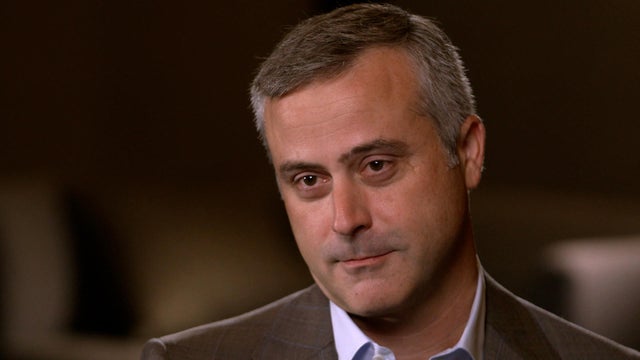
Anderson Cooper interviewed John Poulos, the CEO of Dominion Voting Systems on 60 Minutes about the attacks on the integrity of his company’s voting machines by 2020 election deniers.

Despite a rash of unsubstantiated claims lobbed against his company, the CEO of Dominion Voting Systems, John Poulos, has remained largely silent. That changed Sunday night on 60 Minutes when Poulos sat down with Anderson Cooper, saying irreparable damage has been done to his company and his employees.

“People have been put into danger. Their families have been put into danger. Their lives have been upended and all because of lies,” Poulos said. “It was a very clear calculation that they knew they were lies. And they were repeating them and endorsing them.”

“It’s important to you people admit what they said was wrong?” Cooper asked.

“It’s important to me. It’s important to all the people whose families have been impacted by this. Anderson, my kids still are not allowed to get any package from the front door until we verify that it’s actually from a trusted sender,” Poulos said.

Days after the 2020 presidential election, lawyers supporting then-President Donald Trump, including Sidney Powell and Rudy Giuliani, began spreading unsubstantiated claims that Dominion Voting Systems, an American company, had rigged the election. They said Dominion was backed by Venezuela and that its machines and software switched millions of votes from Donald Trump to Joe Biden.

They never showed any evidence, but that didn’t stop pro-Trump attorneys from making baseless claims, or conservative news networks from giving them plenty of airtime.

Poulos went through a number of their claims with Cooper, dismissing each one…

President Trump first mentioned Dominion in a tweet on November 12, 2020, and recorded a video a few weeks later, posted on Facebook, in which he said: “We have a company that’s very suspect. Its name is Dominion. With the turn of a dial or the change of a chip, you could press a button for Trump and the vote goes to Biden. What kind of a system is this? We have to go to paper. Maybe it takes longer. But the only secure system is paper.”

“We do have paper ballots,” Poulos said. “What the machines do is they count those paper ballots– in a way that makes it very easy for people to verify after the fact through the means of audits and recounts.”

dominionscreengrabs02.jpg
  John Poulos

Dominion makes two types of machines. One is called a ballot marker. It’s a touch screen device that a voter can use to mark their choices and then print the ballot. The second machine is a scanner that reads that paper ballot, counts the vote and immediately stores the ballot securely.

Poulos demonstrated on air how the voting machines work. He explained that his company has no relationship to Venezuela. He has sued various lawyers and FOX News for more than $10 billion. Judges have thus far refused to dismiss the lawsuits.

I hope that those who spread these lies and undermined faith in the integrity of our elections are fined for their deceit and unethical behavior, hopefully to the same extent as the other Big-time liar, Alex Jones.

Apparently Trump lawyers are already planning to claim that the 2022 elections were rigged, if their candidates lose.

There are three things that privatizers hate: public schools, democracy, and teachers’ unions.

In New Hampshire, the privatizers are on the move.

Jacob Goodwin writes about them in The Progressive:

New Hampshire has a proud tradition of public schools, one that, in some towns, dates back to single-room school houses of early America when students would take horse-drawn sleighs to school in the winter. Our schools—and towns, for that matter—are known for operating largely under “local control,” meaning that school boards are made up of parents and community members and are designed to act as sentinels of democracy, tasked with uplifting the highest civic ideals and aspirations.

Historically, the state has had a limited role in determining how schools are run. Consequently, New Hampshire has provided a minimal amount of school funding. While the concept of local control can be both empowering and a burden of responsibility, students and teachers cannot carry out their important work without adequate funding.

Recently, school privatizers seized curricula as a new front in their pressure campaign against teachers, determined to further squeeze public schools financially. Lacking widespread public support, New Hampshire’s legislature restricted classroom conversations about race and gender in 2021—enacting a law which drew ire for its disproportionate penalties and vague requirements. The confusing act prompted the New Hampshire Department of Justice to issue a statement of guidance, confirming the harsh penalties and doing little to protect teachers from potentially career-ending false accusations. The law has placed additional costs on districts in terms of teacher retention and recruitment, compounding staffing shortages in the profession.

Privatizers advance their damaging agenda by undermining the public confidence in schools. Each teacher that leaves due to the relentless attacks is one less trusted adult for children. And the loss of experienced professionals is a way of further loosening communal ties. Traditional, deliberative decision making of small-town New England is rooted in neighborly relational knowledge, but this is now being undercut. Privatizers only see profits by cutting costs, not the most important thing in schools—the people.

Nationwide, attacking teachers and neighborhood schools has become part of a broader strategy to divert taxpayer money away from public accountability. Profiteering and mismanagement scandals in states like Florida and Pennsylvania warn of the danger of moving decision-making from parent volunteers in the auditorium to executives in corporate board rooms.

Despite the odds, teachers are speaking up for their community schools and mounting legal challenges to unjust laws that seek to erode the essential public good of education. On September 14, the presiding federal judge declared that he would rule on the state’s motion to dismiss a suit brought by a coalition including the state’s largest teachers union within sixty to ninety days. But while the speech-chilling law remains in place, teachers fear stifled classroom discussions and even loss of licensure. And the forces of privatization have continued to stretch the civic fabric of our communities through swiftly changing our state with little public input or oversight.

After failing to pass a stand-alone voucher bill in previous legislative sessions, the state Commissioner of Education shepherded a significant voucher bill through the state legislature and into the budget. He promised that the measure would be limited and require a budget of $130,000 in the first year. In October 2021, however, the voucher law was already costing New Hampshire taxpayers $6.9 million…

Distracting the public from the actual needs of over 90 percent of students who attend public schools is part of the coordinated strategy against local control in New Hampshire. The refusal to address funding adequacy, meaningful mental health support for students, and building maintenance are among the major issues that are seldom addressed.

In Tampa, a teacher was fired for teaching false claims to students, but was then hired by a charter school. She was not an exception. Public schools have standards for teachers. Charter schools sometimes do.

Parents said Kimberly Gonzalez was upsetting their children by saying Eve was a man, Adam was gay and God was as real as Santa Claus.

Gonzalez denied making these statements. She kept her job teaching science at Progress Village Middle School in Tampa.

A year later, the concerns escalated. Children said they were told that the Holocaust basically did not happen, that Jewish people wanted World War II, and that the Auschwitz death camp was like a country club with soccer and a cinema. A parent received a link to an antisemitic conspiracy site through Gonzalez’s district messaging server.

Gonzalez told Hillsborough County school officials she wanted her students to think critically about what they learned in school. They opted not to renew her contract. After an argument about sick pay, in which she accused them of “enslaving” her, she left.

She soon found work at Bell Creek Academy, a charter school in Riverview.

Teachers at Florida charter schools, which are publicly funded but independently managed, must hold state credentials in most cases. But when they have a disciplinary history at the organizations they left, it’s unclear how extensively charter schools review them.

The Tampa Bay Times examined 14 such cases in Hillsborough County, often delving deeper into teachers’ backgrounds than the charters did when they hired them.

Peter Greene wants to save time for all organizations that react to the latest NAEP scores. His press release works whether scores are up, down, or flat.

He writes:

It’s time once again to greet the release of another set of data from the NAEP testing machine, which means everyone is warming up their Hot Take generator. But if, like me, you’re getting tired of writing a response to the latest NAEPery, here’s a handy news release that will let you mad lib your way to NAEPy wisdom.


The new scores from the National Assessment of Education Progress (NAEP), known as The Nation’s Report Card, have been released, providing important data about [insert your preferred education policy area]. The recent crisis in [select your favorite policy-adjacent crisis] has clearly created a burgeoning issue of [select whatever Bad Thing you feel will most scare your audience in the direction of your preferred policy].

Says [head of your organization], “The new scores provide important evidence that now is the time for [insert whatever policy action your group always supports]. Clearly the [rise/drop/stagnation] in scores among [whichever subgroup cherry picking best suits your point] proves exactly what we have been arguing for [however long you’ve been at this.]”

[Insert paragraph of data carefully selected and crunched for your purposes. Add a graph if you like. People really dig graphs.]

“This is a clear indication,” says [your favorite go-to education expert], “that it is long past time to [do that thing your organization has been trying to get people to do for years]. Clearly [our preferred solution] is needed.” [Insert further sales pitch here as needed.]

You can expand on this if you wish, but make sure that you definitely do not–

* provide context for the data that you include

* offer perspective from NAEP’s many critics

* absolutely never ever reference the fact that the NAEP folks are extraordinarily clear that folks should not try to suggest a causal relationship between scores and anything else.

As always, the main lesson of NAEP is that contrary to the expectations of so many policy wonks, cold hard data does not actually solve a thing.

The NAEP remains a data-rich Rorschach test that tells us far more about the people interpreting the data than it does about the people from whom the data was collected. Button up your overcoat, prepare for greater-than-usual pearl-clutching and solution-pitching from all the folks who still think the pandemic shutdown is a great opportunity to do [whatever it is they have already been trying to do].

Two women are competing to be Governor of Arizona. Katie Hobbs, the current Secretary of State, is the Democratic candidate. Kari Lake, a former talk show host, is the Republican candidate, endorsed by Trump.

The differences between them on education are stark. Hobbs would roll back the recently passed universal voucher plan. Lake is an enthusiastic supporter of charters and vouchers.

Both pledged to raise teacher pay, but Lake would tie raises to test scores.

If Lake is elected, she would impose extremist ideas that would undermine education in the state. She promises privatization and censorship. If she is elected, she will destroy public schools.

The Arizona Republic described their views:

In the coming year, Arizona schools face key challenges.

A newly minted school voucher program will steer millions of taxpayer dollars to lightly regulated private schools. A major staff shortage has left schools across the state scrambling for teachers, bus drivers and kitchen staff. Total public school spending is nearing a limit that could force massive budget cuts if the Legislature doesn’t act.

The governor has significant sway in shaping the future of education in Arizona. They can propose priorities for legislative action, choose bills to sign, call special legislative sessions, appoint members to the State Board of Education and issue executive orders.

Arizona’s candidates for governor offer voters a stark choice on education policy.

Democrat Katie Hobbs supports repealing the new universal school voucher program and putting more public dollars into public schools. Republican Kari Lake wants all education funding tied to students, not schools, which could send even more public money to private schools.

Here’s what else we know about where they would try to lead Arizona’s education system if elected.

Funding schools, public and private

At the core of Lake’s education plan is a proposal to allow families to decide where state money allocated for their children’s education will go. The funding that would typically go to their local district public school to support their children’s education could be spent at a public district school, a public charter school, a private school, or for “alternative learning arrangements, such as neighborhood pods.”

“Parents and students can mix and match the best educational opportunities available to them,” Lake said on her campaign website. “As parents, you decide where you want your kid to go to school, send them there, and their state funding will follow them. No waitlists, no applications, no hurdles or hoops to jump through, period.”

While district schools usually are expected to welcome any student zoned to the school, some charter schools reach capacity and institute waitlists. Private schools routinely require families to apply for a spot.

That “backpack funding” approach would significantly shift how public school funding works in Arizona. Currently, public schools get a mix of funding from federal, state, and local sources. State funding depends on the number of students in a school and students’ specific needs. High-performing schools can also get additional funding, and many schools qualify for grant funding or other special financial support.

The recently expanded education voucher program shifted the funding dynamic by allowing any family with a school-age child in Arizona — regardless of whether they previously attended a public school — to apply for about $7,000 in public education funding to put toward education-related endeavors, including private schools, tutors and homeschooling.

If elected, Hobbs said she would work to roll back universal vouchers.

On school funding, Hobbs said she wants to direct more of Arizona’s budget surplus, $5 billion in fiscal year 2023, to education. Right now, Arizona ranks near the bottom nationally in per-pupil spending, which educators said accounts for crumbling classrooms, outdated books and low-paid staff.

Hobbs also wants to ensure Arizona schools receive matching federal dollars for early childhood education. “To say that increased funding of schools does not result in better student success is willful ignorance of the needs of Arizona children and families,” said Hobbs’ plan.https://www.usatodaynetworkservice.com/tangstatic/html/pphx/sf-q1a2z37a5af424.min.html

Both would increase teacher pay

Both Lake and Hobbs said they want to increase the number of new teachers and retain current teachers by boosting pay. But they have different ideas about how to go about it.

Hobbs’ promises to support educators and tackle the teacher shortage are at the forefront of her platform. Among her positions are increasing educator annual salaries by an average of $14,000, expanding a state program that subsidizes tuition for college students studying education, promoting mentorship programs and ensuring teachers can access affordable healthcare.

Much of Hobbs’ plan relies on existing systems for low-cost teacher training, including the Arizona Teacher Residency at Northern Arizona University and the Arizona Teachers Academy, a scholarship program that subsidizes tuition at public, in-state higher education institutions. Hobbs said she would also work to convince the Legislature that more base funding for schools is needed.

Lake challenged the connection between more money for schools and higher student achievement. She said Arizona teachers deserve better pay, but any raises should be performance-based. She blamed stagnating teacher salaries on administrators taking ever-larger earnings. “Government-run school leaders appear to be deliberately keeping teacher pay low so they can be used as sympathetic figureheads in a quest for additional funds,” Lake said.

An Arizona Auditor General analysis of instructional spending in the 2021 fiscal year found that the percentage of money spent on instructional spending had fallen to 55.3% from its peak of 58.6% in 2004. While administrative spending is part of what districts spend their non-classroom dollars on, those costs also include food service and transportation.

Instead, Lake said she would provide bonuses for educators whose students perform well and show improvement. She would fund that through Proposition 301, an education sales tax first approved in 2000 and renewed in 2018. “We cannot trust school districts to direct allocated funds to teachers,” she said, explaining her support for performance-related raises. “I want our best teachers to be recognized and to be the highest paid in the country.”

Differences on school spending cap

The aggregate expenditure limit is a constitutional cap put in place in the 1980s on how much all Arizona district-run schools can spend. Last year, schools hit the limit, and the Legislature temporarily lifted the cap. This year, schools are on track to hit it again, and if lawmakers don’t act, school districts will collectively have to cut billions from their budgets.

Hobbs wants to eliminate the constitutional limit. “Each year our school districts are held hostage by political gamesmanship,” she said.

A constitutional fix could take various forms. The Legislature could increase the spending ceiling or exempt from the limit the money that comes in from the Proposition 301 sales tax. An end to the limit altogether would require a public referendum.

Lake did not respond to The Republic’s questions about her education plan, including a question about her position on the spending limit. In a social media statement earlier this year, Lake was critical of efforts to lift the cap. In a February tweet, as lawmakers voted on a bill to temporarily lift the spending cap, Lake encouraged her followers to vote in favor of legislators who did not support raising the aggregate expenditure limit….

Banning ideas, how to teach U.S. history

Lake wants to prohibit several ideas from being discussed in schools.

She’d like to strengthen Arizona’s ban on a college-level theory that teaches people of different races experience aspects of U.S. society differently, restrict teaching systems that aim to improve interpersonal skills and decision-making, and eliminate diversity, equity and inclusion programs. Lake said on the campaign trail that she would consider putting cameras into classrooms to keep these programs from being taught.

Lake also said she would align state standards to the Hillsdale 1776 curriculum, a history and civics program of study created by a conservative private college in Michigan that has been criticized as taking a too rosy view of the U.S. past.

In response to a question from The Republic, Hobbs’ campaign said she opposed using the Hillsdale 1776 curriculum in Arizona schools because it did not offer a comprehensive understanding of civics and history. It would “ultimately be a disservice to Arizona children,” the campaign statement said.

Hobbs’ education plan doesn’t take an explicit position on the teaching of race and history or other political questions that have riled both the Legislature and some Arizona school boards.

Lake pledged to replace the Arizona state test with the National Assessment of Educational Progress, a federal test that is not available for use by schools or states.