Archives for category: Ohio

This article about charter real estate dealings was written by Professors Preston Green III, Bruce Baker, and Derek W. Black.

They argue that lax state laws allow charter operators to reap profits while maintaining an ostensibly “nonprofit” status.

While critics charge that charter schools are siphoning money away from public schools, a more fundamental issue frequently flies under the radar: the questionable business practices that allow people who own and run charter schools to make large profits.

Charter school supporters are reluctant to acknowledge, much less stop, these practices.

Given that charter schools are growing rapidly – from 1 million students in 2006 to more than 3.1 million students attending approximately 7,000 charter schoolsnow – shining a light on these practices can’t come too soon. The first challenge, however, is simply understanding the complex space in which charters operate – somewhere between public and private.

Unregulated competition

Charters were founded on the theory that market forces and competition would benefit public education. But policy reports and local government studiesincreasingly reveal that the charter school industry is engaging in the type of business practices that have led to the downfall of other huge industries and companies.

Charter schools regularly sign contracts with little oversight, shuffle money between subsidiaries and cut corners that would never fly in the real world of business or traditional public schools – at least not if the business wanted to stay out of bankruptcy and school officials out of jail. The problem has gotten so bad that a nationwide assessment by the U.S. Department of Education warned in a 2016 audit report that the charter school operations pose a serious “risk of waste, fraud and abuse” and lack “accountability.”

Self-dealing

The biggest problem in charter school operations involves facility leases and land purchases. Like any other business, charters need to pay for space. But unlike other businesses, charters too often pay unreasonably high rates – rates that no one else in the community would pay.

One of the latest examples can be found in a January 2019 report from the Ohio auditor-general, which revealed that in 2016 a Cincinnati charter school paid $867,000 to lease its facilities. This was far more than the going rate for comparable facilities in the area. The year before, a Cleveland charter was paying half a million above market rate, according to the same report.

Why would a charter school do this? Most states require charter schools to be nonprofit. To make money, some of them have simply entered into contracts with separate for-profit companies that they also own. These companies do make money off students.

In other words, some “nonprofit” charter schools take public money and pay their owners with it. When this happens, it creates an enormous incentive to overpay for facilities and supplies and underpay for things like teachers and student services.

Many millions of dollars of public funds that were intended to educate children are squandered, they say.

It is called “legal graft.”


Perhaps you laughed, perhaps you were astonished when you read that Republicans in Ohio in the House voted for a law that would allow a student’s religious beliefs to give the wrong answers on science tests.

Peter Greene shows that the proposed bill is even worse than we thought.

He begins:

It’s called the “Ohio Student Religious Liberties Act of 2019” and it sets out to accomplish a few things:

It removes the limits on exercising expression of student religious beliefs. The old, struck-out language  said the board of education could limit said expression to lunch period or other noninstructional time. That’s the piddly stuff.

Under the new language, “religious expression” (the stuff no longer limited to non-instructional time) includes prayer, gatherings (clubs, prayer groups, etc), distribution of written materials, and, well, anything religious, actually, including wearing religious gear or “expression of a religious viewpoint” (as long as it’s not obscene or indecent or vulgar). Cue the Church of the Flying Spagetti Monster and the local Satanic Temple; if a student offers a prayer to Satan in the middle of English class and some Christians in the class find that indecent and vulgar, can it be suppressed? Congratulations to the first batch of lawyers and judges that are going to have to sort this out. Double congratulations to whatever government body ends up being responsible for determining which religions are state-certified to be protected under this law.

Students hall have access to school facilities before, during and after school that school hours to the same extent that secular activities may do so. Place your bets now on how many schools will simply ban all before and after school activities in order to sidestep this.

Forget about separation of church and state. The Good News evangelicals will convene their meetings in the middle of math and science classes.

The Founders were wiser than we when they sought to separate church and state, to be sure that every individual was free to practice their own religion (or lack thereof) in their own way outside of the public school.

Thus continues our nation’s slide into a pit of religious intolerance and invasions of religious liberty, all–ironically– in the name of religious freedom.

We are entering into a strange era where religious belief is being permitted to trump scientific fact.

Ohio legislators in the House passed legislation allowing students to receive credit for wrong answers on science tests if their answer is based on their religious beliefs.

Does anyone think that actions such as this one will prepare students to live and thrive in the modern world? Will students so ill prepared with knowledge and understanding of the scientific method be prepared for careers in science, engineering or technology or any other field that requires a firm grasp of evidence and reality? Will they even know how to think critically about history and current affairs?

Every Republican in the House supported the bill. It now moves to the Republican-controlled Senate.

The Ohio legislature is also enthusiastic about charter schools and vouchers.

Former Governor John Kasich presents himself to a national audience as a “moderate” but it was under his leadership that this kind of zealotry took root in Ohio.


Bill Phillis, retired deputy commissioner of the state education department, is a watchdog for Ohio schools, especially finances.

Charter schools in Ohio are called “community schools.”

He writes:

In 2014, the State Auditor’s office conducted an unannounced head count in 30 Ohio site-based charter schools. One charter had no students or 100% absenteeism. Eight had an absentee rate of more than 50 percent. Thirteen had an absentee rate of more than 30 percent.
More than a decade ago Scripps Howard News Service did a head count in several Ohio charters and found that as high as 66 percent of the students in one school were absent. Their report, Ghost Schools, was turned over to the Attorney General’s office but there was no public follow up.
The charter experiment should have been shut down at least 15 years ago.
William L. Phillis | Ohio Coalition for Equity & Adequacy of School Funding | 614.228.6540 | ohioeanda@sbcglobal.net| www.ohiocoalition.org

Imagine a brand new nonprofit organization starting with more than $200 million. The usual group of billionaires has funded an organization called the City Fund, whose main purpose seems to be to buy local school board elections. Thus far, they have targeted Atlanta, Indianapolis, Newark, Denver, San Antonio, St. Louis, and Nashville, but they may have added or subtracted other sites. The City Fund is active in several elections. If they gain control, they will replace public schools with privately managed charter schools. The privatizers are really good at Disruption, not at improving schools or education.

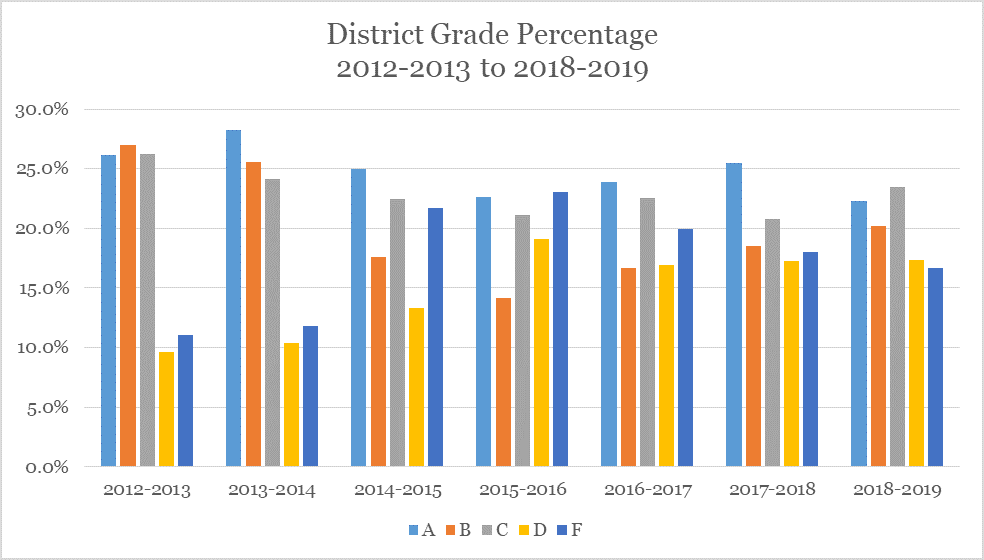
William Phillis warns that the City Fund is active in Ohio, where most charter schools are rated D or F, lower-performing than even the urban districts they seek to dominate.

Charter zealots are running for board of education seats throughout the nation: Ohio is vulnerable
The warning issued by the Cincinnati Education Justice Coalition should attract the attention of all traditional public school advocates.
The charter industry is immersed in cash from the federal government, philanthropists, billionaire charter-friendly folks and, of course, funds siphoned from school districts. The charter establishment uses a toolkit full of strategies to expand its footprint in American education such as:
·        State takeover tactics
·        Portfolio school districts
·        Teach for America alliances
·        Political campaign contributions that overflow politicians’ coffers
Packing school boards with charter activists is a winner-take-all tactic they also use.
Ohio is not immune from any of the charter-promoting tactics. In fact, Ohio’s loosey-goosey regulations for the charter industry attract entrepreneurial opportunists and a variety of non-educators to the charter world.
Some school districts have already been taken over by charter-addicted board members who are bent on privatizing the public common school.
William L. Phillis | Ohio Coalition for Equity & Adequacy of School Funding | 614.228.6540ohioeanda@sbcglobal.net| www.ohiocoalition.org

Bill Phillis reposts here an article by Denis Smith, who offers sound advice about the questions you should ask if you visit a charter school.

Denis Smith on Ron Rice of the National Alliance for Public Charter Schools
In a recent column in the Columbus Dispatch, Ron Rice of the National Alliance for Public Charter Schools opened his piece with this statement. “The early stage of the 2020 presidential campaign has featured a lot of rhetoric about charter schools. Too much of it has been divorced from the reality of what charter schools are. So I have a special request of all the candidates: Go visit a charter school.”
Denis Smith, who used to work in the Ohio Department of Education’s charter school office, thinks that Ohio citizens should take Rice up on his offer to visit and learn more about schools that call themselves public entities but hide their private dimension. He offers suggestions when visiting a charter.
__________
 The recent Op-Ed by Ron Rice Jr. of the National Alliance for Public Charter Schools about the need for candidates to pay attention to charter schools contains an interesting – and inviting – sub-headline:
Cut through the rhetoric and go visit charter schools.
What a wonderful idea! I certainly hope that my fellow citizens will take Mr. Rice up on his request to see what they can find out about these peculiar institutions which are privately managed but publicly funded. If anyone should visit one of these schools, here are some questions visitors should ask to better understand the DNA of charters.
How is the school governed? How are the board members chosen? Since they are not democratically elected by registered voters, like public school board members, whom do they represent? Are the board members American citizens? Do the board members live in the school attendance area? How many other charter school boards might the board members be serving on at the same time?
What about the company that manages the school? Do they own the building in which the school is housed and use operating profits diverted from classroom costs to buy real estate? How much of the school budget is applied to rental costs? Does the management company also own the property where the school is housed? Has the company or school leader populated the board with individuals who may be conflicted with regard to whose interests, rather than the students, come first? 
While we’re at it, folks who might visit charters need to find out about the school leader. A lot of charters use imposing titles such as CEO and Superintendent in their listings. But does the school leader have a professional educator license and graduate training in teaching and school administration? A previous background in the classroom? What percentage of the total school budget goes to administration?
There aren’t as many questions to ask about the teachers inasmuch as state law requires the classroom-level staff to be licensed. However, how many of the teaching staff are completing their first year at the school? How many have worked at the school more than two years? 
These are but a few of a list of sample questions that should be posed to any charter school advocate. The reason for the choice of these particular questions is simple. Ohio law exempts charters from about 150 sections of the state code that apply to public schools. There is no requirement for a charter school board member to be a qualified voter, viz., citizen, nor is there any minimum educational requirement or professional license required to administer a charter school. In spite of Mr. Rice’s advocacy of charters, these are two of many fatal design flaws for these under-regulated schools that have been the subject of so many scandals over the years.
Ohio residents should visit some area charter schools and ask these and other questions. It’s time for voters to inform themselves about charter schools, critically examine their nature and purpose, and cut through the rhetoric offered by Mr. Rice and those who wish to privatize one of key elements of every community. Public education is about democracy and the investment citizens make in their schools, not about enabling private companies to convert public assets into profit and acquire private property that otherwise should belong to the taxpayers.
For these reasons, the term “public charter school” is in fact an oxymoron. The very use of that term is a fitting example of the kind of rhetoric Mr. Rice has encouraged us to avoid. Let us help him to cut through the rhetoric in this election season and take him up on the suggestion of visiting these privately operated schools which convert public funds for their own purposes. 
William L. Phillis | Ohio Coalition for Equity & Adequacy of School Funding | 614.228.6540 | ohioeanda@sbcglobal.net| www.ohiocoalition.org

Bill Phillis, retired deputy superintendent of schools for the state of Ohio, finds it hard to believe that a state legislature would seize control of a school district and remove its elected school board from office. When did Republicans become diehard enemies of local control? It has become clear that the state has no ideas about how to help low-scoring districts. None.

He writes:

Never thought this would happen in America
 
The state is in the process of replacing elected school board members in Youngstown. The electors in Youngstown elected board members. These board members will be replaced via the HB 70 process.
 
The Youngstown Board of Education has not been in control of the district for several years. State control of the district has not resulted in improvement. Therefore, elected board members are being removed from office because the state’s improvement process has failed. Sounds logical.
 
Youngstown board members have not been convicted of any crimes which would be cause for removal from office. Their hands have been tied by HB 70.
 
Congress and some state legislatures across the nation have not demonstrated a stellar performance. Should those elected officials be replaced by some convoluted appointment process?
 
How can Ohio legislators and the Governor allow this despicable process to come to fruition? HB 70 was enacted in less than 24 hours with no public input. The legislature could repeal HB 70 in less than 24 hours.


The State Legislature and Governor in Ohio must be the dumbest in the nation. They responded to low test scores in Youngstown by imposing state control of the district. Needless to say, the state did not have a clue about how to improve the schools, so the state is now replacing the powerless elected local board with mayoral control.

Jan Resseger writes here about this absurd turn of events. 

Officials from the Ohio Department of Education have begun replacing the locally elected school board in Youngstown with a mayoral appointed school board.

This week we learned about one more extension of autocratic state power backloaded in 2015 into the HB 70’s school district takeover of Youngstown. Because at the end of four years of state takeover, the Youngstown school district earned another “F” on the state report card, the state is now imposing a previously unknown provision of the 2015, HB 70, which established state takeover in the first place.

The replacement of the elected school board in Youngstown with a state-approved, mayoral-appointed school board is designed to punish Youngstown for not raising its grade to “C” during four years of state takeover. What is particularly shocking about the new development is that the locally elected school board has had no role to play in the operation of Youngstown’s schools since the time of the state takeover in 2015. The state has been running the district through a state appointed Academic Distress Commission which appointed a CEO to lead the school district.

Krish Mohip, the state-appointed CEO whose term ended on July 31, was never happy in his position, and last spring, several months prior to the end of his term, Mohip took family medical leave. At the time The Youngstown Vindicator‘s Amanda Tonoli reported that Mohip explained: “I’m going to take care of some issues that have accumulated at home, and I’m going to focus my attention there… I don’t see my absence as being a hindrance to all the great work that’s happened and will continue to happen over the next few years.” Mohip left, but he did not resign.  Instead he collected the rest of his $170,000 salary.  Tonoli added: “A longevity provision in Mohip’s contract allows him a $10,000 payout if he completes his full contract.”

Nobody was sorry to see Mohip go. The chair of the Academic Distress Commission explained: “We have to uphold what the contract says… We are following the law and following the contract that was agreed upon with Krish Mohip.” The blatant arrogance of Mohip’s mode of departure was merely the latest example of his abuse of the public trust.  He did not ever move his family to Youngstown, for example.

A new CEO, Justin Jennings, formerly the school superintendent in Saginaw, Michigan, was recently appointed by the state-appointed, Youngstown Academic Distress Commission.

Under HB 70, the residents of the school district have been permitted by the state to elect a local board of education, but its only power has been to decide whether and when to put a property tax levy on the ballot.

Corporate reformers have run out of ideas. They continue to believe that democracy is the problem, that democracy causes low test scores. Everything they try has failed. They fail and fail. They are shameless.


Bill Phillis, founder of the Ohio Coalition for Equity and Adequacy of School Funding, reports on a new study that undercuts the rationale for state takeovers.

He writes:

Research study: Students learn no less in poor, urban schools than other schools
 
OSU Professor of Sociology, Dr. Douglas Downey, lead author of a recent study , found that students in urban districts with high concentrations of disadvantaged students learn as much during the school year as those in wealthier districts. Disadvantaged students, of course, start school at a lower level of development, but according to the research study, disadvantaged students don’t lose ground while in school.
 
This research (and common sense) helps dispel the myth that districts serving high concentrations of disadvantaged students are “failing” just because of low test scores.
This study should inform state officials who are bent on state takeover of school districts (HB 70.) Because a school district has low test scores is not justification for state takeover. (Besides Ohio’s takeover of Youngstown and Lorain have not improved the districts.)
 
If state officials want the state to takeover some school districts, all districts should be in the pool of candidates for takeover, not just those that serve high concentrations of disadvantaged students.
 
Ditch HB 70. Just do it.
 
 
 The Distribution of School Quality: Do Schools Serving Mostly White and High-SES Children Produce the Most Learning?
 
 
Douglas B. Downey, David M. Quinn, Melissa Alcaraz
First Published August 23, 2019 Research Article https://doi.org/10.1177/0038040719870683
Article information 
 
 
Abstract
What is schools’ role in the stratification system? One view is that schools are an important mechanism for perpetuating inequality because children from advantaged backgrounds (white and high socioeconomic) enjoy better school learning environments than their disadvantaged peers. But it is difficult to know this with confidence because children’s development is a product of both school and nonschool factors, making it a challenge to isolate school’s role. A novel approach for isolating school effects is to estimate the difference in learning when school is in versus out, what is called impact. Scholars employing this strategy have come to a remarkable conclusion—that schools serving disadvantaged children produce as much learning as those serving advantaged children. The empirical basis for this position is modest, however, and so we address several shortcomings of the previous research by analyzing a nationally representative sample of about 3,500 children in 270 schools from the Early Childhood Longitudinal Study–Kindergarten Cohort of 2011. With more comprehensive data and better scales, we also find no difference in impact on reading scores across schools serving poor or black children versus those serving nonpoor or white children. These patterns challenge the view that differences in school quality play an important role shaping achievement gaps and prompt us to reconsider theoretical positions regarding schools and inequality.
William L. Phillis | Ohio Coalition for Equity & Adequacy of School Funding | 614.228.6540ohioeanda@sbcglobal.net| www.ohiocoalition.org
 

Jan Resseger reports here on Stephen Dyer’s astute analysis of Ohio’s state budget. Dyer is a former legislator who is now an Education Policy Fellow at Innovation Ohio.

This is Dyer’s report. Read it and weep. Ohio’s rightwing Republicans care more about campaign contributors than they care about the state’s students or the quality of education.

In looking at the plums for charters and vouchers, please bear in mind that most charter schools in Ohio are low-performing and score far below public schools, even in urban districts. And remember too that a study of Ohio’s voucher program sponsored by the rightwing Thomas B. Fordham Institute concluded that students who used vouchers actually lost ground academically. So, when you see legislators increasing funding for vouchers and reducing oversight of charters, be aware that Ohio is underwriting and rewarding failure.

Resseger writes:

In the 2020-2021 biennial Ohio budget signed into law in July, lawmakers quietly embedded the radical expansion of school privatization. Rewards for charter schools and tuition voucher expansion are written into the budget in a lots of little ways, however, which means that, during the budget debate, few noticed the overall significance of exploding state support for school privatization. A new report released last week by Innovation Ohio, however, connects the dots among several measures which together will undermine oversight of charter schools and at the same time radically expand tuition vouchers. The report includes an examination of the fiscal implications for local public school districts.

The former chair of the Ohio House Education Subcommittee of Finance and now Innovation Ohio’s education policy fellow, Steve Dyer authored the report, which ought to be essential reading for legislators and a broad range of citizens—from experts to people who have not previously tracked the issue. Dyer writes a basic primer and at the same time an analysis sophisticated enough to teach experts something new.

Dyer begins: “When Governor Mike DeWine signed HB166 into law, he approved a budget that lawmakers had packed full of little-noticed gifts to those who seek to erode support for traditional public schools through a proliferation of charter and private school options funded at taxpayer expense.”  Dyer explains that the new Ohio budget:

  • weakens Ohio’s 2015 charter school oversight law that mandated automatic closure for academic failure after two years;
  • weakens standards for Ohio’s already deplorable sector of “dropout recovery” charter schools;
  • weakens Ohio’s oversight of its many charter school authorizers; and
  • increases the transfer of state and even local taxpayer dollars to private—mostly religious—schools.

Read this summary of the state’s preferential treatment of failing charters and see if you can overcome an impulse to gag:

Although in 2015, the state cracked down on academically failing charter schools by mandating their closure after two years of failing test scores, the new budget awards these schools an extra, third year to stay in business. The new budget gives 52 schools which had been preparing to close another year of life. Dyer adds: “Interestingly, of the 52 charters that were scheduled to be closed under the old standard, 34 are run by for-profit charter school operators, including almost 20 percent of the former White Hat schools now being operated by Ron Packard—the founder of K-12 Inc.—the nation’s largest (and most notorious) online charter school operator. Another big operator set to take a hit was J.C. Huizenga’s 10 Ohio-based National Heritage Academies. Six of those were on the chopping block before the legislature offered a legislative reprieve. Huizenga is an acolyte of Betsy DeVos—the controversial U.S. Secretary of Education—and his political connections have kept his schools afloat for years, despite complaints….”

The new state budget also weakens standards at a set of charter schools described by their promoters as providing opportunity for students who have dropped out of school. While the education of school dropouts is a worthy purpose, in Ohio, the state has been providing millions of dollars of support for schools that clearly fail to accomplish that stated goal: “Some graduate less than two percent of their students in four years and less than 10 percent in eight years. The state’s already lax standards only require that dropout recovery schools graduate eight percent of their students in four years.”  Before they can graduate, students in these schools must pass a state-approved test, but the new budget permits these schools, “to adopt another, easier test, and reduces the passing score.” It is predicted that the change in standards will save some of these schools from mandatory closure.

Ohio’s legislature is either bought and paid for by privatization advocates (very likely) or it is dominated by ideologues who want to reward failure regardless of how many children are miseducated.