The state can no longer enforce its ban on abortion that took effect in 2022, a Fulton County judge said Monday, allowing the procedure again to be performed in Georgia after a doctor detects fetal cardiac activity.
Fulton County Superior Judge Robert McBurney issued an order Monday that said abortions must be regulated as they were before Georgia’s 2019 law took effect in July 2022 — meaning the procedure is again allowed up until about 22 weeks of pregnancy.
Fulton County Superior Court Judge Robert McBurney wrote in his order that “liberty in Georgia includes in its meaning, in its protections, and in its bundle of rights the power of a woman to control her own body, to decide what happens to it and in it, and to reject state interference with her healthcare choices.”
Kavitha Surana of ProPublica wrote the story of what happened to Amber Nicole Thurman. She died because it was illegal in Georgia to give her the care she needed when she needed it. She didn’t have to die. The anti-abortion Republican legislators in her state killed her. The “pro-life” movement killed her. The conservative majority on the U.S. Supreme Court killed her. Governor Brian Kemp killed her. Shameful!
She’d taken abortion pills and encountered a rare complication; she had not expelled all of the fetal tissue from her body. She showed up at Piedmont Henry Hospital in need of a routine procedure to clear it from her uterus, called a dilation and curettage, or D&C.
In her final hours, Amber Nicole Thurman suffered from a grave infection that her suburban Atlanta hospital was well-equipped to treat.
But just that summer, her state had made performing the procedure a felony, with few exceptions. Any doctor who violated the new Georgia law could be prosecuted and face up to a decade in prison.
Thurman waited in pain in a hospital bed, worried about what would happen to her 6-year-old son, as doctors monitored her infection spreading, her blood pressure sinking and her organs beginning to fail.
It took 20 hours for doctors to finally operate. By then, it was too late.
The otherwise healthy 28-year-old medical assistant, who had her sights set on nursing school, should not have died, an official state committee recently concluded.
Tasked with examining pregnancy-related deaths to improve maternal health, the experts, including 10 doctors, deemed hers “preventable” and said the hospital’s delay in performing the critical procedure had a “large” impact on her fatal outcome.
Their reviews of individual patient cases are not made public. But ProPublica obtained reports that confirm that at least two women have already died after they couldn’t access legal abortions and timely medical care in their state.
There are almost certainly others.
Committees like the one in Georgia, set up in each state, often operate with a two-year lag behind the cases they examine, meaning that experts are only now beginning to delve into deaths that took place after the Supreme Court overturned the federal right to abortion.
Thurman’s case marks the first time an abortion-related death, officially deemed “preventable,” is coming to public light. ProPublica will share the story of the second in the coming days. We are also exploring other deaths that have not yet been reviewed but appear to be connected to abortion bans.
Doctors warned state legislators women would die if medical procedures sometimes needed to save lives became illegal.
Though Republican lawmakers who voted for state bans on abortion say the laws have exceptions to protect the “life of the mother,” medical experts cautioned that the language is not rooted in science and ignores the fast-moving realities of medicine.
The most restrictive state laws, experts predicted, would pit doctors’ fears of prosecution against their patients’ health needs, requiring providers to make sure their patient was inarguably on the brink of death or facing “irreversible” harm when they intervened with procedures like a D&C.
“They would feel the need to wait for a higher blood pressure, wait for a higher fever — really got to justify this one — bleed a little bit more,” Dr. Melissa Kottke, an OB-GYN at Emory, warned lawmakers in 2019 during one of the hearings over Georgia’s ban.
Doctors and a nurse involved in Thurman’s care declined to explain their thinking and did not respond to questions from ProPublica. Communications staff from the hospital did not respond to multiple requests for comment. Georgia’s Department of Public Health, which oversees the state maternal mortality review committee, said it cannot comment on ProPublica’s reporting because the committee’s cases are confidential and protected by federal law.
The availability of D&Cs for both abortions and routine miscarriage care helped save lives after the 1973 Supreme Court ruling in Roe v. Wade, studies show, reducing the rate of maternal deaths for women of color by up to 40% the first year after abortion became legal.
Such stories have been at the center of the upcoming presidential election, during which the right to abortion is on the ballot in 10 states.
But Republican legislators have rejected small efforts to expand and clarify health exceptions — even in Georgia, which has one of the nation’s highest rates of maternal mortality and where Black women are three times more likely to die from pregnancy-related complications than white women.
When its law went into effect in July 2022, Gov. Brian Kemp said he was “overjoyed” and believed the state had found an approach that would keep women “safe, healthy and informed.”
After advocates tried to block the ban in court, arguing the law put women in danger, attorneys for the state of Georgia accused them of “hyperbolic fear mongering.”
Two weeks later, Thurman was dead.
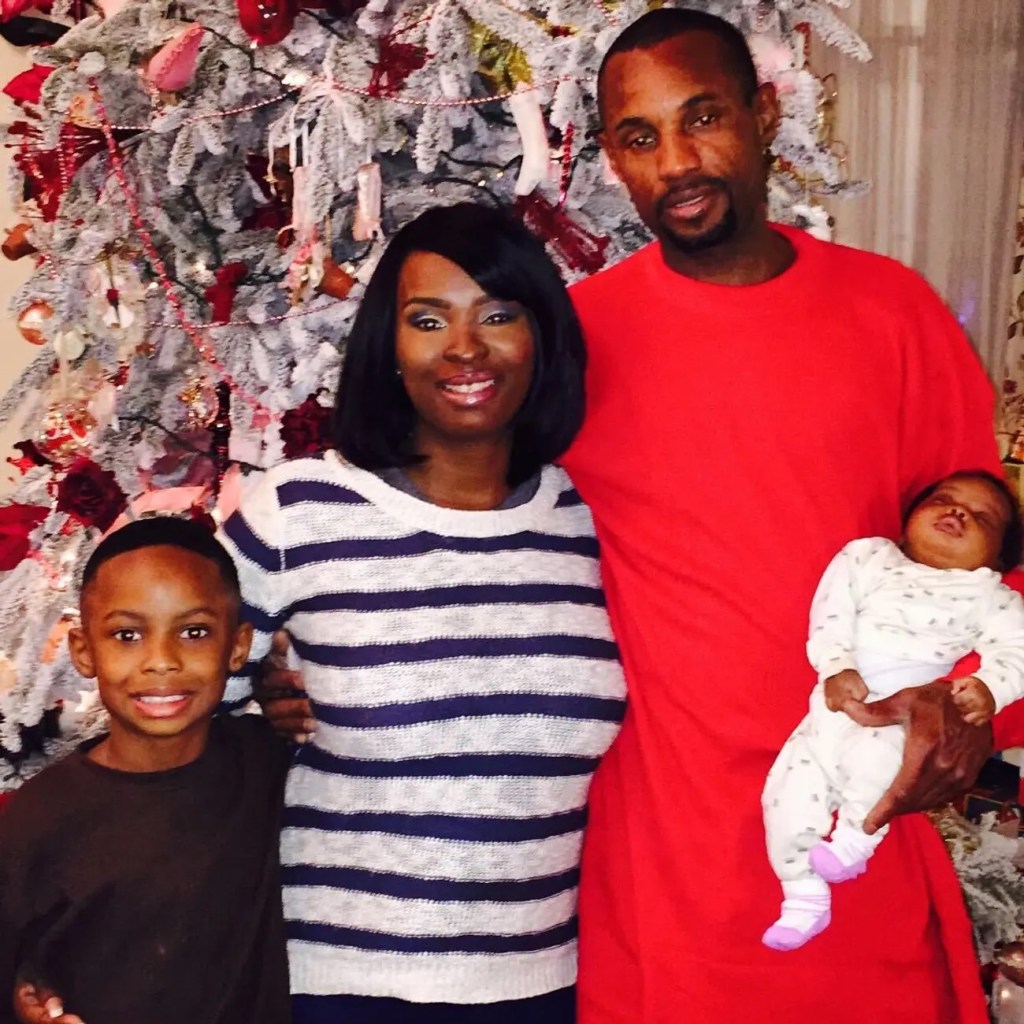
Thurman and her son in a photo she posted on social media the year before her death Credit: via Facebook
Thurman, who carried the full load of a single parent, loved being a mother. Every chance she got, she took her son to petting zoos, to pop-up museums and on planned trips, like one to a Florida beach. “The talks I have with my son are everything,” she posted on social media.
But when she learned she was pregnant with twins in the summer of 2022, she quickly decided she needed to preserve her newfound stability, her best friend, Ricaria Baker, told ProPublica. Thurman and her son had recently moved out of her family’s home and into a gated apartment complex with a pool, and she was planning to enroll in nursing school.
The timing could not have been worse. On July 20, the day Georgia’s law banning abortion at six weeks went into effect, her pregnancy had just passed that mark, according to records her family shared with ProPublica.
Thurman wanted a surgical abortion close to home and held out hope as advocates tried to get the ban paused in court, Baker said. But as her pregnancy progressed to its ninth week, she couldn’t wait any longer. She scheduled a D&C in North Carolina, where abortion at that stage was still legal, and on Aug. 13 woke up at 4 a.m. to make the journey with her best friend.
On their drive, they hit standstill traffic, Baker said. The clinic couldn’t hold Thurman’s spot longer than 15 minutes — it was inundated with women from other states where bans had taken effect. Instead, a clinic employee offered Thurman a two-pill abortion regimen approved by the U.S. Food and Drug Administration, mifepristone and misoprostol. Her pregnancy was well within the standard of care for that treatment.
Getting to the clinic had required scheduling a day off from work, finding a babysitter, making up an excuse to borrow a relative’s car and walking through a crowd of anti-abortion protesters. Thurman didn’t want to reschedule, Baker said.
At the clinic, Thurman sat through a counseling session in which she was told how to safely take the pills and instructed to go to the emergency room if complications developed. She signed a release saying she understood. She took the first pill there and insisted on driving home before any symptoms started, Baker said. She took the second pill the next day, as directed.
Deaths due to complications from abortion pills are extremely rare. Out of nearly 6 million women who’ve taken mifepristone in the U.S. since 2000, 32 deaths were reported to the FDA through 2022, regardless of whether the drug played a role. Of those, 11 patients developed sepsis. Most of the remaining cases involved intentional and accidental drug overdoses, suicide, homicide and ruptured ectopic pregnancies.
Baker and Thurman spoke every day that week. At first, there was only cramping, which Thurman expected. But days after she took the second pill, the pain increased and blood was soaking through more than one pad per hour. If she had lived nearby, the clinic in North Carolina would have performed a D&C for free as soon as she followed up, the executive director told ProPublica. But Thurman was four hours away.
On the evening of Aug. 18, Thurman vomited blood and passed out at home, according to 911 call logs. Her boyfriend called for an ambulance. Thurman arrived at Piedmont Henry Hospital in Stockbridge at 6:51 p.m.
ProPublica obtained the summary narrative of Thurman’s hospital stay provided to the maternal mortality review committee, as well as the group’s findings. The narrative is based on Thurman’s medical records, with identifying information removed. The committee does not interview doctors involved with the case or ask hospitals to respond to its findings. ProPublica also consulted with medical experts, including members of the committee, about the timeline of events.
Within Thurman’s first hours at the hospital, which says it is staffed at all hours with an OB who specializes in hospital care, it should have been clear that she was in danger, medical experts told ProPublica.
Her lower abdomen was tender, according to the summary. Her white blood cell count was critically high and her blood pressure perilously low — at one point, as Thurman got up to go to the bathroom, she fainted again and hit her head. Doctors noted a foul odor during a pelvic exam, and an ultrasound showed possible tissue in her uterus.
The standard treatment of sepsis is to start antibiotics and immediately seek and remove the source of the infection. For a septic abortion, that would include removing any remaining tissue from the uterus. One of the hospital network’s own practices describes a D&C as a “fairly common, minor surgical procedure” to be used after a miscarriage to remove fetal tissue.
After assessing her at 9:38 p.m., doctors started Thurman on antibiotics and an IV drip, the summary said. The OB-GYN noted the possibility of doing a D&C the next day.
But that didn’t happen the following morning, even when an OB diagnosed “acute severe sepsis.” By 5:14 a.m., Thurman was breathing rapidly and at risk of bleeding out, according to her vital signs. Even five liters of IV fluid had not moved her blood pressure out of the danger zone. Doctors escalated the antibiotics.
Instead of performing the newly criminalized procedure, they continued to gather information and dispense medicine, the summary shows.
Doctors had Thurman tested for sexually transmitted diseases and pneumonia.
They placed her on Levophed, a powerful blood pressure support that could do nothing to treat the infection and posed a new threat: The medication can constrict blood flow so much that patients could need an amputation once stabilized.
At 6:45 a.m., Thurman’s blood pressure continued to dip, and she was taken to the intensive care unit.
At 7:14 a.m., doctors discussed initiating a D&C. But it still didn’t happen. Two hours later, lab work indicated her organs were failing, according to experts who read her vital signs.
At 12:05 p.m., more than 17 hours after Thurman had arrived, a doctor who specializes in intensive care notified the OB-GYN that her condition was deteriorating.
Thurman was finally taken to an operating room at 2 p.m.
By then, the situation was so dire that doctors started with open abdominal surgery. They found that her bowel needed to be removed, but it was too risky to operate because not enough blood was flowing to the area — a possible complication from the blood pressure medication, an expert explained to ProPublica. The OB performed the D&C but immediately continued with a hysterectomy.
During surgery, Thurman’s heart stopped.
Her mother was praying in the waiting room when one of the doctors approached. “Come walk with me,” she said.
Until she got the call from the hospital, her mother had no idea Thurman had been pregnant. She recalled her daughter’s last words before she was wheeled into surgery — they had made no sense coming from a vibrant young woman who seemed to have her whole life ahead of her:
“Promise me you’ll take care of my son.”
Thurman and her son in a selfie she posted online in 2020, two years before her death Credit: via Facebook
Candi Miller’s health was so fragile, doctors warned having another baby could kill her.
But when the mother of three realized she had unintentionally gotten pregnant in the fall of 2022, Georgia’s new abortion ban gave her no choice. Although it made exceptions for acute, life-threatening emergencies, it didn’t account for chronic conditions, even those known to present lethal risks later in pregnancy.
At 41, Miller had lupus, diabetes and hypertension and didn’t want to wait until the situation became dire. So she avoided doctors and navigated an abortion on her own — a path many health experts feared would increase risks when women in America lost the constitutional right to obtain legal, medically supervised abortions.
Miller ordered abortion pills online, but she did not expel all the fetal tissue and would need a dilation and curettage procedure to clear it from her uterus and stave off sepsis, a grave and painful infection. In many states, this care, known as a D&C, is routine for both abortions and miscarriages. In Georgia, performing it had recently been made a felony, with few exceptions.
Due to Georgia’s harsh abortion law, she did not get the routine care that would have saved her life. She was killed by the law.
Candi Miller with her husband and her two children.
The State Board of Elections in Georgia passed a rule requiring a hand count of all ballots in the November elections. The board was split 3-2. The majority are Trump allies. They passed the rule over strong criticism.
Republicans advanced the measure over the opposition of Georgia’s Republican secretary of state and attorney general and dozens of local election officials who said the last-minute change could cause delays and confusion on election night and the days that follow.
“If this board votes to implement this rule, I think that we put ourselves in legal jeopardy,” said John Fervier, the board’s nonpartisan chair, who voted against the proposal.
Under the proposed rule change, each voting district would compare the machine vote to a hand count. Local officials complained about lack of time and resources, in a process that could delay certification of the votes by weeks or even months.
Imagine waiting months to know who was elected!
Yet another Trump-inspired blow to the integrity of our electoral system.
A 14-year-old boy is in custody after a mass shooting at Apalachee High School in northern Georgia. Four people are dead, two students and two teachers. At least nine were injured. The boy was a student in the school. At this time, no information has been released about his identity or motive, what kind of gun was used or how the boy got the gun.
Governor Brian Kemp signed legislation weakening the state’s gun laws while sitting in a gun shop, surrounded by gun enthusiasts. Since 2022, Georgia has allowed individuals to carry guns without a permit, although public opinion polls showed that almost 70% of Georgians opposed permitless carry.
Georgia Governor Brian Kemp on Tuesday signed a law allowing residents to carry handguns in public without a license or background check.
Kemp, a Republican, backed a similar proposal when he ran for governor in 2018, and expanding gun rights was a key part of his platform. He urged the legislature to take up the issue at a press conference earlier this year.
“(This bill) makes sure that law-abiding Georgians, including our daughters and your family too, can protect themselves without having to have permission from your state government,” Kemp said Tuesday before signing the bill into law. “This is an issue that I campaigned on in 2018 alongside so many members that are standing with us today. And by working together, we have gotten it across the finish line.”
Georgia has some of the weakest gun laws in the country. The legislature passed a law requiring colleges and universities to allow guns on campus in 2017, and in 2022, Georgia repealed its last foundational policy by passing permitless carry legislation. Though Georgia repealed its Citizen’s Arrest law in 2021, the state still has a dangerous Shoot First law that allows a person to kill another in a public area, even when they can safely walk away from the danger.
If Georgia had the gun death rate of our National Leaders—the eight states with the strongest gun safety laws—we could save 17,987 lives in the next decade.
If you have ever wondered about Trump’s mental acuity, watch this video. Trump goes to Georgia and holds a rally, where he spends his time attacking Brian Kemp, the Republican governor of the state.
Kemp refused to overturn the election in 2020, and Trump has not forgiven him. The vote in Georgia was counted, recounted, recounted by hand, and every count showed that Biden won narrowly. But Trump insists that Kemp should have ignored the count and declared him the winner.
That’s what loyalty means to Trump. Ignore the facts and stick by Trump.
Trump is still outraged and angry, not only at Kemp but at his ungrateful wife!
Georgia is a swing state. Trump needs its votes. He needs Governor Kemp’s enthusiastic support.
In 2009, Atlanta’s school superintendent, Dr. Beverly Hall, was honored by the American Association of School Administrators as National Superintendent of the Year for the city’s amazing progress in the past ten years.
The scores seemed too good to be true for skeptical journalists. So that same year,the Atlanta Journal Constitution analyzed test results in the city’s schools and found some extraordinary gains that seemed improbable. The Georgia Bureau of Investigation launched a probe and released a report in July 2011 claiming that there was cheating in 44 out of 56 schools. The GBI charged 178 educators with changing answers to raise scores.
Dr. Hall was charged with multiple crimes in 2013. She was accused of putting pressure on teachers to raise scores and creating an atmosphere of intimidation and fear. She never went to trial. She died of cancer in 2015 at the age of 68.
Ultimately 35 educators were indicted and punished with jail time, fines or both. Twelve educators refused a plea deal, insisting on their innocence. Using the RICO statute, intended for racketeering, District Attorney Fani Willis continued to prosecute the 12 holdouts.
One of them, Shani Robinson, wrote a book insisting on her innocence. The book is titled None of the Above. I read the book and was persuaded that she had suffered a grave injustice. Shani was a first-grade teacher. Her students’ scores did not affect the district’s ratings. There were no stakes, no rewards or punishments attached to them.
She was offered a deal: Confess or turn someone else in, and all charges would be dropped. Because Shani refused to do either, she was convicted and sentenced to one year in prison, four years of probation,a fine of $1,000, and 1,000 hours of community service. She believes someone else named her to escape punishment. She has appealed repeatedly and has spent a decade in limbo, worrying about whether she would be sent to prison. Meanwhile, she married and has two children.
I wrote the following posts on her behalf and sent an affidavit to the judge.
Shani taught first grade, where the tests have no stakes for students or teachers. She had no motive or reason to cheat.
I believe she was unjustly prosecuted by overzealous investigators. She could have pleaded guilty or accused others to avoid prosecution but she insisted on her innocence.
I believe her.
In February 2023, I wrote an update, quoting two Atlanta lawyers who excoriated the prosecution, calling the case “a textbook example of overcriminalization and prosecutorial discretion gone amok…”
In October 2023, Shani wrote an update on the case for my blog.
She wrote:
This RICO indictment has hung over my head for the past 10 years, leading to a diagnosis of Post Traumatic Stress Disorder (PTSD). The impact of PTSD and the fallout from the trial has taken a significant toll on my family. I have 2 small children, sothe thought of going to prison and being separated from them is agonizing. There are 6 defendants, including me, still appealing convictions. We’ve all been able to remain out of prison thus far due to being on appeal bonds. But the case has been handled so poorly; the entire appeals process restarted this year with no end in sight. Millions of tax players dollars have already been spent on this trial.
Last year brought a ray of hope: Judge Jerry Baxter granted a new sentence for a principal who was convicted, enabling her to avoid prison and do community service instead. I’m hopeful that Fulton County District Attorney Fani Willis and Judge Jerry Baxter will come to the realization that RICO was misused in our case and find a peaceful resolution.
The long ordeal is finally over.
A few days ago, Shani and the other holdouts arrived at a plea deal. They had to make a public apology to the children of Atlanta, admitting their guilt, in exchange for no prison time. In addition, she is required to pay a fine of $1,000 and give 1,000 hours of community service.
I believe Shani. I believe she is innocent. I think it’s a travesty that she had to admit guilt in order to avoid prison. That was the deal. I wish she could sue the city of Atlanta for destroying her profession and ruining 15 years of her life.
I’m curious. Regarding the Georgia election case, where – exactly – is the Fanni Willis “conflict” that may have impaired, impinged or otherwise impacted the rights of those accused in that case?
The Associated Press reported this:
“A Fulton County grand jury in August indicted Trump and 18 others, accusing them of participating in a sprawling scheme to illegally try to overturn the 2020 presidential election in Georgia. Four defendants have pleaded guilty after reaching deals with prosecutors, but Trump and the others have pleaded not guilty…Trump and eight other defendants had tried to get Willis and her office removed from the case, arguing that a romantic relationship she had with special prosecutor Nathan Wade created a conflict of interest. McAfee in March found that no conflict of interest existed that should force Willis off the case, but he granted a request from Trump and the other defendants to seek an appeal of his ruling from the state Court of Appeals.”
So, again, what EXACTLY is the “conflict” that infringes on the rights of the accused in the Georgia, some of whom have already – in fact pleaded guilty.
CNN reported this:
“In March, after what amounted to a mini-trial where attorneys for Trump and his co-defendants sought to prove their case against Willis and Wade, McAfee found there was not enough evidence to firmly prove Willis financially benefited from the relationship.”
So, the prosecutors were put on trial and the judge found that there wasn’t evidence to say that Willis got some kind of financial favor from Wade. But even if she HAD, where is the “conflict” that harms the right of the accused?
The Washington Post put it like this:
“McAfee ruled that Trump and the others had ‘failed to meet their burden’ of proving Willis’s romantic relationship with special prosecutor Nathan Wade and allegations that she was financially enriched by trips the two took together were enough of a ‘conflict of interest’ to disqualify her from the case..
To put it differently, the “conflict” in this case was that Willis and Wade slept together and sometimes took trips together– they were “bad” — and thus that should disqualify them from the case. But, What. About. The. Case? What about the facts of the case? What about the specific charges and the charges to which others have pled guilty?
Sydney Powell – yes, her – pled guilty to “conspiracy to commit intentional interference with the performance of election duties.” She also agreed to help prosecutors in other cases.
Guess who was involved in the conspiracy and the other cases?
Kenneth Chesebro, charged with seven felony counts, pled guilty to “one felony count of conspiracy to commit filing false documents. ” False documents to be used to overturn the election results. Guess on whose behalf Chesebro filed those false documents? Chesebro agreed to cooperate with prosecutors in other cases too.
Trump attorney Jenna Ellis pleased guilty in Georgia “to a charge of aiding and abetting false statements and writings, a felony. She has already written an apology letter to the citizens of Georgia, and she agreed to cooperate fully with prosecutors as the case progresses.”
So, there’s a pattern here.
But where – exactly – is the “conflict” in the other cases? The cases of the ringleader Trump, and dirty trickster Mike Roman? The cases of Rudy Giuliani and John Eastman? Of Mark Meadows and Jeffrey Clark and the rest?
Meanwhile, the findings of fact in the Colorado court decision by Sarah Wallace that declared Trump an insurrectionist, which relied heavily on the January 6 Committee Report and included testimony by officers attacked in the January 6 riot, have gone unchallenged by any credible evidence, including that put forth by Trump or his attorneys. As noted in the decision,
“while Trump spent much time contesting potential biases of the Committee members and their staff, he spent almost no time attacking the credibility of the Committee’s findings themselves. The Hearing provided Trump with an opportunity to subject these findings to the adversarial process, and he chose not to do so, despite frequent complaints that the Committee investigation was not subject to such a process. Because Trump was unable to provide the Court with any credible evidence which would discredit the factual findings of the January 6th Report, the Court has difficulty understanding the argument that it should not consider its findings which are admissible under C.R.E. 803(8).”
The Colorado Supreme Court found that because Trump was – in fact – an insurrectionist, he could not be on the Colorado ballot because the United States Constitution explicitly prohibited it under Article 3 of the Fourteenth Amendment, which states that
“No person shall be a Senator or Representative in Congress, or elector of President and Vice-President, or hold any office, civil or military, under the United States, or under any State, who, having previously taken an oath, as a member of Congress, or as an officer of the United States, or as a member of any State legislature, or as an executive or judicial officer of any State, to support the Constitution of the United States, shall have engaged in insurrection or rebellion against the same, or given aid or comfort to the enemies thereof. But Congress may by a vote of two-thirds of each House, remove such disability.”
Seems pretty clear: “no person shall…hold any office, civil or military, under the Constitution who, having previously taken an oath, as a member of Congress, or as an officer of the United States…to support the Constitution of the United States, shall have engaged in insurrection or rebellion against the same…”
The United States Supreme Court ignored the findings of fact in the Colorado trial court and overturned the Colorado Supreme Court decision to take Trump off the ballot. The Court said “We conclude that States may disqualify persons holding or attempting to hold state office. But States have no power under the Constitution to enforce Section 3 with respect to federal offices, especially the Presidency.”
According former federal appellate judge Michael Lutting and constitutional scholar Lawrence Tribe, this was “a grave disservice to both the Constitution and the nation…Our highest court dramatically and dangerously betrayed its obligation to enforce what once was the Constitution’s safety net for America’s democracy.”
Three members of the Supreme Court were – in fact – appointed by a seditionist, an insurrectionist, who took lots of help from Russian intelligence agencies to win* the 2016 election, and tried to violently overturn the 2020 results. One other justice flies seditionist flags over his houses, and another has a wife who is an open seditionist.
It appears to me that the “conflicts” some people, mostly Republicans, are worried about are the absolutely entirely wrong conflicts.
As young Georgians, we share the belief that all children should have the freedom to pursue their dreams and that our futures depend on receiving a great education. To get there, we must equip every public school with the resources to deliver a quality education for every child, no matter their color, their ZIP code or how much money their parents make.
Unfortunately, we find ourselves in yet another moment of massive resistance to public education with increasingly aggressive efforts on behalf of the state of Georgia to privatize our public schools and return us to a two-tiered system marked by racial segregation. As public school students in high schools across Georgia, we believe that the 70th anniversary of Brown v. Board of Education is not just a cause for celebration but an invitation to recommit ourselves to the promise of a public education system that affirms an essential truth: Schools separated by race will never be equal.
Even as our country celebrates the anniversary of Brown this month, we know that our state actively worked to obstruct desegregation, which did not meaningfully take place for another 15 years. Seven years after the Supreme Court’s ruling that separating children in public schools on the basis of race was unconstitutional, the Georgia General Assembly revoked its school segregation law in 1961. Another 10 years later, a court-ordered desegregation plan finally took effect — in 1971.
In 2024, educators across Georgia, from Albany to Atlanta, from Valdosta to Vinings, from Dalton to Dublin, and everywhere in between, are working hard to provide students like us with a quality education, empowering us to build a brighter future in Georgia for all. Yet politicians in the Georgia Capitol seem dedicated to resegregating and privatizing our public schools by taking tax dollars meant to support all of the students in our communities and giving it to unaccountable voucher programs that favor the wealthiest few.
The long and shameful history of vouchers is something that politicians who forced them to become law this year don’t want us to know. In many cities, public education funding was funneled to private “segregation academies” where white children received better resources than children of color. Instead of making our public schools stronger and moving us all forward together, these politicians are defunding our public schools by more than $100 million and working to drag us backward to the days when Georgia was still resisting court-ordered desegregation.
We want our leaders to get serious about what works: fully funding our public schools so that we can improve our neighborhood schools. That’s where 1.7 million public school students in Georgia learn and grow, and where we all can have a say. Research all across the country shows that voucher programs will not improve student outcomes in Georgia, but we know what will best serve students.
Young Georgians like us need investments in our public schools so we have the opportunity to learn and thrive. Gov. Brian P. Kemp has $16 billion of unspent public funds — enough to cover the costs of funding our schools and investing in our communities. Georgia has one of the highest overall rates of child poverty in the nation. Yet our state is one of only six states that provides schools with no specific funding to support children living in poverty. By refusing to give our schools what they need, we are setting our schools and our students up for failure.
Politicians brag about Georgia’s teachers being among the highest paid in the South even though they know they have created a crisis around public education that puts our teachers, our parents and students like us in an impossible position. Right now, nearly every school district in Georgia operates with a waiver to avoid adhering to classroom size restrictions because they cannot afford to hire enough teachers. And though the American School Counseling Association recommends a counselor-to-student ratio of 1:250, Georgia mandates a counselor-to-student ratio of 1:450 students. Many schools cannot even meet that ratio because of a lack of funding. All of that is by design because politicians have refused to update Georgia’s school funding formula for nearly 40 years.
This year, as we celebrate 70 years since Brown v. Board of Education, we invite every Georgian to join us in our call for fully funded neighborhood public schools so that every Georgia student has an inviting classroom, a well-rounded curriculum, small class sizes and the freedom to learn.
The writers are members of the Georgia Youth Justice Coalition. Nia G. Batra is a sophomore at Decatur High School. Hunter Buchheit is a senior at Walton High School. Ava Bussey is a senior at Marietta High School. Keara Field is a senior at McDonough High School. Saif Hasan is a junior at Lambert High School. Jessica Huang is a senior at Peachtree Ridge High School. Shivi Mehta is a junior at the Alliance Academy for Innovation. Bryan Nguyen is a senior at the Gwinnett School of Mathematics, Science, and Technology. Rhea Sethi is a senior at North Gwinnett High School. Maariya Sheikh is a senior at Campbell High School. Harrison Tran is a junior at Jenkins High School. Sharmada Venkataramani is a sophomore at South Forsyth High School. Thomas Botero Mendieta is a junior at Archer High School. Kennedy Young is a senior at Campbell High School.
It’s disappointing to watch an increasing number of Republicans fall in line behind former president Donald Trump. This includes some of his fiercest detractors, such as U.S. Senate Minority Leader Mitch McConnell, New Hampshire Gov. Chris Sununu and former U.S. Attorney General Bill Barr, who raised eyebrows during a recent interview by vowing to support the “Republican ticket.”
This mentality is dead wrong.
Yes, elections are a binary choice. Yes, serious questions linger about President Biden’s ability to serve until the age of 86. His progressive policies aren’t to conservatives’ liking.
But the GOP will never rebuild until we move on from the Trump era, leaving conservative (but not angry) Republicans like me no choice but to pull the lever for Biden. At the same time, we should work to elect GOP congressional majorities to block his second-term legislative agenda and provide a check and balance.
The alternative is another term of Trump, a man who has disqualified himself through his conduct and his character. The headlines are ablaze with his hush-money trial over allegations of improper record-keeping for payments to conceal an affair with an adult-film star.
Most important, Trump fanned the flames of unfounded conspiracy theories that led to the horrific events of Jan. 6, 2021. He refuses to admit he lost the last election and has hinted he might do so again after the next one….
The healing of the Republican Party cannot begin with Trump as president (and that’s aside from the untold damage that potentially awaits our country). A forthcoming Time magazine cover story lays out in stark terms “the outlines of an imperial presidency that would reshape America and its role in the world.”
Unlike Trump, I’ve belonged to the GOP my entire life. This November, I am voting for a decent person I disagree with on policy over a criminal defendant without a moral compass.
The next frontier of the abortion debate is rapidly approaching. It is the movement to legislate that life begins at the instant of conception, and that fetuses in the womb (or stored in a tank in an In Vitro Fertilization clinic) are human beings, with the same rights as other human beings. Thus, to kill a fetus for any reason (e.g., to save the life of the mother, or because the pregnant girl is a 10-year-old victim of rape, or because the fetus has fatal abnormalities) is murder.
Are fetuses “natural persons?” Some people think so. They have the right to believe whatever they want, but they should not have the right to impose their beliefs on others.
But they are trying.
One-third of states have laws defining “fetal personhood.” In Georgia, individuals can claim a $3,000 tax deduction for an unborn child. The deduction applies even if there is a stillbirth or miscarriage. State auditors may have to dig into medical records to verify claims.
Critics complain that the state of Georgia is hypocritical: “This was not necessarily a good faith attempt to support people in pregnancy because, at the same time as this was being passed, we were still fighting to expand Medicaid coverage for pregnant people beyond 60 days after delivery,” [Kwajelyn Jackson, executive director of the Feminist Women’s Health Center in Atlanta] said. She also stressed the need to improve Georgia’s maternal mortality rates, which are the worst in the country, and address systemic racism within health care, which results in Black maternal mortality rates being twice as high as white women in the state.”
In Texas, a woman who was given a ticket for driving alone in the HOV lane claimed that she shouldn’t have to pay the ticket because she was 34 weeks pregnant. But Texas has not yet passed a fetal personhood law, so she was required to pay the ticket.
In several high-profile murder cases, men have been charged with a double homicide when they killed their pregnant wife.
Similar to what we’ve seen on the state level, anti-abortion members of Congress have pushed ”fetal personhood” attacks for years, and fights are expected to continue this spring. Federal lawmakers trying to ban abortion have tried to embed personhood language in maternal health bills, birth control bills, tax codes, child support laws, college savings plans, COVID-19 relief packages, and essential safety-net programs like Temporary Assistance for Needy Families. And they aren’t stopping. Like other personhood attacks, if taken to its most extreme, this language could affect birth control — including the pill, IUDs, and emergency contraception.
Currently, 125 members in the House, including Speaker Mike Johnson, support the Life at Conception Act, a federal personhood bill that would extend all inalienable rights afforded to Americans by the Constitution to apply at all stages of life, including to fetuses and embryos. Last year, during the first full Congress since Dobbs, as many as 166 members signed on as co-sponsors.
This attempt to legally define when personhood begins would make all abortion illegal nationwide. And, like the legislation proposed at the state level, would have grave implications for a range of sexual and reproductive health care, including some forms of contraception, infertility treatment, and miscarriage and ectopic pregnancy management. This language could also, in some circumstances, subject health care providers to criminal charges. “Personhood” language in our federal code would take away people’s ability to make safe and healthy choices about their reproductive futures and well-being.
Laws of this kind are troubling because they turn religious beliefs into legal mandates. They inject Big Government into the most intimate details of people’s private lives. And, they are profoundly hypocritical. The states that insist on “fetal personhood” are the very ones that oppose almost every federal or state program to improve the lives of children. They are states that reject the expansion of Medicaid, leaving large numbers of people without medical insurance; they are states that weaken child labor laws, allowing teens to work long hours in dangerous jobs. They are states whose elected representatives oppose extending the child tax credit, which cut child poverty in half during the year in which it was in effect. Almost any legislation you can think of that would have improved the lives of born children has been opposed by the same people who insist on “fetal personhood.”
What’s the lesson in all this? Each of us may see it differently.
Here’s what I conclude:
Republicans care passionately about fetuses and unborn children. Once they are born, the children are on their own.




 Diane Ravitch's blog